
24 Hours Hotline: +86 137-3541-1378
Email:[email protected]
24 Hours Hotline: +86 137-3541-1378
Email:[email protected]
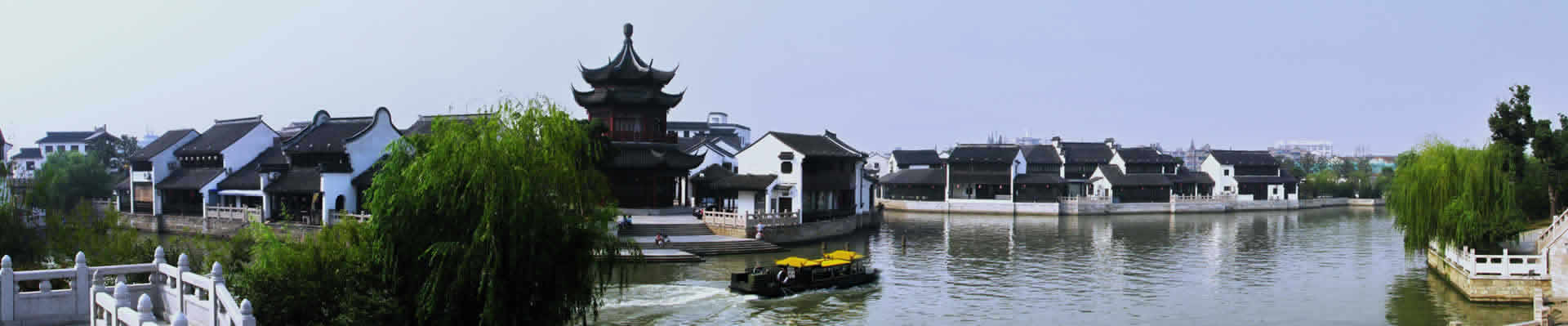
Known as the"Heaven on Earth", "City of Gardens", "Silk of Land", Suzhou is one of the top tourist destinations in China. Suzhou is an old city with the history of over 2500 years, which endows aboundant tourism resoreces, such as rivers, grand canal, hills, historic streets, classic gardens, etc. Suzhou city not only feature natural scenic spots and Chinese classic gardens, also it gets the fame of "Venic of the East" because of the ancient water towns like Zhouzhuang Water Town, Tongli Water Town, Luzhi Water Town, etc. Follow Suzhou Private Tours, we would like to show you what to see in Suzhou, help you to find an easy way to explore. Suzhou. Below are the top attractions and sevaral kinds of attractions in and around Suzhou:
 Ultimate Suzhou Day Trip with Suzhou Hotel & Train Station Pickup
 Classic Suzhou 1 Day Tour With Suzhou Hotel & Train Station Pickup
Humble Administrator's Garden (Zhuozheng Yuan)
The Humble Administrator's Garden is the largest and most famous Chinese garden in Suzhou. It is also the best representation of Chinese classical gardens of the Ming Dynasty in the south regions of the Yangtze River, and hailed as the "mother of Chinese gardens". The Humble Administrator's Garden covers an area about 52,000 square meters(12.85 acres), which has been inscribed as a World Heritage Site by UNESCO along with other classical gardens of Suzhou in 1997. Humble Administrator's Garden is celebrated by its delicate layout of pools, rockeries, islets, bamboo grove, pines, pavilions and corridors.And its design is duplicated in many gardens all over China, and there is even a replica in the New York Metropolitan Museum.
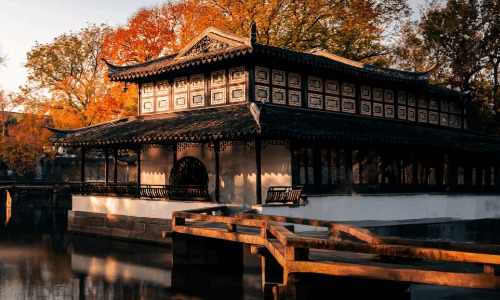
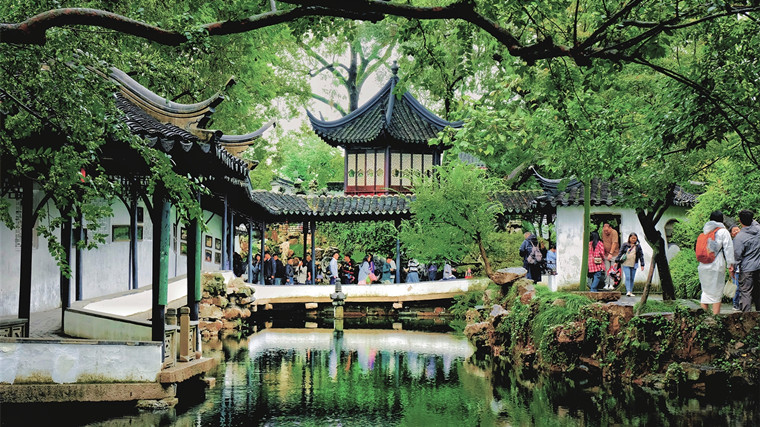
1. Attraction Highlights
· Large scale, covering an area of about 78 mu, divided into three parts: east, middle and west. The middle part is the core essence of the Humble Administrator's Garden, fully retaining the original style of the Ming Dynasty garden.
· With water as the core, the water surface accounts for one third of the total area of the garden. All buildings are built near the water, perfectly replicating the dynamic artistic conception of the Jiangnan water town.
· The ultimate garden art, adopting classic techniques such as "borrowed scenery, framed scenery, opposite scenery", borrowing the distant North Temple Pagoda into the garden, achieving the pinnacle of garden building of "seeing the big from the small, scenery outside the garden".
· Scenery in all four seasons: begonia, peony and cherry blossom in spring, lotus ponds in summer, red maple and osmanthus in autumn, wintersweet and camellia in winter, with unique garden aesthetics in each season.
· The garden has classic buildings such as the 36 Mandarin Ducks Hall, 18 Mandala Flower Hall, Yuanxiang Hall, Xiangzhou Boat Hall, and Jianshan Tower, each containing the aesthetics and wisdom of Jiangnan literati.
2. Best Time to Visit
· Season: March-May (spring) and September-November (autumn) every year, with pleasant temperature and blooming flowers, which is the golden season for visiting the garden.
· Time: Within 1 hour after the park opens every day (7:30-8:30), with the fewest tourists, you can enjoy the quiet artistic conception of the garden alone; visiting on rainy days, you can feel the ultimate poetry of "misty rain Jiangnan".
3. Travel Tips
· Opening Hours: 7:30-17:30 (March 1-November 15); 7:30-17:00 (November 16-end of February of the following year). Admission stops 1 hour before closing.
· Ticket Information: Peak season 90 RMB/person; Off season 70 RMB/person.
· How to get to Humble Administrator's Garden: Take tourist buses No.1, 2, 5, or buses No. 40, 78, 202, 313, 529, 923, and get off at the stop of Humble Administrator's Garden (Zhuo Zheng Yuan).
· Tour Suggestion: 2.5-3 hours is recommended for the whole tour. Priority is given to the central core area, then the west area, and the east area can be browsed quickly.
· Peak Avoidance Tip: The number of tourists is extremely large on weekends, holidays and summer vacation. It is recommended to go on weekdays to avoid the crowding affecting the tour experience.
4. Surrounding Facilities and Attractions
· Catering: There are many Su-style cuisine restaurants, Su-style noodle shops and tea houses around the park, where you can taste authentic Suzhou food; there are also tea rooms in the park, where you can taste tea near the water and feel the elegance of Jiangnan.
· Linked Attractions: It is within 15 minutes' walking distance from Suzhou Museum, Lion Grove Garden and Pingjiang Road Historical Block.
5. Related Activities
· Azalea exhibition and peony tea party in spring, chrysanthemum exhibition and garden culture festival in autumn, wintersweet exhibition in winter, to immerse in the four-season aesthetics of the garden.
· Kunqu Opera and Pingtan performances are held regularly in the garden. Listen to the intangible cultural heritage opera in the classical garden and experience the ultimate Jiangnan culture.
· Provide Hanfu rental and shooting services, wear Hanfu to check in the garden, and replicate the elegant life of Jiangnan literati.
Lingering Garden (Liuyuan)
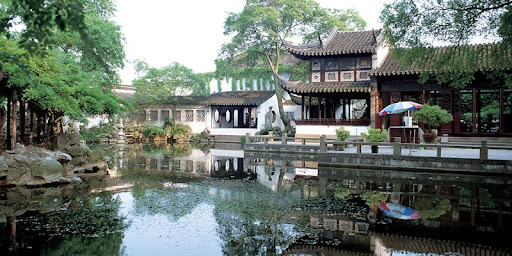
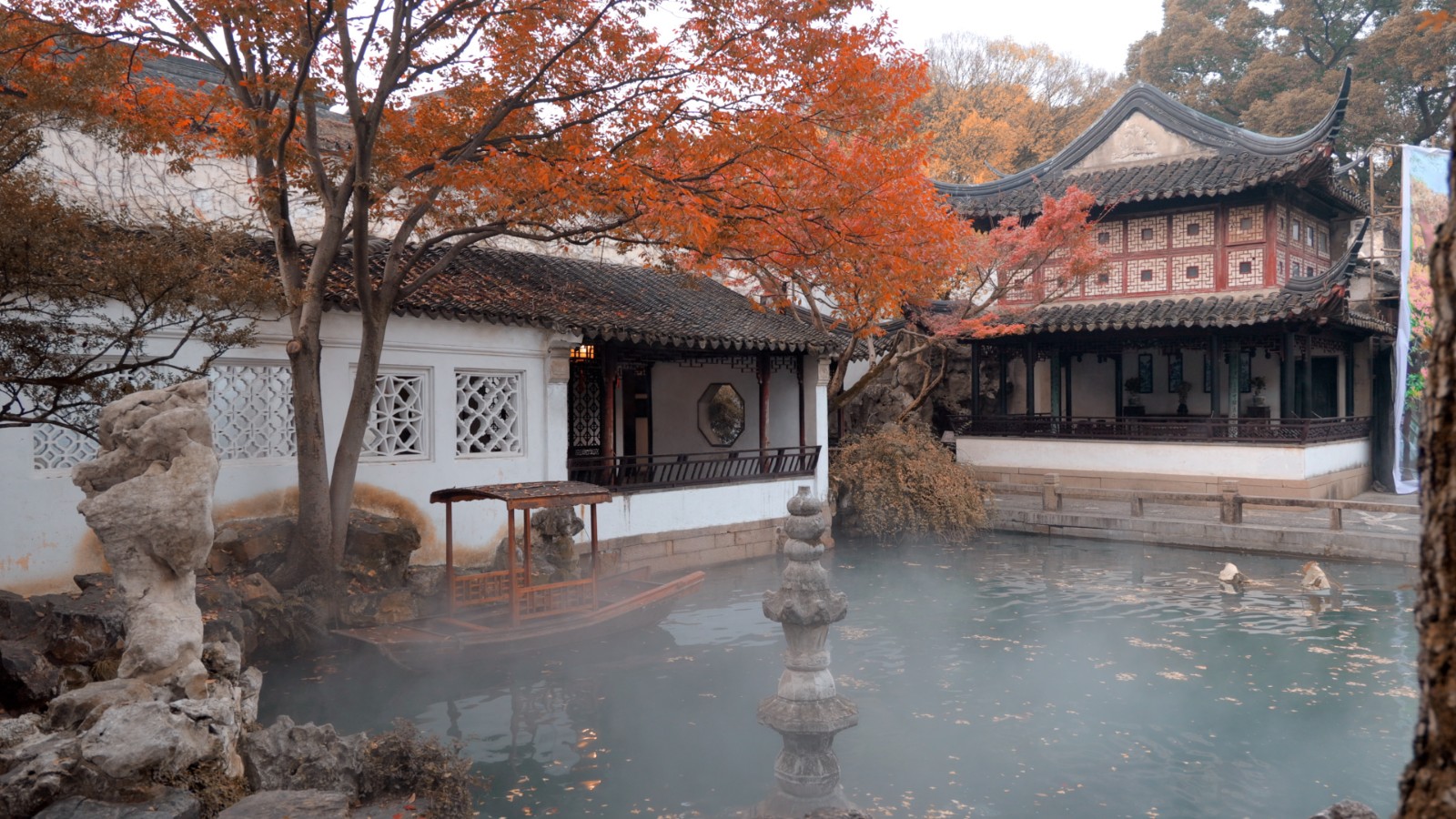
Located outside of Changmen Gate, Lingering Garden is world cultural heritage, which is a famous tourist scenic spot in Suzhou. Lingering Garden called China's four big gardens with the humble administrator's garden, the Summer Palace, Chengde summer resort. Lingering Garden covers an area of more than 30 acres, set housing, ancestral temple, temples, gardens, and integrated the jiangnan landscape gardening art. Landscape architectural space processing of Lingering Garden is very exquisite, using a variety of artistic techniques, built a unique space system, becoming one of the world civilization examples of architectural space art processing.
1. Attraction Highlights
· The garden art is at its peak, known as "the top of Wuzhong gardens". The whole garden is divided into four areas: residence, central courtyard, east garden and west garden, with compact layout and rich layers, achieving the ultimate effect of "one step, one scene; changing scenery with each step".
· The building density is extremely high, but there is no sense of crowding. Through the clever design of corridors, windows and walls, the space is infinitely extended, which is a textbook-level work of space design in Chinese classical gardens.
· It has the "Three Wonders of Lingering Garden": Guanyun Peak (the highest single Taihu stone in Jiangnan, a relic of the Huashi Gang in the Song Dynasty), Nanmu Hall (Wufeng Fairy Hall, the largest Nanmu hall in Jiangnan), and Fish Fossil (a naturally formed fish pattern fossil with a history of hundreds of millions of years).
· Famous for the "framed scenery" art, the leaky windows and cave doors in the garden are exquisitely designed. Each window is a natural landscape painting, which perfectly interprets the garden concept of "although made by man, it is like nature".
2. Best Time to Visit
· Season: March-May in spring and September-November in autumn, with comfortable climate and blooming flowers in the garden, which is the best season for visiting.
· Time: 8:00-9:00 in the morning, or after 15:00 in the afternoon, there are fewer tourists, and you can calm down to feel the beauty of the details of the garden; on a sunny morning, the sunlight forms light and shadow through the leaky windows, which is the golden time for photography.
3. Travel Tips
· Ticket Information: Peak season (April 1-October 31) 55 RMB/person; Off season (November 1-end of March of the following year) 45 RMB/person.
· Opening Hours: 7:30-17:30 (March 1-October 20); 7:30-17:00 (October 21-end of February of the following year).
· Tour Suggestion: 1.5-2 hours is recommended for the whole tour. Visit in the order of "residence - central courtyard - east garden - west garden", focusing on the three wonders of Lingering Garden and the design of corridor windows.
· How to get to
*Bus Routes: No.7,22,33,44,70,85 get off at the station of Liu Lingering Garden road.
*Subway Routes: Take subway No.2 and get off at the station of Shilu Station.
4. Surrounding Facilities and Attractions
· Catering: There are many Su-style snack shops and tea houses at the gate of the park, and many time-honored Su-style cuisine restaurants within 1 km around, where you can taste authentic Suzhou flavor.
· Linked Attractions: It is only 10 minutes' walking distance from Shantang Street Historical Block, and 15 minutes' drive from Hanshan Temple and Tiger Hill.
5. Related Activities
· Orchid exhibition and peony exhibition are held every spring, chrysanthemum exhibition and bonsai exhibition are held in autumn, showing the flower and bonsai art of Jiangnan gardens.
· Jiangnan Sizhu and Pingtan performances are regularly held in the garden. Listen to traditional folk music in the antique hall and immerse in Jiangnan culture.
· Garden elegant gatherings, tea ceremony and incense ceremony experience activities are held on holidays to replicate the elegant life of ancient literati.
Master of Nets Garden(Wangshiyuan)
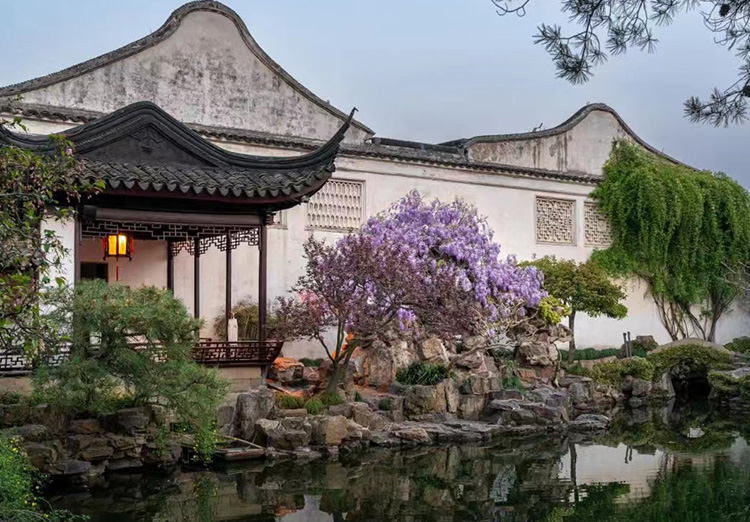
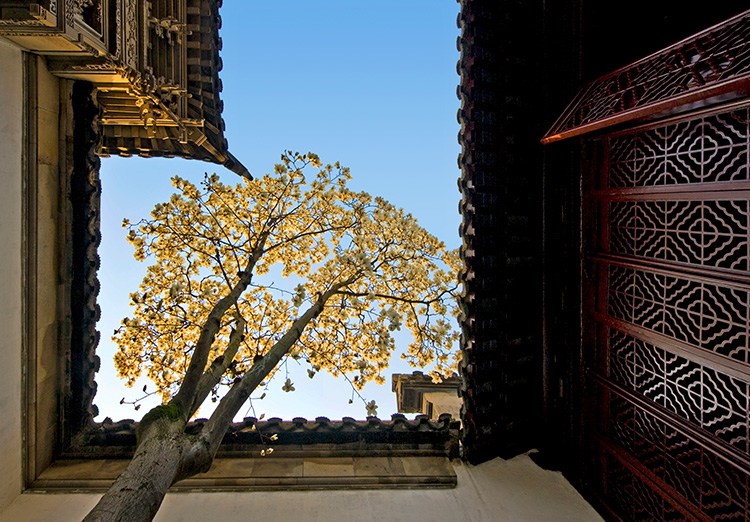
The Garden of the Master of the Nets is the smallest of the Suzhou residential gardens, yet it is the most impressive one because of its use of space which creates the illusion of an area that is much greater than its actual size. The garden is divided into three sections: a residential section, the central main garden and an inner garden. The garden is especially fancied by overseas visitors and is praised as the most ornate and intact private gardens in Suzhou. Some tourists even offer a huge amount of money to buy it. Moreover it's an UNESCO World Heritage Site boasts animpressive garden and nightly Kunqu opera performances, and it's best known for its architectural splendor.
1. Attraction Highlights
· Small in scale, covering an area of only about 8 mu, it perfectly realizes the garden concept of "seeing the big from the small, there are gardens in the garden", with compact layout, clear primary and secondary, no sense of cramped, and is the pinnacle of small gardens in the history of world garden building.
· With water as the center, the pool is in the middle, and the buildings are built around the water, with pleasant scale, combination of virtual and real, perfectly replicating the artistic conception of the Jiangnan water town, known as "the land is only a few mu, but there is a lingering endless feeling; although the residence is near the market, there is the joy of forgetting each other in the clouds and water".
· The "Moon and Wind Pavilion", "Zhuoying Water Pavilion", "Kansong Duhua Xuan" and other buildings in the garden are exquisitely designed, perfectly integrated with the landscape, flowers and trees, which is the ultimate embodiment of the aesthetics of Jiangnan literati.
· The unique night garden experience is a characteristic business card of Suzhou gardens. At night, the Master of the Nets Garden is decorated with lanterns, matched with intangible cultural heritage performances such as Kunqu Opera, Pingtan and Guqin, to immerse in the night banquet and elegant gathering of ancient literati, with a full sense of atmosphere.
2. Best Time to Visit
· Season: Suitable for all seasons, the best climate is in spring and autumn, and the night garden experience in summer night is particularly comfortable.
· Time: There are very few tourists before 9:00 in the morning, so you can enjoy the quiet of the garden alone; from evening to night, you can experience the unique night garden performance and feel the different charm of the garden.
3. Travel Tips
· Ticket Information: Day ticket 40 RMB/person in peak season, 30 RMB/person in off season; Night garden ticket 100 RMB/person. The night garden is only open from mid-March to mid-November every year, and needs to be reserved in advance.
· Opening Hours: Daytime 7:30-17:30; Night garden 19:30-22:00, admission stops at 21:00.
· Tour Suggestion: 1 hour is recommended for daytime tour, you can slowly taste the beauty of the details of the garden; 1.5 hours is recommended for night garden tour, there is a fixed performance route throughout the whole process, and you can fully experience all performances by following the route.
· Peak Avoidance Tip: There are many tourists in the night garden on weekends. It is recommended to go on weekdays for a better experience.
· How to get to the Master of Nets Garden: Take bus No.55?02?529?811?931 and then gets off "master of the nets Garden".
4. Surrounding Facilities and Attractions
· Catering: The surrounding Shiquan Street is a famous food block in Suzhou, which gathers many time-honored Su-style cuisine restaurants, Internet-famous cafes and characteristic snack shops, which can be reached within 5 minutes' walk.
· Linked Attractions: It is only 10 minutes' walking distance from Canglang Pavilion and Keyuan Garden, and 15 minutes' drive from Pingjiang Road and Humble Administrator's Garden. You can visit the garden cluster in the south of Suzhou Ancient City in series.
5. Related Activities
· Fixed performances in the night garden: Six major intangible cultural heritage performances including Kunqu Opera, Pingtan, Guqin, Jiangnan Sizhu, Flute and Xiao, and Su Opera are staged in sessions every night, each performance lasts about 10 minutes, with route-based viewing and full immersive experience.
· Magnolia and begonia exhibitions are held in spring, osmanthus tea party in autumn, and wintersweet exhibition in winter to feel the beauty of the four seasons of the garden.
· Regular calligraphy, traditional Chinese painting, tea ceremony experience activities are held to deeply feel the elegant life of Jiangnan literati.
Tiger Hill (Hu Qiu)
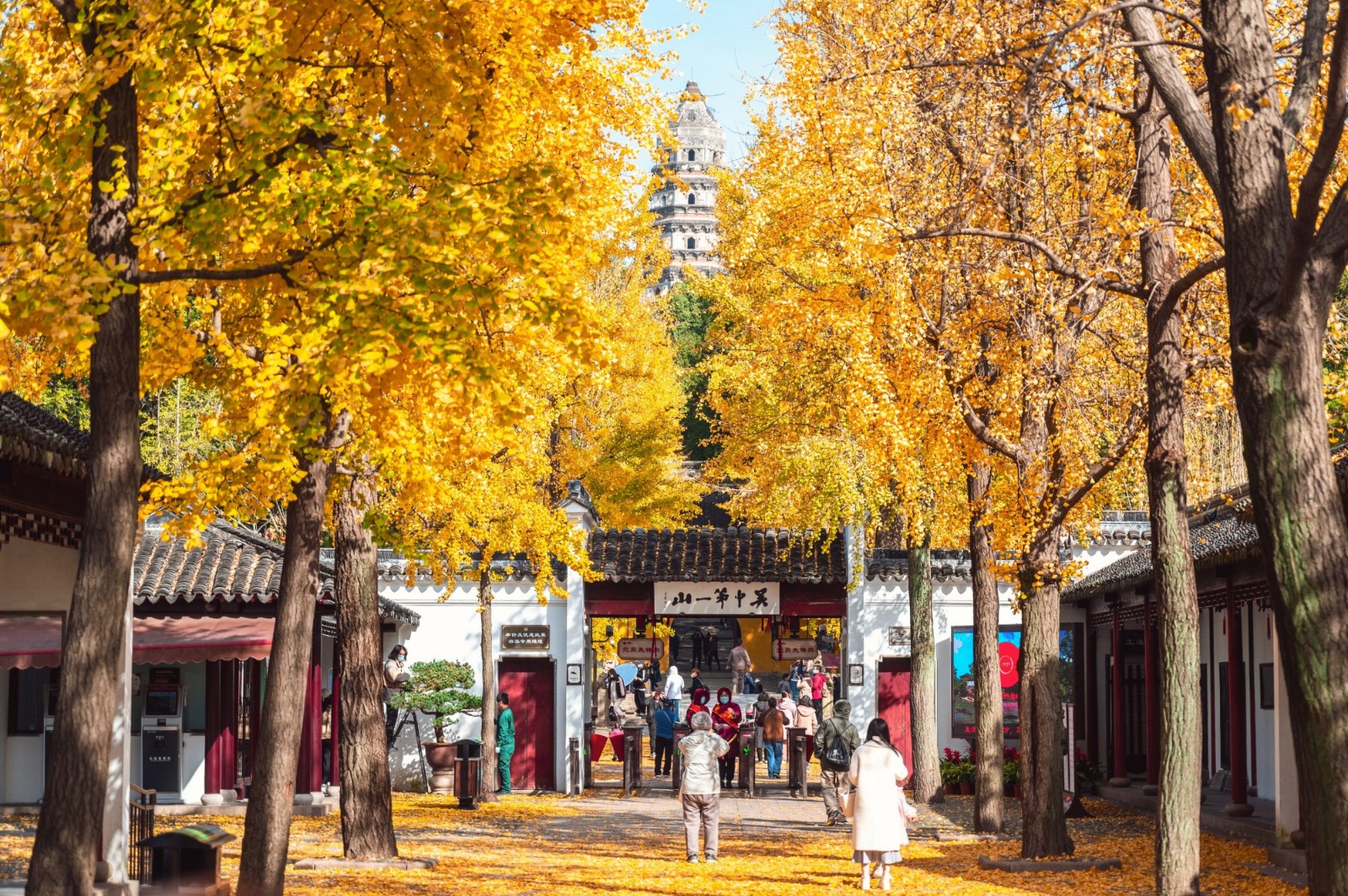
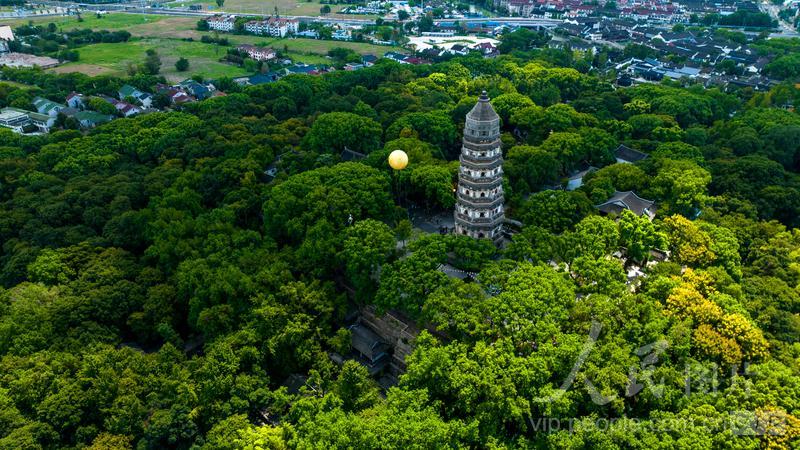
The Tiger Hill extends over an area of 1.4 hectares (3.5 acres) and is 36 meters (118 feet) in height. Though small in size, Tiger Hill is provided with many gorgeous scenes, historical sites, numerous towering ancient trees and a Tiger Hill Pagoda on the top of the hill. Tiger Hill is also famous as Surging Sea Hill because of its natural beauty. You will find lots of historical sites in Tiger Hill scenic area, some of which can be traced back over 2500 years to the founding of Suzhou. The Tiger Hill has been the must for tourists. The great Song literary man Su Dongpo said, "It would be a pity if you had been to Suzhou but didn't get to visit the Tiger Hill." As a showcase of Suzhou and one of the first ten exemplary civilized tourist attractions of China.
1. Attraction Highlights
· Tiger Hill Pagoda (Yunyan Temple Pagoda): The core landmark of Tiger Hill, first built in the 6th year of Xiande in the Later Zhou Dynasty of the Five Dynasties (959 AD), is one of the earliest existing brick pavilion-style pagodas in China. The pagoda has been tilted for thousands of years without falling, known as the "Oriental Leaning Tower of Pisa", and is a symbol of Suzhou Ancient City.
· Sword Pool: The most legendary scenic spot in Tiger Hill. It is said to be the burial place of King Helü of Wu. There are cliff inscriptions by famous calligraphers such as Yan Zhenqing of the Tang Dynasty and Mi Fu of the Song Dynasty by the pool, which have extremely high historical and calligraphic value.
· Beautiful natural scenery. Although the mountain is not high, it has the artistic conception of "no matter how high the mountain is, it will be famous if there is an immortal". The mountain forest is lush, with gurgling water, and scenery in all seasons. It is a rare resort in Suzhou Ancient City where nature and humanity are integrated.
· It has many historical monuments such as Duangliang Hall, Hanhan Spring, Sword Testing Stone, Zhenniang Tomb, and Thousand People Stone. Each place hides a legendary story, one step at a time, one scene at a time, one history at a time.
2. Best Time to Visit
· Season: March-May in spring, Tiger Hill holds an art flower fair, with peonies, tulips and cherry blossoms in full bloom; September-November in autumn, it holds a golden autumn temple fair, which is the busiest time of the year in Tiger Hill and the golden season for visiting.
· Time: 8:00-9:00 in the morning, there are fewer tourists, so you can visit the historical sites quietly; on a sunny morning, the sun shines on the Tiger Hill Pagoda, which is the best time for photography.
3. Travel Tips
· Ticket Information: Peak season (April 1-October 31) 80 RMB/person; Off season (November 1-end of March of the following year) 60 RMB/person. You can make an appointment and buy tickets online in advance.
· Opening Hours: 7:30-17:30 (March 1-October 20); 7:30-17:00 (October 21-end of February of the following year).
· Tour Suggestion: 2-2.5 hours is recommended for the whole tour. Recommended tour route: Head Mountain Gate - Duangliang Hall - Hanhan Spring - Sword Testing Stone - Thousand People Stone - Sword Pool - Tiger Hill Pagoda - Yunzai Tea Fragrance - Xixi Huancui, no turning back throughout the whole process.
· How to ger to Tiger Hill: take tourist lines No.1, 2, 32, 146, 816 and 949 get off at Huqiubeimen (north gate of Tiger Hill).
4. Surrounding Facilities and Attractions
· Catering: There are many Su-style snack shops and tea houses at the gate of the park, and many time-honored Su-style cuisine restaurants within 3 km around, where you can taste authentic Suzhou flavor.
· Linked Attractions: It is within 10 minutes' drive from Hanshan Temple, Lingering Garden and Shantang Street. You can plan a one-day tour of historical sites in the west of Suzhou in series.
5. Related Activities
· Tiger Hill Art Flower Fair is held every March-May, Golden Autumn Temple Fair is held in September-October, and lantern fairs and folk activities are held during the Spring Festival and Lantern Festival, which are the most representative folk cultural events in Suzhou.
· Suzhou Pingtan and Kunqu Opera performances are regularly held in the park. Listen to traditional operas in the thousand-year-old monuments and immerse in the charm of Wu culture.
· Hanfu parade and intangible cultural heritage handcraft experience activities are held on holidays, allowing tourists to deeply participate in Suzhou traditional culture.
Hanshan Temple (Could Mountain Temple)
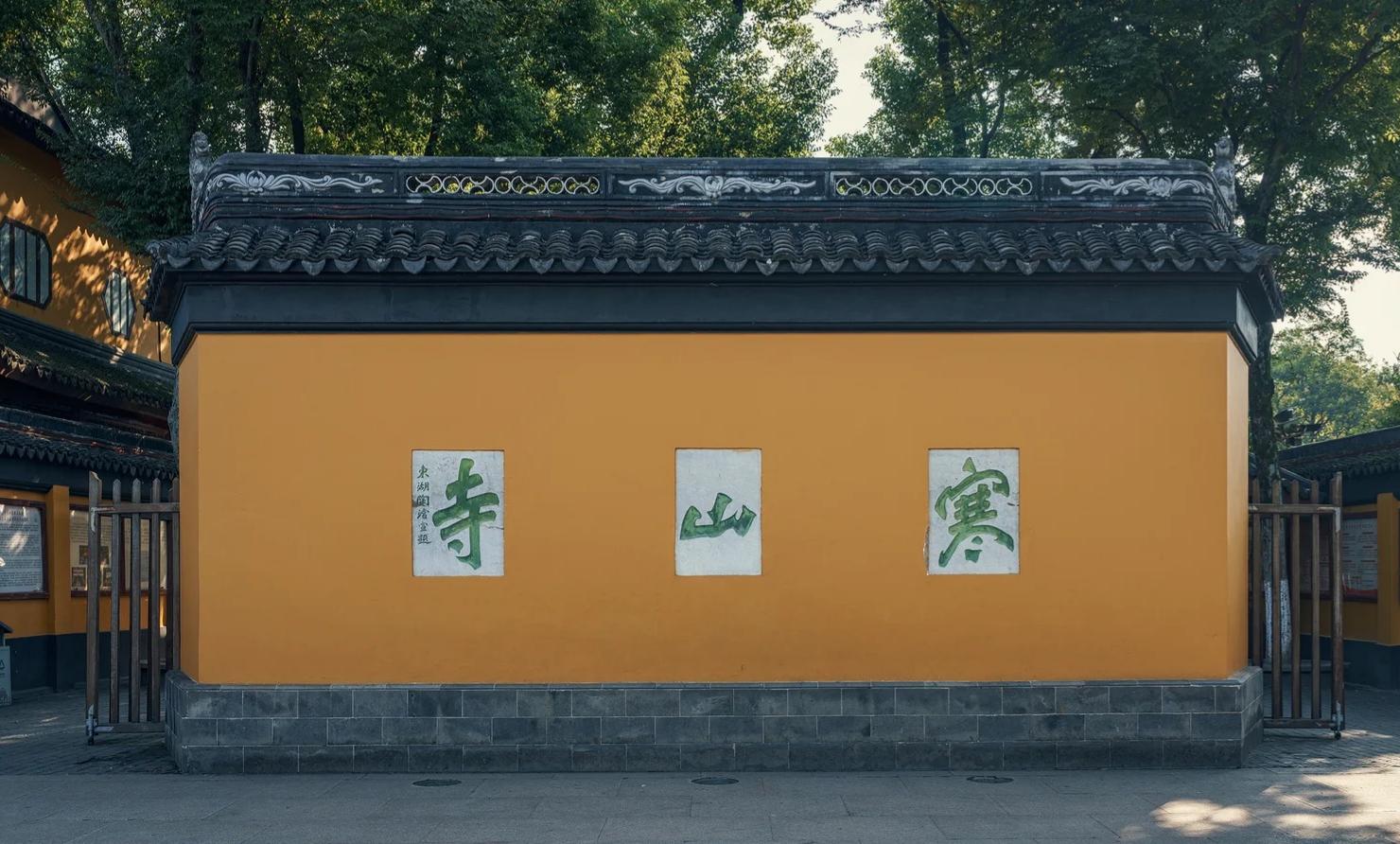
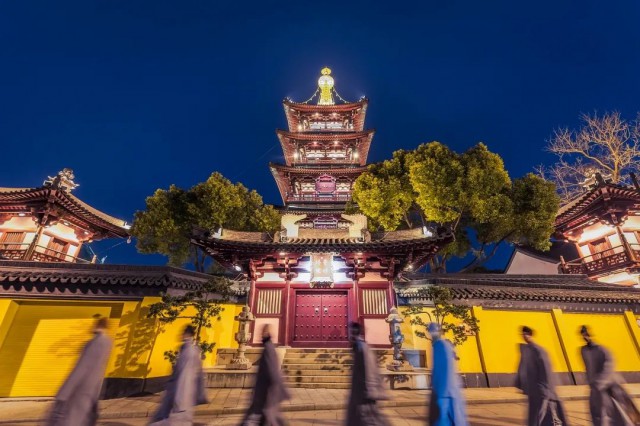
Traditionally, Hanshan Temple is believed to have been founded during the Tianjian era (502–519) of the reign of Emperor Wu of Liang, in the Southern and Northern Dynasties period with a history of more than 1400 years. The current name of the monastery derives from Hanshan, the legendary monk and poet. Hanshan and his disciple Shide are said to have come to the monastery during the reign of Emperor Taizong of Tang (627–649), where Hanshan became the abbot. Hanshan Temple (Cold Mountain Temple) is a Buddhist temple and monastery in Suzhou. Cold Mountain Temple is often known for its bell rings, the bell is ringed to pray for safety, peace and happiness. It is said that all your trouble in one year will be driven away by the bell. Hanshan Temple is also famed in East Asia because of the poem "A Night Mooring by Maple Bridge", composed by Tang Dynasty poet, Zhang Ji.
1. Attraction Highlights
· A holy land of poetry culture. A poem Mooring by Maple Bridge at Night has made Hanshan Temple spread for thousands of years. The temple preserves the inscriptions of Mooring by Maple Bridge at Night inscribed by celebrities of all dynasties. Among them, the inscription written by Yu Yue in the Qing Dynasty is the most famous and is the treasure of Hanshan Temple.
· The thousand-year-old ancient bell culture. The bell of Hanshan Temple is world-famous. The temple preserves the ancient bell of the Ming Dynasty. Every New Year's Eve, Hanshan Temple holds a New Year's Eve bell ringing ceremony, ringing 108 bells, which means eliminating 108 kinds of troubles. It is the most representative New Year's Eve activity in Suzhou.
· The architectural pattern is magnificent. The Mahavira Hall, Buddhist Sutra Library, Bell Tower, Fengjiang Tower, Puming Pagoda and other buildings in the temple are magnificent, with yellow walls and black tiles, antique, perfectly showing the architectural style of Jiangnan temples.
· Integrated with the Fengqiao Scenic Area. Outside the temple are the Beijing-Hangzhou Grand Canal, Fengqiao Bridge and Tieling Pass. The ancient temple, ancient bridge, ancient canal and ancient pass complement each other, fully presenting the poetic scene of Mooring by Maple Bridge at Night.
2. Best Time to Visit
· Season: Suitable for all seasons. September-November in autumn, with clear autumn sky, is the best time to feel the artistic conception in ancient poems; you can experience the New Year's Eve bell ringing ceremony on New Year's Eve and New Year's Day.
· Time: 8:00-9:00 in the morning, there are fewer pilgrims and tourists, so you can quietly feel the Zen of the temple; early morning or evening, with soft light, is the best time to shoot the ancient temple.
3. Travel Tips
· Ticket Information: 20 RMB/person. Fengqiao Scenic Area is open for free. You can make an online appointment in advance or buy tickets on site.
· Opening Hours: 7:30-17:00 (open all year round)
· Tour Suggestion: 1-1.5 hours is recommended for the whole tour. You can first visit the main temple area of Hanshan Temple, then visit the adjacent Fengqiao Scenic Area to fully feel the scene of Mooring by Maple Bridge at Night.
· Etiquette Tips: The temple is a religious place. Please do not make loud noises or take photos when entering the hall, dress appropriately, and respect religious etiquette.
· Bell Ringing Experience: The bell tower in the temple provides paid bell ringing experience. You can ring the ancient bell in person and feel the artistic conception of "midnight bell".
· How to get to Hanshan Temple: take bus No.2,6,9,17,21,31,301 and tourist bus Line 3 to get off at the Fengqiao Stop(Maple Bridge).
4. Surrounding Facilities and Attractions
· Catering: There are many vegetarian restaurants and Su-style snack shops around, where you can taste temple vegetarian food and Suzhou characteristic snacks.
· Linked Attractions: It is within 10 minutes' drive from Tiger Hill, Lingering Garden and Shantang Street.
5. Related Activities
· The New Year's Eve bell ringing ceremony is held every New Year's Eve, which has been held for decades. It is the most influential New Year's Eve Buddhist cultural activity in Suzhou and even the whole country.
· Cherry Blossom Festival is held every spring, and Osmanthus Festival is held in autumn. A large number of cherry blossoms and osmanthus trees are planted in the temple. During the flowering season, the ancient temple contrasts with the sea of flowers, with a beautiful artistic conception.
· Regular meditation, scripture copying, tea ceremony experience activities are held, so that tourists can deeply experience Buddhist culture and Jiangnan Zen life.
Grand Canal (Beijing-Hangzhou Grand Canal)
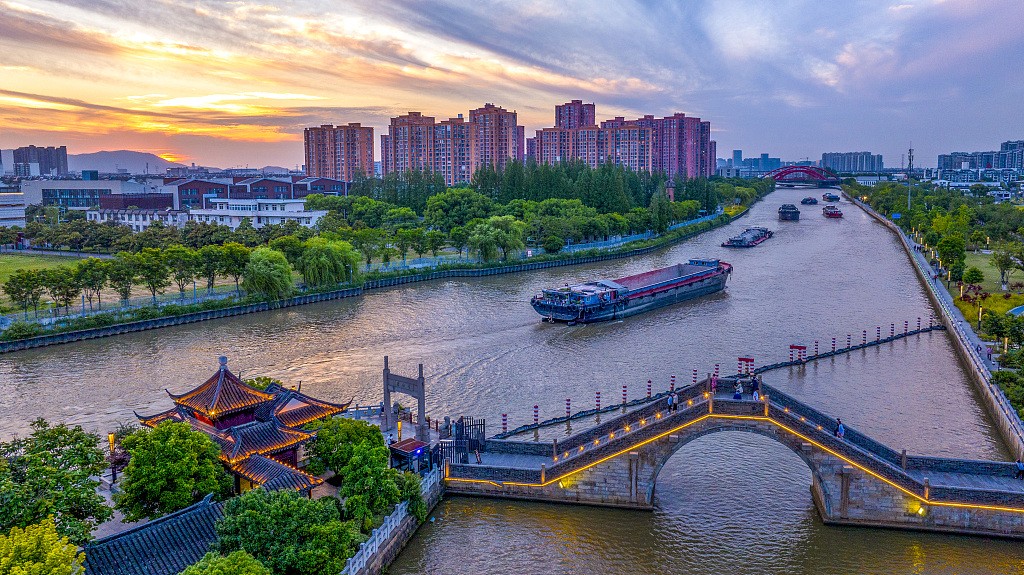
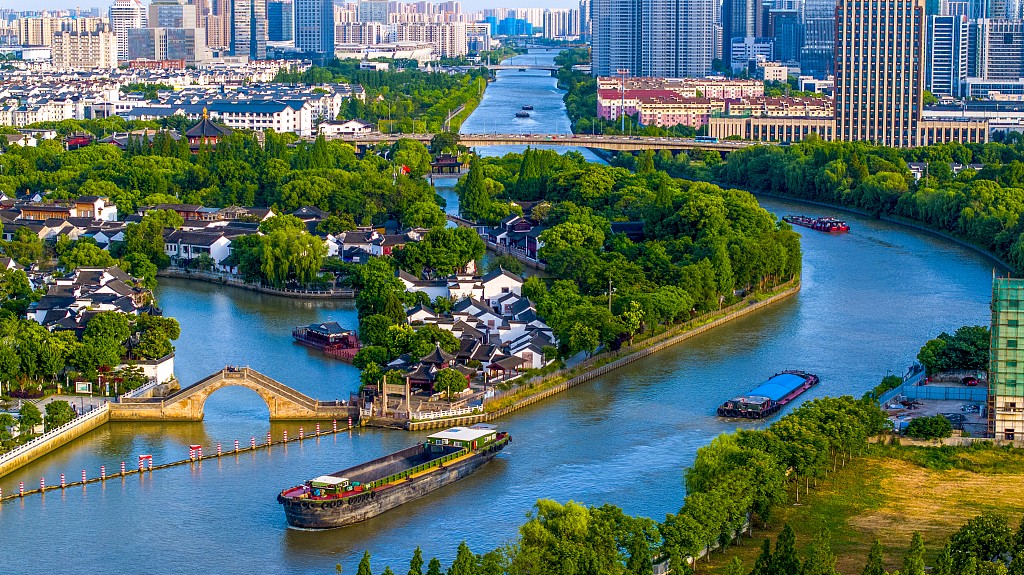
The Grand Canal (also known as the Beijing-Hangzhou Grand Canal), a UNESCO World Heritage Site, is the longest canal or artificial river in the world and a famous tourist destination. Starting at Beijing, it passes through Tianjin and the provinces of Hebei, Shandong, Jiangsu and Zhejiang to the city of Hangzhou, linking the Yellow River and Yangtze River. The canal is a communication artery connecting north and south China in ancient times. The Grand Canal Suzhou Section refers to the part from Wuqi Bridge (the border of Suzhou and Wuxi) to Yazi Ba (the border of Suzhou and Zhejiang Province),which covers around 82.35 km. Suzhou Section is the essential part undertaking freight transport on the canal.
1. Attraction Highlights
· The core section of the World Cultural Heritage. The Grand Canal in Suzhou section has 7 World Cultural Heritage sites including Shantang River, Pingjiang Historical Block, Panmen, Baodai Bridge, Fengqiao Tieling Pass, which is one of the most dense sections of heritage sites along the Grand Canal.
· It fully retains the double chessboard pattern of "rivers and streets adjacent, water and land parallel", which is the core feature of Suzhou Ancient City. Taking a boat tour of the Grand Canal, you can immerse in the artistic conception of the Jiangnan water town of "When you arrive in Gusu, you will see people living by the river".
· It connects many core scenic spots in Suzhou Ancient City. From Fengqiao Hanshan Temple, to Shantang Street, Pingjiang Road, to Panmen and Baodai Bridge, the Grand Canal is like a necklace, connecting Suzhou's historical monuments, gardens, ancient streets and ancient bridges, forming a complete cultural tourism belt.
· The night canal style is extremely beautiful. At night, the two sides of the Grand Canal are brightly lit, and the ancient bridges, ancient buildings and old streets are full of atmosphere against the backdrop of lights. Taking a night cruise on the Grand Canal is the best way to feel the night charm of Suzhou.
2. Best Time to Visit
· Season: Suitable for all seasons. The climate is pleasant in March-May in spring and September-November in autumn, and the boat tour is the most comfortable; night tour in summer night can avoid the high temperature during the day and feel the charm of night Suzhou.
· Time: Before 10:00 in the daytime and after 15:00 in the afternoon, with soft light, suitable for boat tour and photography; 18:30-20:30 at night is the golden time for night tour of the Grand Canal, with the best lighting effect.
3. Travel Tips
· Ticket Information: The public area along the Grand Canal is open for free, and the cruise needs to be purchased separately. The ticket price varies for different routes. The ticket price for short-distance cruises in the ancient city is about 60-100 RMB/person, and the ticket price for long-distance night cruises is about 120-180 RMB/person. You can make an appointment and buy tickets on the official platform in advance
· Cruise Terminals: The main terminals are Xumen Terminal, Panmen Terminal, Bai Juyi Terminal, Shantang Street Terminal, Pingjiang Road Terminal. You can choose the nearest terminal according to your itinerary
· Tour Suggestion: 1 hour is recommended for short-distance cruise (Shantang Street-Tiger Hill, Pingjiang Road-Panmen); 1.5 hours is recommended for long-distance night cruise (Xumen-Xinshiqiao-Panmen). You can choose the appropriate route according to your time
· Peak Avoidance Tip: There are many tourists on the night cruise routes on weekends and holidays. It is recommended to go on weekdays or book tickets in advance to avoid the situation of no tickets
· How to get to Grand Canal: take buses No.7, 39, 47, 305, 522, 602, or tourist buses No.2, 5.
4. Surrounding Facilities and Attractions
· Catering: There are Su-style cuisine restaurants, characteristic snack shops, cafes and tea houses around the coastal terminals. There are many foods around Shantang Street, Pingjiang Road and Xumen, where you can taste authentic Suzhou flavor.
· Linked Attractions: The Grand Canal connects many core scenic spots such as Hanshan Temple, Fengqiao, Shantang Street, Tiger Hill, Pingjiang Road, Humble Administrator's Garden, Panmen, Baodai Bridge. You can plan a one-day tour of the Grand Canal Cultural Belt and visit Suzhou Ancient City along the canal.
5. Related Activities
· The Grand Canal Cultural Tourism Festival is held every year, including dragon boat races, folk parades, intangible cultural heritage performances, light shows and many other activities, which is one of the most influential cultural and tourism events in Suzhou.
· The night cruise route regularly provides Pingtan and Kunqu Opera performances. While taking a boat tour, you can listen to the traditional opera in Wu dialect and immerse in Jiangnan culture.
· Regular canal hiking and cycling activities are held to visit along the canal greenway and deeply feel the history and scenery of the Grand Canal.
Suzhou No.1 Silk Mill (No.1 Silk Facory)
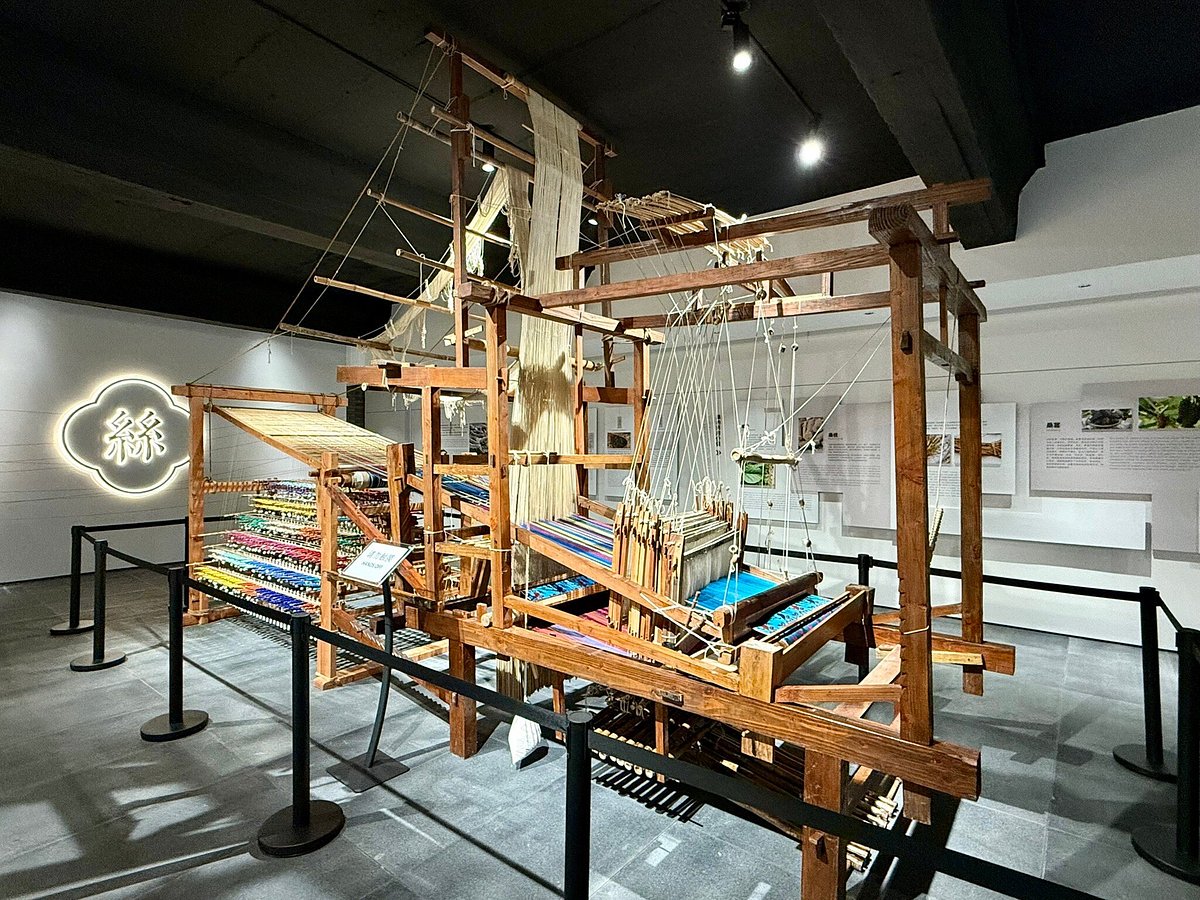
Suzhou No.1 Silk Mill, also named Suzhou Silk Factory, which was founded in 1926, it is a near one hundred year old state-owned factory. Suzhou Silk enjoyed a worldwide reputation from as early as the Tang and Song Dynasty, because of its historical association with riches and royalty. This Suzhou Silk Factory gains a good reputation in China silk for its traditional skills to make silk and the exhibitions of culture and history of silk in China, it has been a leader in local silk production. A complete silk manufacturing facility, the No. 1 Silk Factory handles every facet of production from raising silkworms and cocoon boiling to reeling and packing. Visit this Suzhou Silk Factory, travelers can get the knowledge of the whole life of a silkworm, the process of silkworm breeding, how the silkworm spinning silk, how the silk make into various kinds of stuffs and appreciate various kinds of silk scarves, bedding and other items.

1. Attraction Highlights
· A living silk industry museum, which fully retains the production workshop and mechanical equipment of the century-old silk factory. Tourists can enter the production workshop and intuitively see the whole process from cocoon reeling, weaving, printing and dyeing to finished products, and understand every link of silk production. This is a rare living silk factory still in operation in China.
· The Silk Culture Exhibition Hall systematically displays the more than 6,000 years of silk culture history in China, from the silkworm mulberry site in the Neolithic Age, to the silk weaving in the Han and Tang Dynasties, to the heyday of Suzhou silk in the Ming and Qing Dynasties, as well as the history of the Silk Road. There are also a large number of precious silk cultural relics, ancient looms, Song Brocade, Kesi intangible cultural heritage works on display, to fully understand Chinese silk culture.
· Live display of intangible heritage skills. There are national intangible cultural heritage inheritors in the factory to display intangible heritage skills such as Su embroidery, Song Brocade and Kesi on site. Tourists can watch the exquisite skills of the inheritors up close and understand the charm of Suzhou silk intangible cultural heritage.
· Immersive silk experience. Tourists can personally participate in experience activities such as cocoon reeling, silk hand-painting, and Su embroidery handicrafts to deeply feel the charm of silk culture.
· Full-category silk product exhibition and sales. There is a silk exhibition and sales center in the factory, ranging from high-end Song Brocade, Kesi, Su embroidery works to daily silk clothing, silk scarves, and bedding products, with a complete range of categories. You can directly buy high-quality silk products from the place of origin, which is the first choice for Suzhou silk souvenirs.
2. Best Time to Visit
· Season: Suitable for all seasons, open at constant indoor temperature throughout the year, not affected by the weather, and an excellent alternative destination for visiting Suzhou on rainy days.
· Time: 9:00-11:00 in the morning, the whole process of the factory production line is open, and you can fully watch the silk production process; there are fewer tourists in the afternoon, and the experience projects do not need to queue, with a better experience.
3. Travel Tips
· Ticket Information: Factory visit is free, intangible heritage experience projects and guide services need to be paid separately.
· Opening Hours: 9:00-17:00 (open all year round, except Spring Festival holiday).
· Tour Suggestion: 1.5-2 hours is recommended for the whole tour. First visit the Silk Culture Museum, then enter the production workshop to watch the whole production process, and finally experience intangible cultural heritage handicrafts or buy silk products.
· How to get to Suzhou No.1 Silk Factory: Bus Route Take No. 40, 89
4. Surrounding Facilities and Attractions
· Catering: There are many Su-style cuisine restaurants and home-cooked restaurants within 1 km around the factory, where you can taste authentic Suzhou flavor; there is also a tea house in the factory, where you can taste the characteristic Biluochun tea of Suzhou
· Linked Attractions: It is within 10 minutes' drive from Panmen Scenic Area, Canglang Pavilion and Master of the Nets Garden.
5. Related Activities
· Regular silk culture popularization classes are held to explain sericulture knowledge, silk history and intangible heritage skills to tourists, especially teenagers, and popularize Chinese silk culture.
· Provide intangible cultural heritage handicraft experience courses such as Su embroidery, Song Brocade, Kesi, and silk hand-painting, taught by professional teachers hand in hand, and you can make exclusive silk handicraft souvenirs.
· Silk Culture Festival and intangible cultural heritage exhibition activities are held on holidays to show the traditional skills and innovative design of Suzhou silk, allowing tourists to deeply feel the charm of silk culture.
Pingjiang Historical Street
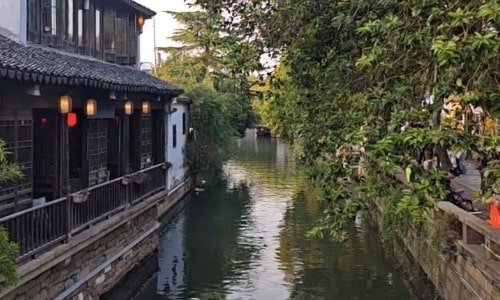
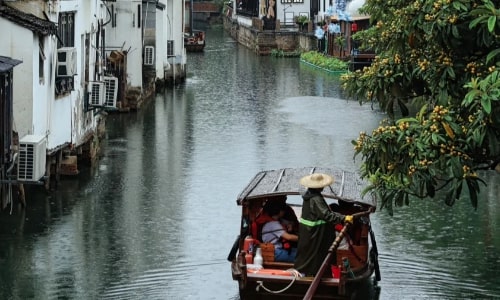
For an authentic taste of city life in old Suzhou, a stroll down Pingjian Street is a great way to get acquainted with the local vibe. Quiet, leafy and slow-paced, the street is lined with old Chinese houses as well as restaurants and teahouses serving traditional food and drink, upscale cafés catering to the historical chic crowd, as well as a few hostels. In addition, the Pingtang Museum and Kunqu Opera Museum and Schoolare along the road. Waling on the Pingjiang road, you can see all the scenery was as beautiful as a painting. The black tiles have the traces of white wall when it rains, just like a Chinese ink. Because of its ancient style, Pingjiang Road becomes the symbol of Suzhou ancient city.
1. Attraction Highlights
· Complete Jiangnan water town ancient city pattern. Pingjiang Road is built along the Pingjiang River, with the road on the east side and the river on the west side. There are 17 ancient bridges on the river, and Jiangnan dwellings with white walls and black tiles on both sides, fully presenting the poetic scene of "When you arrive in Gusu, you will see people living by the river", which is the core representative of the style of Suzhou Ancient City.
· The perfect integration of local life and artistic atmosphere. There are century-old time-honored snack shops, teahouses, and Su embroidery workshops in the block, as well as fresh and artistic cafes, bookstores, cultural and creative shops, and independent designer studios. The slow life of old Suzhou and the artistic style of new Suzhou coexist here, without the sense of incongruity of excessive commercialization.
· Many historical monuments and former residences of celebrities are scattered here. In addition to Hong Jun's former residence, there are many cultural protection units such as Gu Jiegang's former residence, Pan Shi'en's former residence, Dong's Yizhuang, and Suzhou Opera Museum. Every alley and every old house hides the historical stories of Suzhou.
· Living inheritance of intangible cultural heritage. There are many Kunqu Opera and Pingtan teahouses in the block, with professional actors performing Pingtan and Kunqu Opera in Wu dialect every day. There are also intangible cultural heritage handicraft workshops such as Su embroidery, Kesi, nuclear carving, and Su fan. Tourists can watch and experience intangible heritage skills up close, and immerse in the charm of Wu culture.
2. Best Time to Visit
· Season: Suitable for all seasons. March-May in spring, magnolia, begonia and cherry blossoms bloom on both sides of Pingjiang Road; September-November in autumn, with osmanthus fragrance and pleasant climate, which is the best season for visiting.
· Time: 6:00-9:00 in the morning, there are very few tourists, you can feel the local life of the locals and enjoy the quiet of the old street alone; 17:00-21:00 in the evening, when the lights are on, the night atmosphere of the old street is full, and you can experience the night life of Suzhou; visiting on rainy days, you can feel the extreme poetry of misty rain Jiangnan.
3. Travel Tips
· Ticket Information: The block is open for free, and the former residences of celebrities and museums inside need to be purchased separately, with ticket prices mostly 10-20 RMB/person.
· Opening Hours: Open 24 hours a day, and shops and venues along the street are mostly open from 9:00 to 22:00.
· Tour Suggestion: 2-3 hours is recommended for the whole tour. You can walk along the main street. You must visit the alleys on both sides such as Daru Lane, Niujia Lane, Xuanqiao Lane, and Huxiangshi Lane, which hide the most original Suzhou dwellings and life atmosphere, and avoid the flow of people on the main street.
· Peak Avoidance Tip: The number of tourists is extremely large on weekends and holidays, and the main street is crowded. It is recommended to go on weekdays, or visit in the early morning and night to avoid the peak of the flow of people.
· Experience Recommendation: You must listen to a Pingtan performance in the Pingtan teahouse in the block, order a cup of Biluochun tea, and listen to a piece of storytelling in Wu dialect, which is an excellent way to experience Suzhou culture.
· How to get to Pingjiang Street: take bus No. 529, 518, 309, 178 or 202 and get off at the "Vinegar Workshop East Guanqian Street".
4. Surrounding Facilities and Attractions
· Catering: The block gathers the most complete characteristic snacks and time-honored food in Suzhou, including dumb shengjian, Fox's yogurt, gorgon fruit syrup, Su-style noodle soup, squirrel mandarin fish and other Su-style foods, from street snacks to high-end Su-style cuisine restaurants.
· Linked Attractions: It is within 15 minutes' walking distance from Humble Administrator's Garden, Suzhou Museum and Lion Grove Garden, and only 5 minutes' walk from Couple's Retreat Garden.
5. Related Activities
· At fixed times every day, many Pingtan and Kunqu Opera teahouses in the block have professional performances, no reservation is required, you can directly enter the store to watch, and immerse in the Wu opera culture.
· Pingjiang Road Market is held regularly, gathering stalls for intangible cultural heritage handicrafts, cultural and creative products, characteristic food, etc., which is an excellent opportunity to feel the integration of Suzhou art and local life.
· Hanfu parade, Jiangnan elegant gathering, intangible cultural heritage exhibition and other activities are held on holidays to replicate the local life of ancient Jiangnan, allowing tourists to deeply experience Suzhou traditional culture.
Lion Grove Garden (Shi Zi Lin)
Lion Grove Garden is the greatest example among its kind in Suzhou, it is famous for the large and labyrinthine grotto of taihu rocks at its cente which has the reputation of being the funnest garden in Suzhou because there is a complex maze people get lost in. It was in inscribed in the UNESCO World Heritage List in the year 2000. The name of the garden is derived from the shape of these rocks, which are said to resemble lions. The garden is recognized with other classical gardens in Suzhou as a UNESCO World Heritage Site to to be masterpieces of Classical Chinese-style gardens.


1. Attraction Highlights
· The world-famous "Kingdom of Rockeries". The rockery in the garden covers an area of about 1153 square meters, divided into upper, middle and lower floors, with a total of 9 routes and 21 holes, winding and crisscrossing, like a maze, known as "the pinnacle of rockery art". Most of the rockery stones are taken from Taihu Lake, with different shapes, most of which are like lions, sitting, lying, dancing, or roaring, lifelike. There are famous rockery landscapes such as "Nine-Headed Lion", "Han Hui", "Tu Yue".
· Unique Zen garden style. Lion Grove Garden was originally a Zen forest. The buildings, rockeries and landscapes in the garden contain profound Zen culture. The winding rockery maze implies the realm of Zen "enlightenment". It is a rare work in Chinese classical gardens that perfectly integrates Zen and garden art.
· Classic garden buildings and landscapes. The Yanyu Hall, Jianshan Tower, Waterfall Pavilion, Wenmei Pavilion, Shuangxiang Fairy Hall and other buildings in the garden are classic works of Ming and Qing garden architecture, which are perfectly integrated with rockeries, pools, flowers and trees, forming a unique garden artistic conception of "mountains multiply and streams double back no doubt there is a way; willows cluster darkly, blossoms shine another village ahead".
· Profound celebrity cultural heritage. Ni Zan's Lion Grove Garden, Emperor Qianlong's inscriptions, and calligraphy and painting works of many literati have made the cultural heritage of Lion Grove Garden more profound. It is one of the gardens with the most celebrity relics in Suzhou gardens.
2. Best Time to Visit
· Season: March-May in spring, plum blossoms, begonias and cherry blossoms bloom in the garden, contrasting with the rockeries; September-November in autumn, red maples and ginkgoes decorate the garden with rich colors, which is the best season for visiting.
· Time: Within 1 hour after the park opens in the morning (7:30-8:30), there are the fewest tourists, you can quietly explore the rockery maze and avoid crowding; on a sunny morning, the sun shines on the rockery, with excellent light and shadow effect, which is the golden time for photography.
3. Travel Tips
· Ticket Information: Peak season (April 1-October 31) 40 RMB/person; Off season (November 1-end of March of the following year) 30 RMB/person. You can make an appointment and buy tickets online in advance.
· Opening Hours: 7:30-17:30 (March 1-October 20); 7:30-17:00 (October 21-end of February of the following year).
· Tour Suggestion: 1-1.5 hours is recommended for the whole tour. First visit the main hall area, then enter the rockery area to explore, and finally visit the buildings and landscapes on the west side of the pool; the rockery maze has a complex route, it is recommended to go with friends to avoid getting lost.
· Parent-child Tips: The rockery maze in the garden is deeply loved by children. It is the most suitable garden for parent-child tour in Suzhou gardens. Please take care of children when playing to avoid bumps.
· How to get to Lion Grove Garden (Shi Zi Lin): Take Bus No.518, 112, 55, 262, 202, Y2, Y5 South Line, 811, 529, 309 get off at the bus station of Suzhou Museum(Humble Administrator Garden/Lion Grove Garden).
4. Surrounding Facilities and Attractions
· Catering: There are many Su-style snack shops and tea houses at the gate of the park, and many time-honored Su-style cuisine restaurants within 1 km around, where you can taste authentic Suzhou flavor.
· Linked Attractions: It is within 10 minutes' walking distance from Humble Administrator's Garden, Suzhou Museum and Pingjiang Road Historical Block. You can plan a one-day tour of Suzhou gardens in series.
5. Related Activities
· Plum blossom exhibition and orchid exhibition are held every spring, chrysanthemum exhibition and bonsai exhibition are held in autumn, showing the flower and bonsai art of Jiangnan gardens.
· Regular Zen culture lectures, tea ceremony and incense ceremony experience activities are held to let tourists deeply feel the Zen culture of Lion Grove Garden.
· Garden elegant gatherings, calligraphy and painting exhibitions, intangible cultural heritage handicraft experience activities are held on holidays to replicate the elegant life of ancient literati.
Suzhou Museum
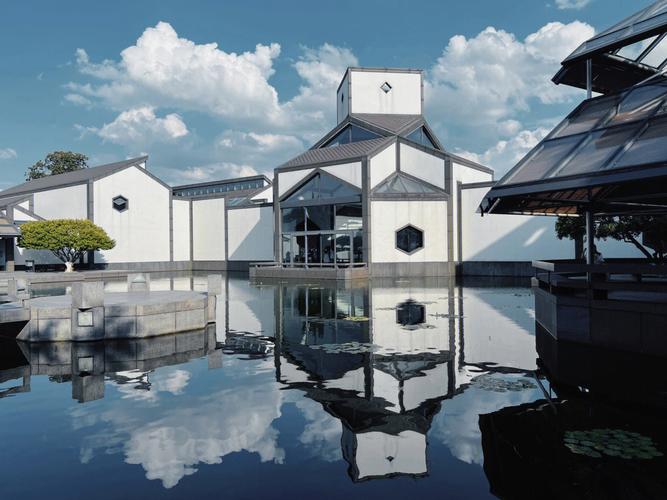
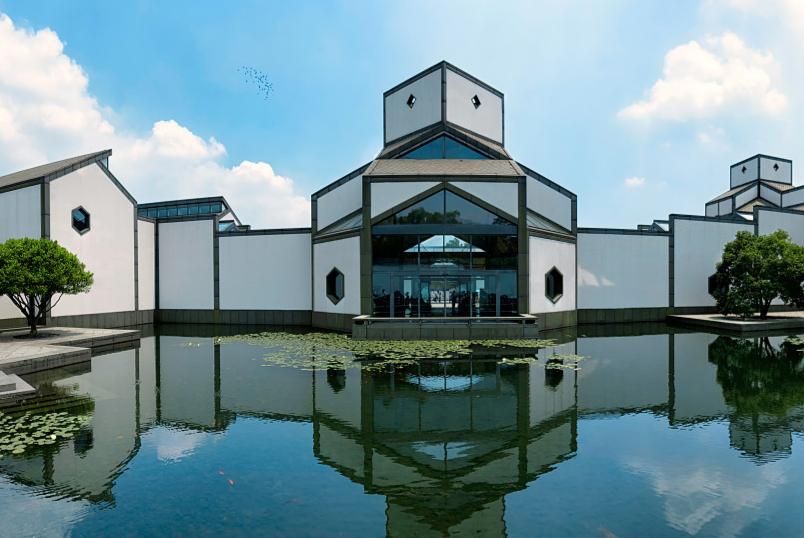
Featuring a southern Chinese architectural style, Suzhou Museum is well-equipped with advanced service facilities and combines modern and ancient elements together. Designed by the famous architect Ieoh Ming Pei, Suzhou Museum is a historical and artistic museum in Suzhou, sitting on the very site of the Residence of Zhongwang (Li Xiucheng, a leading general of Taiping Heavenly Kingdom), and it’s now listed as one of the key cultural relic units under China’s state protection. Suzhou Museum covers an area of 2200 square meters, displaying Chinese paintings and calligraphies, porcelains, gold and silver wares, jade wares and precious stones.
1. Attraction Highlights
· The ultimate architectural art, the final masterpiece of I.M. Pei, with the design concept of "Chinese but new, Suzhou but new", integrating the gardening techniques of Suzhou classical gardens into modern architecture. The building is based on white walls and black tiles, using steel structure and glass curtain wall to replace the traditional wooden structure bricks and tiles, which not only retains the charm of Jiangnan architecture, but also is full of modern sense. The rockery, geometric pond, bamboo forest path, and light and shadow atrium in the garden are exquisitely designed, perfectly integrating architecture, landscape, light and shadow, known as "a museum that is an exhibit itself".
· Rich collection of cultural relics. Suzhou Museum has a collection of more than 40,000 cultural relics, from ancient times to the Ming, Qing and Republic of China, focusing on unearthed cultural relics in Wu area, Ming and Qing calligraphy and paintings, and Jiangnan handicrafts. It has four fixed exhibition halls: "Wu Treasures", "Wu Pagoda National Treasures", "Wu Elegance", and "Wu School Calligraphy and Painting". The town hall treasures include national treasure-level cultural relics such as the Pearl Relic Pagoda, the Secret Color Porcelain Lotus Bowl, the Seven Gentlemen Painting, and Shen Zhou's paintings. It is the core place to fully understand the history of Wu culture.
· Perfect integration with classical gardens. The new Suzhou Museum is adjacent to the Humble Administrator's Garden and the Zhongwang Mansion of the Taiping Heavenly Kingdom. The Zhongwang Mansion is the most complete preserved Taiping Heavenly Kingdom historical building in the country, and also a part of Suzhou Museum. Tourists can visit the classical gardens and ancient buildings of the Zhongwang Mansion while visiting the museum, and feel the collision and integration of modern architecture and classical gardens.
· Rich temporary exhibitions and cultural activities. Suzhou Museum holds many high-quality temporary exhibitions every year, covering calligraphy and painting, cultural relics, contemporary art and other fields. At the same time, it regularly holds cultural activities such as lectures, workshops, and intangible cultural heritage experiences, which is the core platform for Suzhou cultural and artistic exchanges.
2. Best Time to Visit
· Season: Suitable for all seasons, open at constant indoor temperature throughout the year, not affected by the weather, and an excellent destination for visiting Suzhou on rainy days.
· Time: Within 1 hour after opening (9:00-10:00), or 2 hours before closing (14:00-16:00), there are fewer tourists, you can visit the exhibition and building quietly; on a sunny morning, the sun forms light and shadow through the glass curtain wall, which is the golden time to shoot the museum building.
3. Travel Tips
· Ticket Information: Open for free, you need to make an appointment 1-7 days in advance on the official WeChat account of Suzhou Museum, by time period. No appointment, no admission.
· Opening Hours: Tuesday to Sunday 9:00-17:00 (admission stops at 16:00), closed every Monday (except statutory holidays).
· Tour Suggestion: 2-2.5 hours is recommended for the whole tour. First visit the building and atrium landscape, then visit the fixed exhibition halls in the order of "Wu Treasures - Wu Pagoda National Treasures - Wu Elegance - Wu School Calligraphy and Painting", and finally visit the Zhongwang Mansion area.
· Photo Tips: It is forbidden to take photos with flash and tripod in the exhibition hall. You can take photos freely in the public area of the building, and respect the museum visiting etiquette.
· How to get to Suzhou Museum: take bus No. 112
4. Surrounding Facilities and Attractions
· Catering: There is a cafe and tea house in the museum, providing drinks and light meals; there are many Su-style cuisine restaurants, Su-style noodle shops and snack shops within 1 km around, where you can taste authentic Suzhou flavor.
· Linked Attractions: It is within 10 minutes' walking distance from Humble Administrator's Garden, Lion Grove Garden and Pingjiang Road Historical Block. You can plan a one-day cultural tour of Suzhou Ancient City in series.
5. Related Activities
· Many high-quality temporary exhibitions are held every year, covering ancient cultural relics, calligraphy and painting, contemporary art, intangible cultural heritage and other fields, which is the core platform for Suzhou art exhibitions.
· Regular academic lectures, cultural salons, intangible cultural heritage handicraft workshops, youth science education and other activities are held to popularize Wu culture and art knowledge to tourists of different ages.
· Hanfu garden tour, Jiangnan elegant gathering, traditional festival experience and other activities are held on holidays, allowing tourists to deeply feel Suzhou traditional culture in the museum.
 Discover Suzhou: 2-Day Local & Private Tour Experience
 Immersive Suzhou Day Tour: Exploring Tongli Water Town Tour From Suzhou
Zhouzhuang Water Town
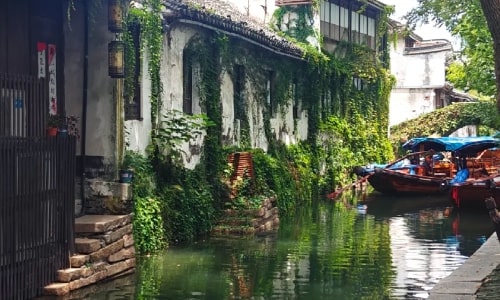
Zhouzhuang gets the fame of one of six famous water towns in China, lies at the middle between Shanghai and Suzhou, is an ancient town of Kunshan city. It abounds with rivers and lakes, has a history of more than 900 years old with many houses built in the Ming and Qing Dynasties. The ancient Zhouzhuang water town is noted for its profound cultural background, the well preserved ancient residential houses, the elegant watery views, and the strong locally colored traditions and customs. There are about 100 houses with courtyards and 60 of them have arch gateways made by carved bricks. Largely due to these waterways, the town avoided the most of the chaos and wars that raged at the time. Because of the peace enjoyed there, most of the architectural structures have remained basically intact. All those make a visit most enjoyable. also, one can enjoy the fairyland atmosphere of the evenings.
1. Attraction Highlights
· Complete water town ancient town pattern. Zhouzhuang is surrounded by water on all sides, with crisscross rivers in the ancient town, forming a "well"-shaped water system. Streets are built along the river, and dwellings are built near the water. More than 60% of the buildings in the town still retain the style of the Ming and Qing Dynasties, perfectly presenting the Jiangnan water town artistic conception of "small bridges, flowing water, and families".
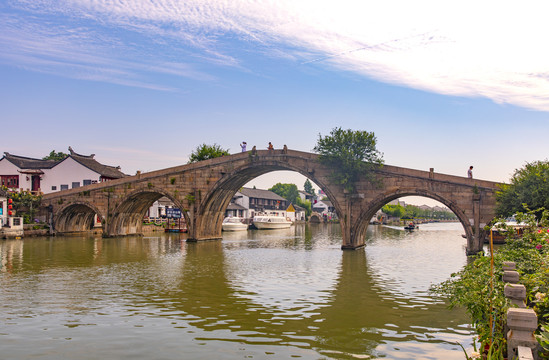
· Many ancient bridges and historical monuments. There are 14 ancient bridges built in the Yuan, Ming and Qing Dynasties in the ancient town. Among them, the Twin Bridges (Key Bridge) is the landmark of Zhouzhuang, famous all over the world for the painter Chen Yifei's Memory of Hometown. There are also famous ancient bridges such as Fu'an Bridge, Taiping Bridge, and Zhenfeng Bridge. Each bridge has a long history and legendary stories. There are also many historical monuments in the ancient town, such as Shen Hall, Zhang Hall, Former Residence of Shen Wansan, Quanfu Temple, and Milou Tower, which fully show the history and culture of Zhouzhuang.
· Profound Jiangnan business culture. Zhouzhuang is the birthplace of Shen Wansan, the richest man in the south of the Yangtze River. The merchant culture, water transport culture, and water town business culture here are profound. Shen Hall and Former Residence of Shen Wansan fully show the legendary life of Shen Wansan and the development process of Jiangnan business culture.
· Unique water town folk culture. Zhouzhuang retains many traditional folk customs such as Datiancai, Yaokuai Chuan, Grandma Tea, and water town marriage customs. Regular folk performances are held to allow tourists to immerse in the folk culture of Jiangnan water town.
2. Best Time to Visit
· Season: March-May in spring and September-November in autumn, with pleasant climate and beautiful water town scenery, which is the best season for visiting; traditional festivals such as Spring Festival, Lantern Festival, Mid-Autumn Festival, the ancient town will hold large-scale folk activities, with a full sense of atmosphere.
· Time: 7:00-9:00 in the morning, there are very few tourists, you can feel the water town life of the locals and enjoy the quiet of the ancient town alone; 17:00-21:00 in the evening, when the lights are on, the night water town atmosphere of the ancient town is extremely beautiful, which is the golden time for visiting.
3. Travel Tips
· Ticket Information: 100 RMB/person, the ticket includes all attractions in the ancient town, valid for 3 days, you can enter and exit the ancient town many times, you can make an appointment and buy tickets online in advance.
· Opening Hours: The ancient town is open 24 hours a day, and the internal attractions are open from 7:30 to 21:00.
· Tour Suggestion: 3-4 hours is recommended for the whole tour. Recommended tour route: Ancient Archway - Zhenfeng Cultural Street - Twin Bridges - Zhang Hall - Shen Hall - Fu'an Bridge - South Lake Qiuyue Garden. You can take a sculling boat to tour the ancient town water system and immerse in the water town style.
· Accommodation Recommendation: It is recommended to stay in the ancient town for one night. There are very few tourists in the ancient town in the early morning and night, and you can feel the most original water town life. There are many accommodation options in the ancient town, such as high-end boutique homestays, characteristic water town inns, and budget hotels.
Tongli Water Town
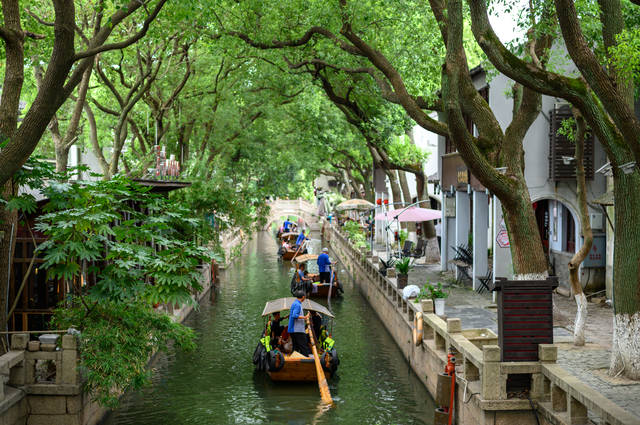
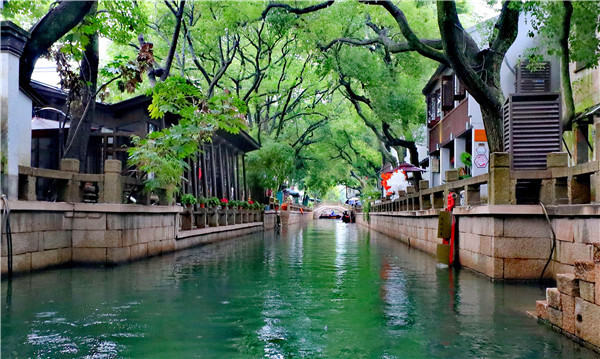
Tongli water town covers an area of 24 square miles (63 square kilometers) and has a population of over 33 thousand. It was established in the Song Dynasty, has a history of over 1,000 years, rich in cultural heritage. Also, Tongli is one of six famous water towns in east China with Zhouzhuang water town, Wuzhen water town, Luzhi water town, Nanxun water town and Xitang water town. For its long history and special beauty, Tongli water town is a fantastic travel destination where you can spend a marvelous holidays or learn traditional Chinese culture. Walk around Tongli, enjoy its rivers, streets, bridges, civil residences, and gardens are integrated perfectly as one, also you can be able to taste daily life in Tongli.
1. Attraction Highlights
· The World Cultural Heritage Retreat and Reflection Garden is the core landmark of Tongli. It was built during the Guangxu period of the Qing Dynasty by Ren Lansheng, an official who was dismissed from office. It takes the meaning of "retreat and reflect on mistakes", and is the pinnacle of small private gardens in the south of the Yangtze River. The garden covers an area of only 9.8 mu, but it perfectly integrates residences, ancestral halls, gardens and courtyards. It is famous for the "water-adjacent garden". All buildings are built near the water, as if floating on the water, with the ultimate garden art. It was included in the World Cultural Heritage List in 1997.
· The original ecological water town life atmosphere. There are still a large number of local residents living in Tongli Ancient Town, without excessive commercialization. The old streets, alleys and dwellings in the ancient town retain the most original Jiangnan water town life. The morning vegetable market, the grandma washing clothes by the river, the old people drinking tea and chatting in the teahouse, everywhere is the local atmosphere of the Jiangnan water town. It is the ancient town with the strongest life atmosphere among the six major water towns in the south of the Yangtze River.
· Dense ancient bridge water system. Tongli Ancient Town is surrounded by five lakes. There are 15 crisscross rivers in the ancient town, dividing the ancient town into 7 small islands, and 49 ancient bridges connect the small islands in series, forming a unique pattern of "one water around the town, every household near the water". It is one of the ancient towns with the highest bridge density in the Jiangnan water town.
· Rich historical monuments and humanistic heritage. In addition to the Retreat and Reflection Garden, there are many historical monuments in the ancient town, such as Jiayin Hall, Chongben Hall, Gengle Hall, Three Bridges, Luoxing Island, and Former Residence of Chen Qubing. Among them, the Three Bridges (Taiping Bridge, Jili Bridge, Changqing Bridge) are the landmark landscape of Tongli. The local has a traditional folk custom of "walking the three bridges", which means peace and auspiciousness, and is the core representative of Tongli's folk culture.
2. Best Time to Visit
· Season: March-May in spring and September-November in autumn, with pleasant climate and beautiful water town scenery, which is the best season for visiting.
· Time: 6:00-8:00 in the morning, you can feel the water town life of the locals and enjoy the quiet of the ancient town alone; 17:00-20:00 in the evening, when the lights are on, the night life atmosphere of the ancient town is full, which is the golden time for visiting.
3. Travel Tips
· Ticket Information: 100 RMB/person, the ticket includes all attractions in the ancient town (including Retreat and Reflection Garden), valid for 2 days, you can enter and exit the ancient town many times, you can make an appointment and buy tickets online in advance.
· Opening Hours: The ancient town is open 24 hours a day, and the internal attractions are open from 7:30 to 17:30.
· Tour Suggestion: 3-4 hours is recommended for the whole tour. Recommended tour route: Ancient Town Entrance - Retreat and Reflection Garden - Jiayin Hall - Chongben Hall - Three Bridges - Gengle Hall - Luoxing Island. You can take a sculling boat to tour the ancient town water system and immerse in the water town style.
· Transportation Guide: Get off at Tongli Station of Suzhou Metro Line 4, transfer to Bus No.725 to reach the entrance of the ancient town, the journey is about 30 minutes, with extremely convenient transportation; you can also take a direct bus from Suzhou South Bus Station, the journey is about 1 hour.
Luzhi Water Town
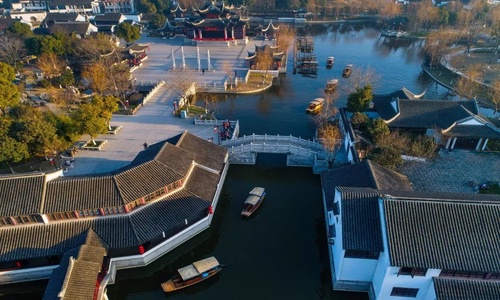
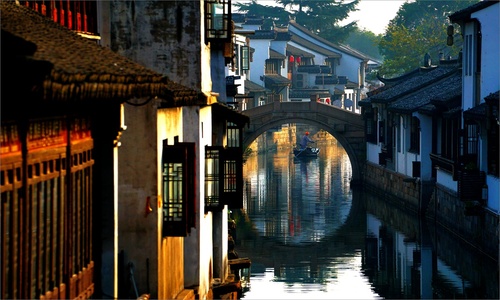
Located to the east of Suzhou, Luzhi water town is one of 6 famous water towns in China. Luzhi was also known as Puli, but in the Qing Dynasty it was officially re-named Luzhi. Luzhi water town is one of the best preserved old towns in China with a history of more than 1400 years, along with its old canals and streets. Luzhi town is noted for several historical and cultural sites, such as Baosheng temple, the Wansheng Rice Company and the White Lotus Flower Temple of the North Song dynasty. The town's most notable features are its numerous quaint stone bridges, which were built in the Song, Yuan, Ming, and Qing dynasties. Due to this, Luzhi has the reputation of being the "Museum of Ancient Chinese Bridges". A walk in the ancient town Luzhi is said to be a walk into history frozen in time, tranquil and serene.
1. Attraction Highlights
· "Jiangnan Ancient Bridge Museum", the core feature of Luzhi Ancient Town is the dense ancient bridges. There are 41 ancient bridges built in the Song, Yuan, Ming and Qing Dynasties in the ancient town. The bridge density is far higher than that of Zhouzhuang and Tongli, and it is the ancient town with the highest density of ancient bridges in China. These ancient bridges have different shapes, including arch bridges, flat bridges, twin bridges, sister bridges, etc. Each bridge has a long history and exquisite carvings, which fully show the artistic achievements of ancient Chinese bridge architecture. Among them, Dongmei Bridge, Zhengyang Bridge, Hefeng Bridge are classic representatives of Jiangnan ancient bridges.
· The thousand-year-old ancient temple Baosheng Temple is the core landmark of Luzhi. It was first built in the 2nd year of Tianjian in the Liang Dynasty of the Southern Dynasties (503 AD), with a history of more than 1,500 years. It is one of the four famous temples in the south of the Yangtze River. The temple preserves 9 arhat sculptures created by the Tang Dynasty sculpture master Yang Huizhi, known as "national treasure-level cultural relics", which is the pinnacle of ancient Chinese sculpture art. There are also many historical monuments such as thousand-year-old ginkgo, ancient scripture pillars, and Lu Guimeng's tomb in the temple.
· The original ecological water town style, without excessive commercialization. The commercialization degree of Luzhi Ancient Town is much lower than that of Zhouzhuang and Tongli. The ancient town is still dominated by the life of local residents. The old streets, alleys and dwellings retain the most original Jiangnan water town life, without noisy bars and Internet-famous shops. Everywhere is the quiet and local atmosphere of the Jiangnan water town. It is the best choice to avoid the flow of people and feel the original ecological water town.
· Profound humanistic heritage. Luzhi is the seclusion place of Tang Dynasty poet Lu Guimeng, and the hometown of modern educator Ye Shengtao. The Ye Shengtao Memorial Hall, Lu Guimeng's Former Residence, and Wang Tao Memorial Hall in the ancient town fully show the humanistic history of Luzhi. At the same time, Luzhi is also the birthplace of Suzhou intangible cultural heritage water town clothing. Luzhi water town women's clothing is known as "Jiangnan Hanfu", which is included in the national intangible cultural heritage list, and is the living inheritance of Jiangnan folk culture.
2. Best Time to Visit
· Season: March-May in spring and September-November in autumn, with pleasant climate and beautiful water town scenery, which is the best season for visiting.
· Time: 8:00-10:00 in the morning, there are very few tourists, you can quietly feel the original ecological life of the ancient town; 15:00-17:00 in the afternoon, with soft light, which is the golden time for shooting ancient bridges and water town scenery.
3. Travel Tips
· Ticket Information: The public area of the ancient town is open for free. The joint ticket for internal attractions (Baosheng Temple, Ye Shengtao Memorial Hall, Shen House, Xiao House, etc.) is 78 RMB/person. You can buy tickets for individual attractions separately, or make an appointment for the joint ticket online in advance.
· Opening Hours: The ancient town is open 24 hours a day, and the internal attractions are open from 8:00 to 17:00 (admission stops at 16:30).
· Tour Suggestion: 2-3 hours is recommended for the whole tour. Recommended tour route: Ancient Town Entrance - Baosheng Temple - Ye Shengtao Memorial Hall - Jiangnan Cultural Park - Shen House - Xiao House - Ancient Bridge Group. Focus on checking in Baosheng Temple and Ancient Bridge Group to feel the history and original ecological style of the ancient town.
· Transportation Guide: Get off at Luzhi Station of Suzhou Metro Line 11, transfer to Bus No.523 to reach the entrance of the ancient town, the journey is about 20 minutes; you can also take Bus No.18 directly from Suzhou North Bus Station to the ancient town, the journey is about 1 hour.
· Peak Avoidance Tip: The number of tourists in the ancient town is much lower than that in Zhouzhuang and Tongli. It will not be overcrowded on weekends. Going on weekdays can enjoy the quiet of the ancient town alone, which is an excellent choice to avoid the flow of people in Suzhou's popular attractions.
Other Worthwhile Attractions
If you have more time, want to avoid the crowds of popular attractions, and unlock a more niche, more original, and more local characteristic travel experience in Suzhou, these hidden treasures and characteristic cultural experiences are absolutely not to be missed. They are the local private Suzhou highlights, which allow you to feel the most authentic Gusu life.
1. Yipu Garden
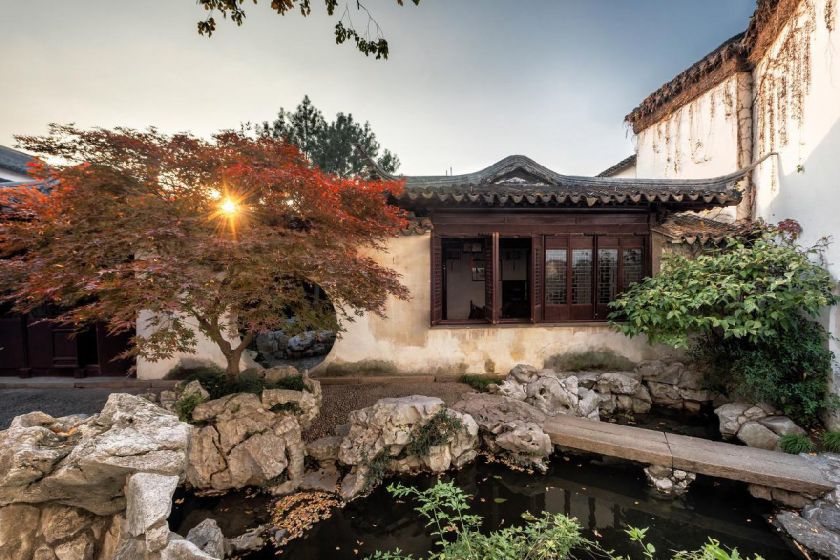
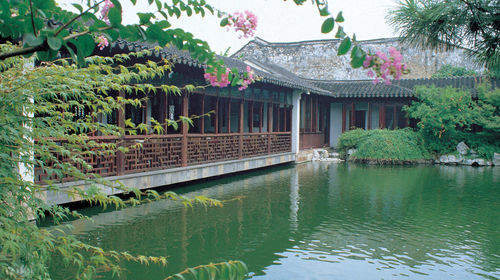
Yipu Garden is the most niche World Cultural Heritage garden in Suzhou. It was first built in the Ming Dynasty and is a model of Suzhou literati gardens. It is hidden deep in the alleys of Suzhou Ancient City, with almost no tour groups and mostly locals. The garden is famous for its minimalist garden style. A pool of clear water, a rockery, and several halls contain the purest artistic conception of Jiangnan gardens. The Ruyu Pavilion in the garden is the only existing Ming Dynasty wooden pavilion in Suzhou. The tea house near the lake is a gathering place for local old Suzhou people to drink tea and chat, with extremely high cost performance. It is an excellent choice to avoid the crowds and feel the authenticity of Suzhou gardens.
· Ticket Information: 10 RMB/person
· Opening Hours: From March 1st to October 31st each year: ticket checking begins at 7:30 AM, entry stops at 5:00 PM, and the park closes at 5:30 PM; From November 1st to the end of February of the following year: ticket checking begins at 7:30 AM, entry stops at 4:30 PM, and the park closes at 5:00 PM.
2. Canglang Pavilion & Keyuan Garden
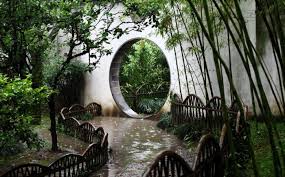
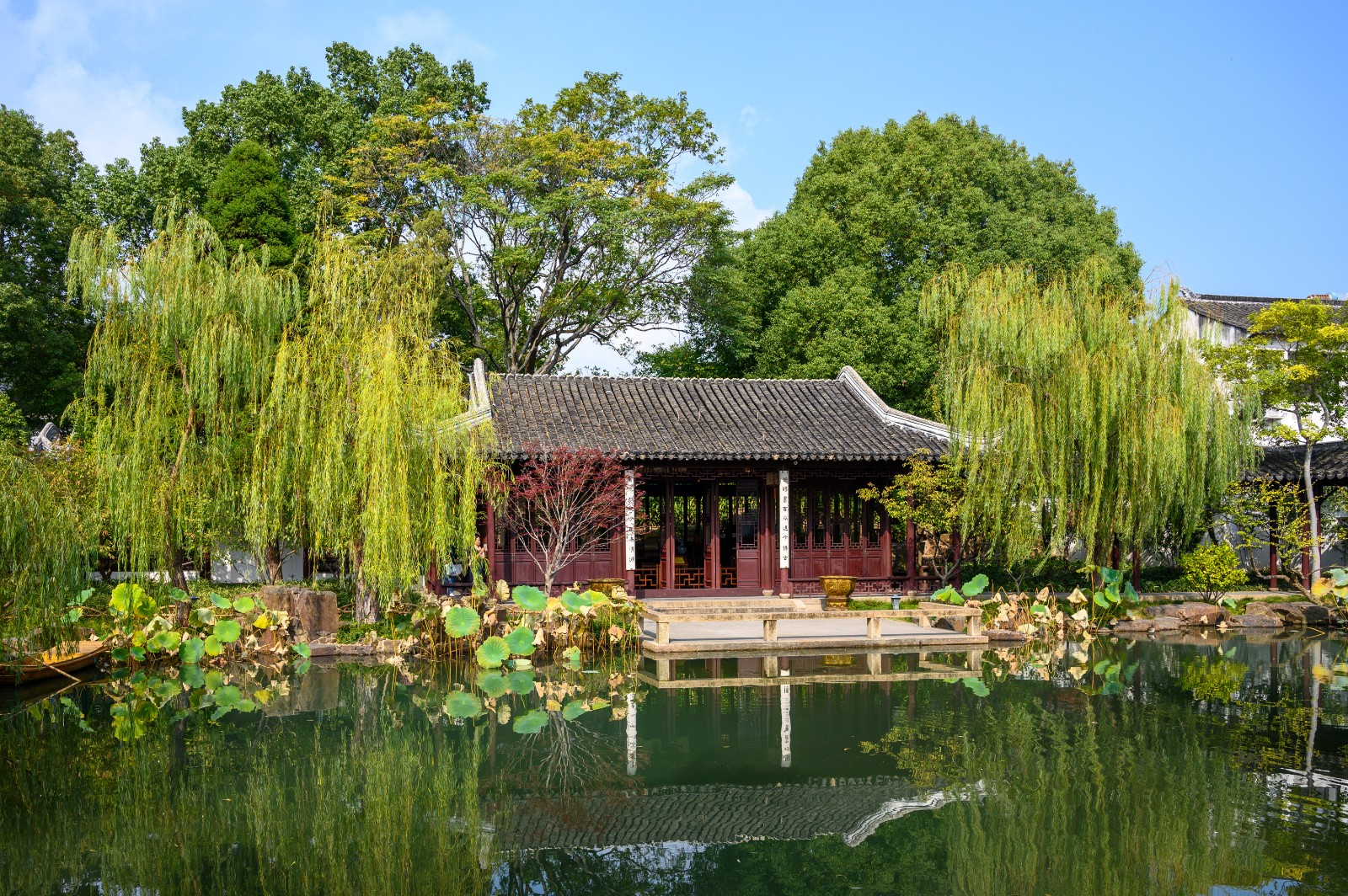
Canglang Pavilion is the oldest existing garden in Suzhou. It was first built in the Northern Song Dynasty and is one of the Four Great Gardens of Suzhou. It was included in the World Cultural Heritage in 1997. It is famous for the art of "borrowed scenery". The clear water outside the garden is integrated with the landscape inside the garden, realizing the ultimate gardening technique of "scenery outside the garden, garden in the scenery". The Five Hundred Sages Temple in the garden records hundreds of celebrities in Suzhou's history, with extremely profound cultural heritage. The adjacent Keyuan Garden is the only existing academy garden in Suzhou, separated from Canglang Pavilion by a wall. It was first built in the Song Dynasty and was the former site of Zhengyi Academy in Suzhou in the Qing Dynasty. The garden is elegant and quiet, with a strong scholarly atmosphere, and almost no tourists. It is an excellent place to feel the culture of Suzhou academies.
· Ticket Information: Canglang Pavilion is 15 RMB/person; Keyuan Garden is 20 RMB/person.
· Opening Hours: From March 1st to October 31st each year: ticket checking begins at 7:30 AM, entry stops at 5:00 PM, and the park closes at 5:30 PM; From November 1st to the end of February of the following year: ticket checking begins at 7:30 AM, entry stops at 4:30 PM, and the park closes at 5:00 PM.
3. Huanxiu Mountain Villa
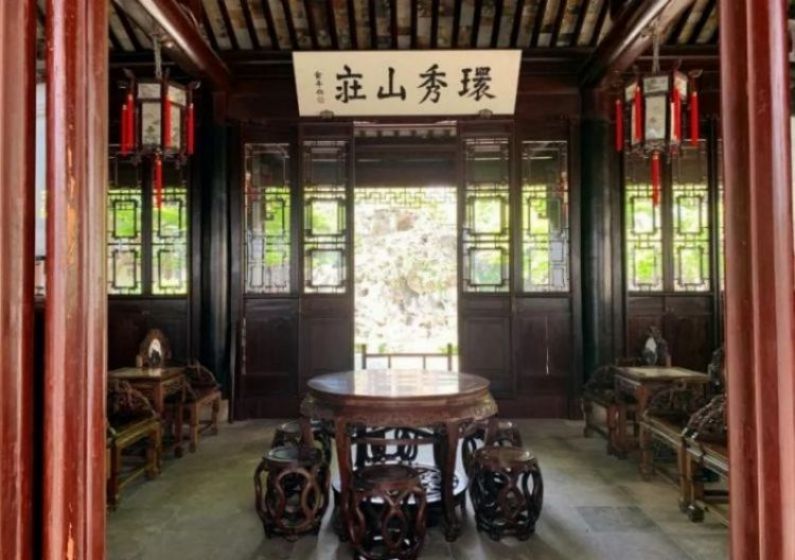
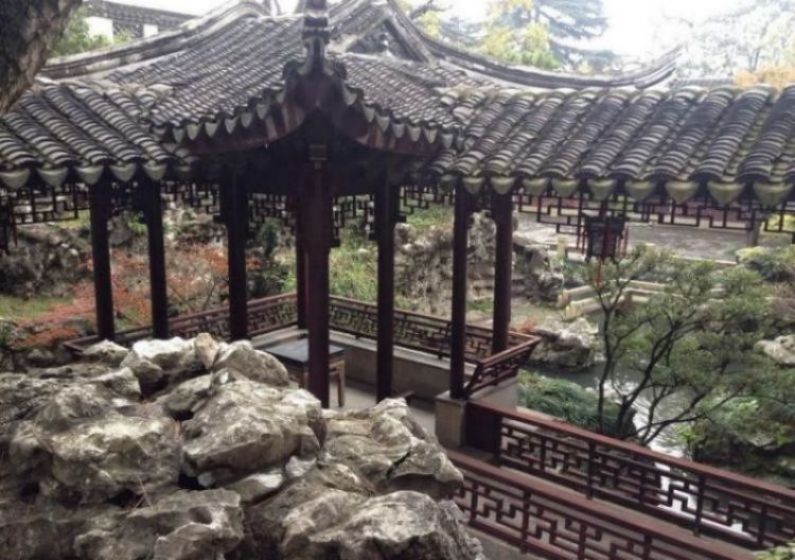
Huanxiu Mountain Villa is one of the World Cultural Heritage gardens in Suzhou. It is famous all over the world for its rockery art, known as "the crown of Suzhou rockeries". The rockery in the garden was built by Ge Yuliang, a master of rockery stacking in the Qing Dynasty. It covers an area of only half an mu, but it creates the artistic conception of thousands of rocks and valleys, mountains multiply and streams double back. It is the pinnacle of rockery stacking art in Chinese classical gardens. The garden is hidden in the alleys of Suzhou Ancient City, with a very small scale and very few tourists, but it contains the most extreme gardening skills of Suzhou gardens, and is a niche treasure that garden lovers must check in.
· Ticket Information: 15 RMB/person
· Opening Hours: From March 1st to October 31st each year: ticket checking begins at 7:30 AM, entry stops at 5:00 PM, and the park closes at 5:30 PM; From November 1st to the end of February of the following year: ticket checking begins at 7:30 AM, entry stops at 4:30 PM, and the park closes at 5:00 PM.
4. Couple's Retreat Garden
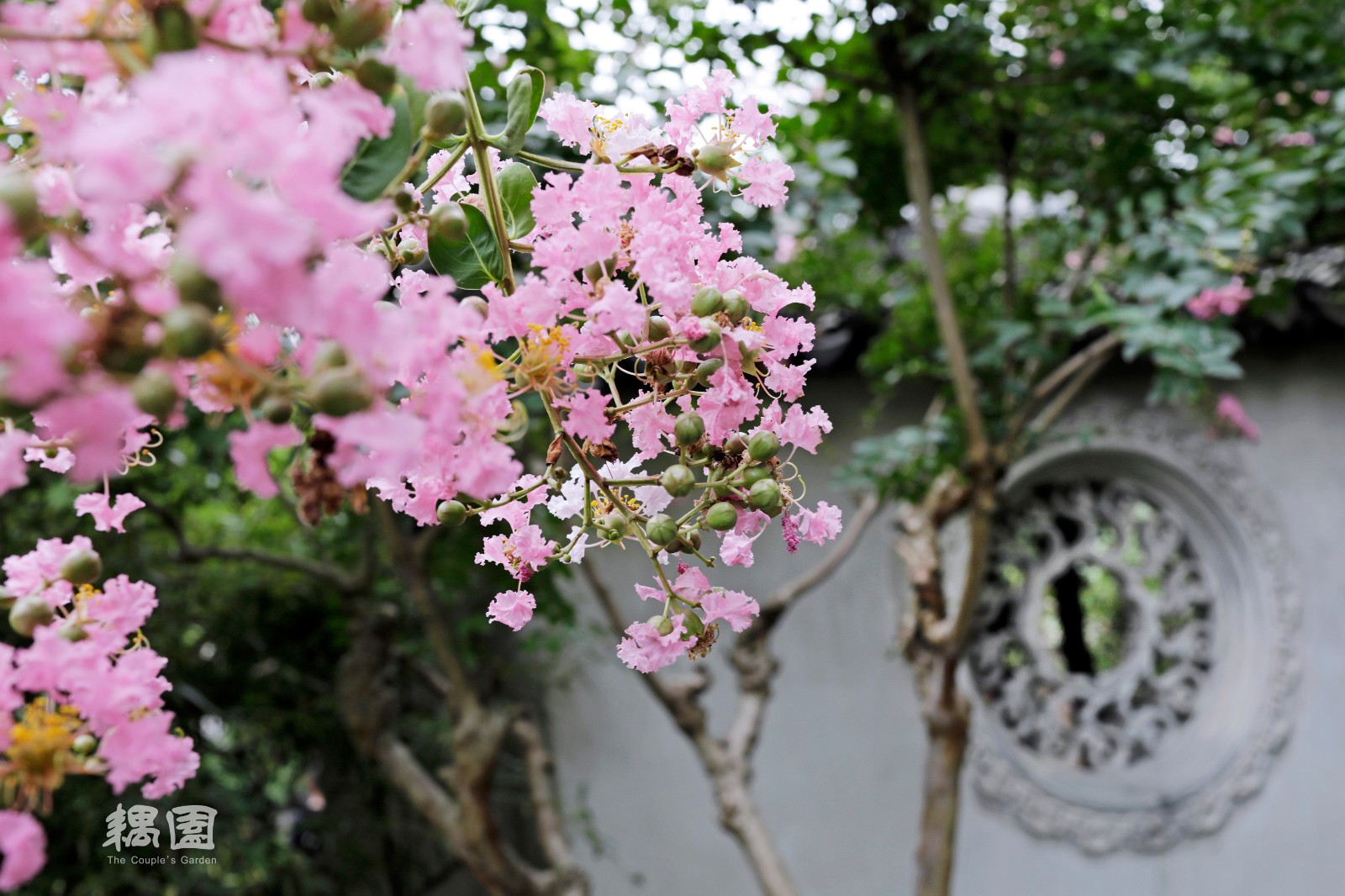
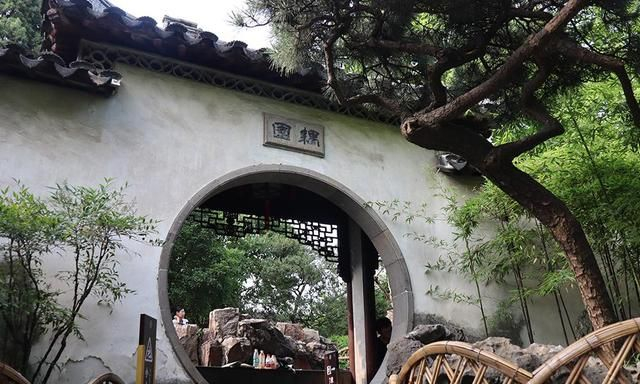
Couple's Retreat Garden is one of the World Cultural Heritage gardens in Suzhou. It was first built in the Qing Dynasty, with the theme of "love garden". The garden name "Couple" means husband and wife retiring together, and it is the only garden with symmetrical layout in Suzhou. The east garden and west garden are symmetrically distributed with the residence as the center, hiding the romance and elegance of ancient literati couples. The garden is adjacent to Pingjiang Road, but it is quiet in the middle of the noise, with very few tourists. The landscape layout in the garden is exquisite. The yellow stone rockery is a classic work of Suzhou gardens. It also retains the ancient private wharf, which can be reached by boat directly to Pingjiang Road. It is an excellent choice to unlock the niche gardens around Pingjiang Road.
· Ticket Information: 20 RMB/person
· Opening Hours: From March 1st to October 31st each year: ticket checking begins at 7:30 AM, entry stops at 5:00 PM, and the park closes at 5:30 PM; From November 1st to the end of February of the following year: ticket checking begins at 7:30 AM, entry stops at 4:30 PM, and the park closes at 5:00 PM.
5. Shantang Street Historical Block
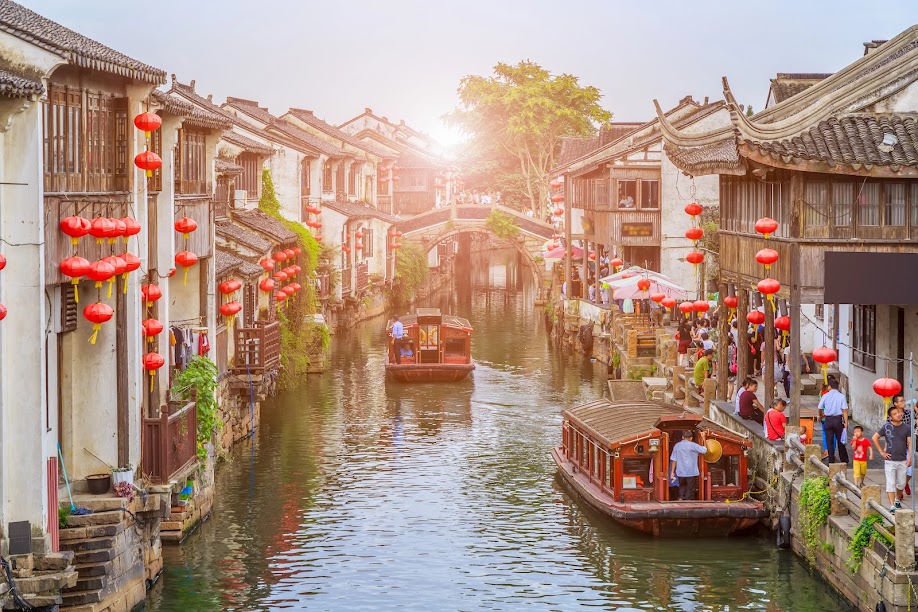
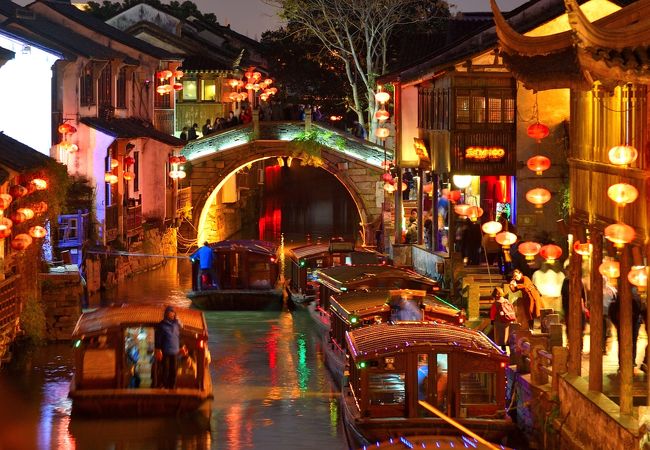
Shantang Street is known as "the No.1 Street in Gusu". It was first built in the Tang Dynasty, presided over by Bai Juyi, with a total length of about 7 li, so it is called "Seven Li Shantang to Tiger Hill". It is one of the most famous historical blocks in Suzhou Ancient City. The eastern section of Shantang Street is a lively commercial street, while the western section is the original ecological water town dwellings, with almost no commercialization, white walls and black tiles, people living by the water, hiding the most authentic Suzhou water town life. It is recommended to start from the eastern section of Shantang Street, walk west along the Shantang River to Tiger Hill. The ancient bridges, ancient houses, old streets and water town scenery along the way are extremely beautiful, with almost no tourists throughout the whole journey. It is an excellent route to feel the original ecological water town of Suzhou.
· Ticket Information: Free
· Opening Hours: Open 24 hours
6. Xiyuan Temple
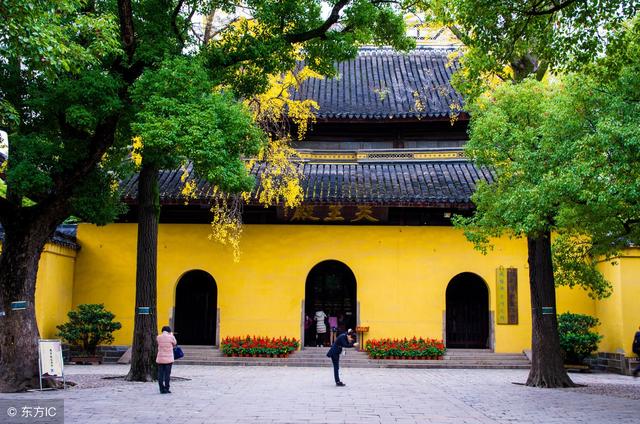
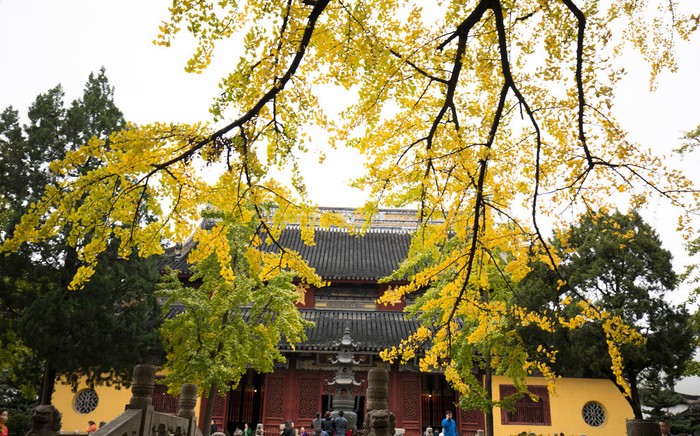
Xiyuan Temple is a "private treasure" of Suzhou locals. It was first built in the Yuan Dynasty. It is the most popular Buddhist temple in Suzhou, without excessive commercialization. The ticket is only 5 RMB, and three sticks of incense are given as a gift. The temple has a quiet environment with towering ancient trees, and hundreds of lovely stray cats, known as "the most beautiful cat temple in Suzhou" by netizens. The vegetarian restaurant in the temple is a time-honored brand in Suzhou. Vegetarian noodles and vegetarian buns are famous in Suzhou, with extremely high cost performance. It is a gathering place for local old Suzhou people to burn incense, eat vegetarian noodles, feed cats and drink tea. If you want to feel the slow life of Suzhou locals, Xiyuan Temple is absolutely not to be missed.
· Ticket Information: 5 RMB/person
· Opening Hours: Open from 7:30 to 17:30 (ticket sales stop at 17:00).
Travel Tips
1. How to Plan Your Suzhou Trip
Suzhou's attractions are mainly divided into three sections: the core area of Suzhou Ancient City, the historical sites area in the west of the city, and the ancient water towns. You can plan your itinerary efficiently based on your travel duration, avoiding backtracking and unlocking the most comprehensive way to experience Suzhou. Below are some of the most classic and popular routes in Suzhou.
 Two Days Impressive Suzhou Gardens With Zhouzhuang Water Town Tours
 A Two-Day Trip to Suzhou: Experience the Charm of Iconic Gardens and Historical Landmarks
 Suzhou City Tours: A Day of Local Life Experience
 Suzhou Classical Garden Culture Experience Tours: Explore, Learn & Immerse in Tradition
2. Transportation Guide
The transportation in Suzhou is extremely convenient. Whether you arrive in Suzhou or travel between attractions in the city, there are a variety of transportation options available. The following is a detailed transportation guide.
· Arrive in Suzhou:
*High-speed Rail/EMU: Suzhou has four main high-speed rail stations: Suzhou Station, Suzhou North Station, Suzhou Industrial Park Station, and Suzhou New District Station. Among them, Suzhou Station is located in the core area of Suzhou Ancient City, only 2 km away from Humble Administrator's Garden and Pingjiang Road, which is the most recommended arrival station; Suzhou North Station is the main station of the Beijing-Shanghai High-speed Rail, about 15 km away from the ancient city. You can take Metro Line 2 directly to the ancient city, the journey is about 30 minutes.
*Airplane: Suzhou has no civil airport. The nearest airport is Shanghai Hongqiao International Airport, about 80 km away from Suzhou Ancient City. You can take the high-speed rail from Shanghai Hongqiao Station directly to Suzhou Station, the journey is only 25 minutes, which is extremely convenient; the second is Wuxi Sunan Shuofang International Airport, about 40 km away from Suzhou Ancient City, you can take the airport bus directly to Suzhou.
· Urban Transportation:
*Metro: Suzhou Metro has opened a number of lines, covering Suzhou Ancient City, major attractions, high-speed rail stations, and water town ancient towns. It is the most convenient way to travel in Suzhou. Metro Line 1, Line 2, Line 3, Line 4, Line 5, Line 11 can directly reach the major core attractions, the ticket price is 2-8 RMB, you can swipe Alipay and WeChat ride codes to enter the station.
*Bus: Suzhou's bus network is extremely dense, covering all attractions, the ticket price is 1-2 RMB, you can swipe Alipay and WeChat ride codes to take the bus, suitable for short-distance travel.
*Taxi/Online Car-hailing: Suzhou has a sufficient number of taxis and online car-hailing, the starting price is 12 RMB/3 km, and then 2.5 RMB per km, suitable for multi-person travel, carrying luggage, or going to attractions that are not directly accessible by metro.
*Shared Bikes/Electric Bikes: The attractions in Suzhou Ancient City are relatively close. Shared bikes and shared electric bikes are all over the streets and alleys of the ancient city. Riding to visit Pingjiang Road, Shantang Street, and ancient city alleys is an excellent way to feel Suzhou Ancient City.
*Cruise: Suzhou is a water town. There are cruise routes in Pingjiang Road, Shantang Street, and Beijing-Hangzhou Grand Canal in the ancient city. You can take a sculling boat or painted boat to tour the water town scenery, which is a unique transportation and experience method in Suzhou.
· Water Town Ancient Town Transportation:
*Zhouzhuang: There are direct tourist buses from Suzhou Railway Station and Suzhou North Bus Station, the journey is about 1.5 hours; you can also drive by yourself, the journey is about 1 hour.
*Tongli: Suzhou Metro Line 4 directly reaches Tongli Station, transfer to the bus to reach the ancient town, the journey is about 30 minutes, which is the most convenient water town ancient town by transportation.
*Luzhi: Suzhou Metro Line 11 directly reaches Luzhi Station, transfer to the bus to reach the ancient town, the journey is about 20 minutes.
3. Local Culture and Events
Suzhou is the core birthplace of Wu culture, with rich intangible cultural heritage and traditional folk activities. If you want to deeply feel the cultural heritage of Suzhou, these cultural experiences and characteristic activities are absolutely not to be missed.
· Intangible Cultural Heritage Experience:
*Kunqu Opera: Kunqu Opera is known as "the ancestor of all operas", originated in Kunshan, Suzhou. It is one of the oldest opera genres in China, and is included in the World Intangible Cultural Heritage List. Recommended check-in places: Suzhou Kunqu Opera Theatre, Kunqu Opera Teahouse on Pingjiang Road, Shantang Kunqu Opera Hall on Shantang Street. You can watch professional Kunqu Opera performances and immerse in the melodious Kunqu Opera.
*Pingtan: Suzhou Pingtan is the most representative folk art in Suzhou, sung in Wu dialect, accompanied by Pipa and Sanxian, divided into Pinghua and Tanci, which is the daily entertainment of local Suzhou people. Recommended check-in places: Pinfang Teahouse, Guangyu Shuting, Pipa Language Pingtan Teahouse on Pingjiang Road. Order a cup of Biluochun tea and listen to a Pingtan performance, which is an excellent way to experience Suzhou culture.
*Su Embroidery: Su Embroidery is one of the four famous embroideries in China, originated in Suzhou, included in the national intangible cultural heritage list, with fine stitches and exquisite patterns, which is the core representative of Suzhou silk culture. Recommended check-in places: Suzhou No.1 Silk Factory, Zhenhu Su Embroidery Town. You can watch the on-site embroidery of Su embroidery inheritors, and also experience Su embroidery handicrafts to make exclusive Su embroidery souvenirs.
*Song Brocade/Kesi: Song Brocade is known as "the crown of brocade", Kesi is known as "the saint of weaving", both are national intangible cultural heritage of Suzhou, and were the royal silk fabrics in ancient times. Recommended check-in places: Suzhou Silk Museum, Suzhou No.1 Silk Factory. You can understand the weaving skills of Song Brocade and Kesi, and feel the pinnacle of Chinese silk culture.
· Traditional Festivals and Characteristic Activities:
*Spring Festival/Lantern Festival: Major gardens and ancient towns in Suzhou will hold lantern fairs, temple fairs, and folk parade activities. The lantern fairs on Pingjiang Road, Shantang Street, and Zhouzhuang are full of atmosphere, which is an excellent time to feel the traditional New Year flavor of Suzhou.
*Suzhou International Tourism Festival: Held every April, it is the most influential cultural and tourism event in Suzhou, including Grand Canal cruise parade, folk performance, garden cultural activities and many other contents.
*Tiger Hill Flower Fair/Temple Fair: Tiger Hill Art Flower Fair is held every March-May, and Golden Autumn Temple Fair is held in September-October, which is the most representative garden and folk event in Suzhou.
*Yangcheng Lake Hairy Crab Culture Festival: Held every September-December, when Yangcheng Lake hairy crabs are launched, it is the most popular food event in Suzhou in autumn. You can go to Yangcheng Lake to taste authentic hairy crabs.
*Winter Solstice Festival: Suzhou has the tradition of "Winter Solstice is as big as the New Year". Around the Winter Solstice, every family in Suzhou will drink winter wine and have a reunion dinner, which is a unique traditional festival in Suzhou.
· Characteristic Cultural Experience:
*Garden Elegant Gathering: Major gardens in Suzhou regularly hold tea ceremony, incense ceremony, calligraphy, traditional Chinese painting experience activities, and feel the elegant life of ancient literati in the classical garden.
*Hanfu Garden Tour: Suzhou's gardens, ancient streets, and ancient towns are excellent places for Hanfu check-in. You can rent a set of Hanfu, check in at Humble Administrator's Garden, Pingjiang Road, and Zhouzhuang, and immerse in the ancient style of Jiangnan.
*Biluochun Tea Picking Experience: Every March-April, when Biluochun spring tea is launched, you can go to Dongting Mountain in Xishan, Suzhou, to experience the whole process of tea picking, tea frying, and tea tasting, and feel the tea culture of Suzhou.
Conclusion
From the Humble Administrator's Garden, the head of China's Four Great Gardens, to Tiger Hill, where the "Oriental Leaning Tower of Pisa" is located; from Hanshan Temple, which is famous all over the world for an ancient poem, to the Beijing-Hangzhou Grand Canal, which bears a thousand years of water transport history; from the historical block of "One Pingjiang Road, half of Gusu City", to Suzhou Museum, the final masterpiece of I.M. Pei; to Zhouzhuang, "China's No.1 Water Town", the original ecological Tongli and Luzhi Ancient Town, every attraction in Suzhou hides the poetry and heritage of Jiangnan, and every journey can make you feel the true meaning of "Just as there is paradise in heaven, there are Suzhou and Hangzhou on earth".
The beauty of Suzhou is hidden in the winding paths of the classical gardens, in the water-side families of the water town ancient towns, in the Pingtan and Kunqu Opera of Wu dialect, and also in the local atmosphere of the streets and alleys. Whether you are a tourist visiting Suzhou for the first time, or a travel lover who wants to deeply unlock Gusu, you can find your own poetry and beauty in this city.
Explore Your Way Holiday’s Recommended Tours.
We design private and Tailor-made Suzhou Tours customized to your style of travel at affordable local prices. We will provide a private & spacious car and a local professional tour guide with over 5 years guiding experience only work for you or your group. Transport, ticket, and dining (We find the most authentic dishes popular with locals) all we will arrange for you according your requirements. Please check our most popular tours below:
 5 Days Hangzhou Suzhou Heavenly Tour From Shanghai By High Speed Train
 9-Day Shanghai, Suzhou, Hangzhou and Huangshan Tour by Train: Discover the Heart of China’s Cultural and Natural Wonders
Are the above sample tour programs not suitable for you? Dont worry, our Suzhou tours can be tailor-made based on your requirements and budget to create unique Suzhou experiences that allow you to interact with the local people and culture. We are Suzhou travel experts who know what your guidebook and foreign agencies don't. Our enthusiastic tour expert will promptly reply you in details within 24 hours.
Suzhou is renowned as "Garden of City". It enjoys great fame for its Chinese classic garden. It is said that the gardens to the south of Yangtze River are the best in the world, and Suzhou gardens are the best among them. Suzhou attracts many visitors both home and abroad every day.
Suzhou, the cradle of Wu culture, is one of the oldest towns in the Yangtze Basin with a history of more than 2500 years. Suzhou city was synonymous with high culture and elegance, noted for its canals, thousand-year0old temples, bridges, pagodas, etc.
Each museum in Suzhou offers a unique window into a different aspect of Suzhou art and Wu culture within this city's 2500 year old lifespan. These museums also maintain a bold commitment to foster the promotion and education of Suzhou's rich history and culture into the present.
As an old city, Suzhou not only rich in culture and history, also provide many natural green parks, entertainments, shopping streets, moutains and wonderful lakes, etc. It becomes a green corridor for people to walk into the beautiful landscape and feel its natural ecology.
Wechat: YourWayHolidayAsia
24 Hours Hotline:
+86 137-3541-1378
* Authentic Experiences: Genuine local experiences that immerse you in the true essence of Suzhou and beyond.
* Safety First: Highest safety standards with secure activities and reliable transportation.
* Customizable Tours: Flexible itineraries tailored to your interests and needs.
* Local Expertise: In-depth knowledge of Suzhou and China, offering exclusive insights.
* Professional Guides: Licensed bilingual guides with over 5 years of experience.
* Comfortable Travel: Experienced drivers and well-maintained vehicles for a smooth journey.
* Sustainable Tourism:Commitment to responsible tourism and supporting local communities.
* Customer-Focused: Personalized service and continuous improvement based on your feedback.
* Free Cancellation: Cancel up to 24 hours before travel for flexibility and peace of mind.
* 24/7 Support: Round-the-clock assistance for any questions or help needed.
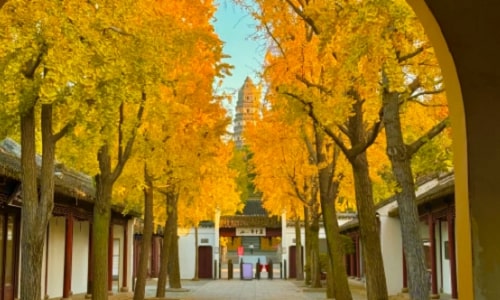 Tiger Hill (Huqiu) Travel Guide: Exploring Suzhou’s Iconic Leaning Pagoda
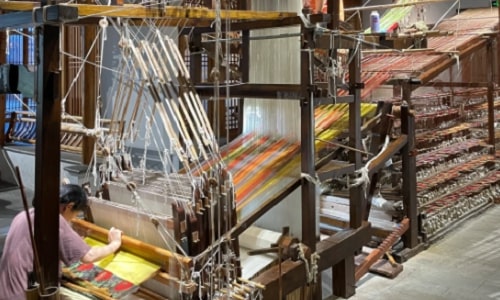 Exploring Suzhou No. 1 Silk Factory: A Journey into the Heart of China’s Silk Industry
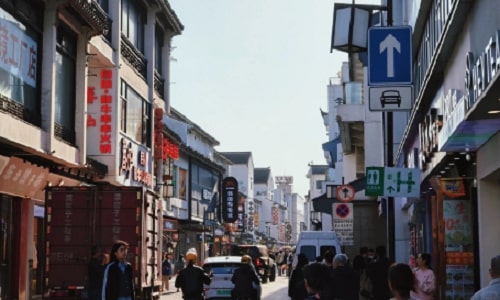 Exploring Guanqian Street in Suzhou: A Blend of Tradition, Shopping, and Local Flavors
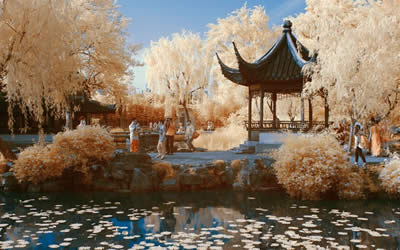 Humble Administrator’s Garden Suzhou: Complete Visitor Guide to Zhuozheng Garden, History, Highlights & Tips
 Song He Lou Suzhou: A Culinary Journey through Suzhou’s Historic Songhelou Restaurant
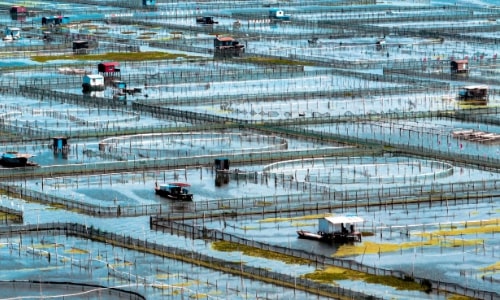 Yangcheng Lake Hairy Crab Guide: The King of Crabs in China
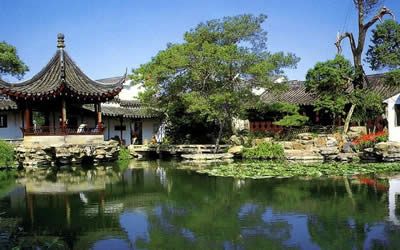 Master of the Nets Garden Suzhou: A Complete Guide to China’s Most Exquisite Classical Night Garden
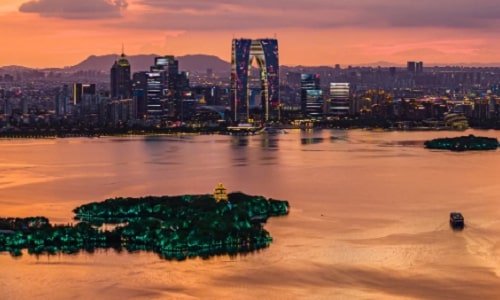 Jinji Lake Suzhou Travel Guide: What to See and Do Around Suzhou’s Modern Landmark
1 to 1 tailor-made service from our professional travel advisors for the most sophisticated
Constantly excellent reviews for attraction, hotel and service Competitive price
Local experts provide quality tours Best selected knowledgeable local guides Authentic local restaurants
7*24 hours available to create you a worry-free tour. No Hidden Fees and absolutely no pressure to buy. Secured









Copyright © 2017 Suzhouprivatetour.com All rights reserved. 浙ICP备18056007号-4
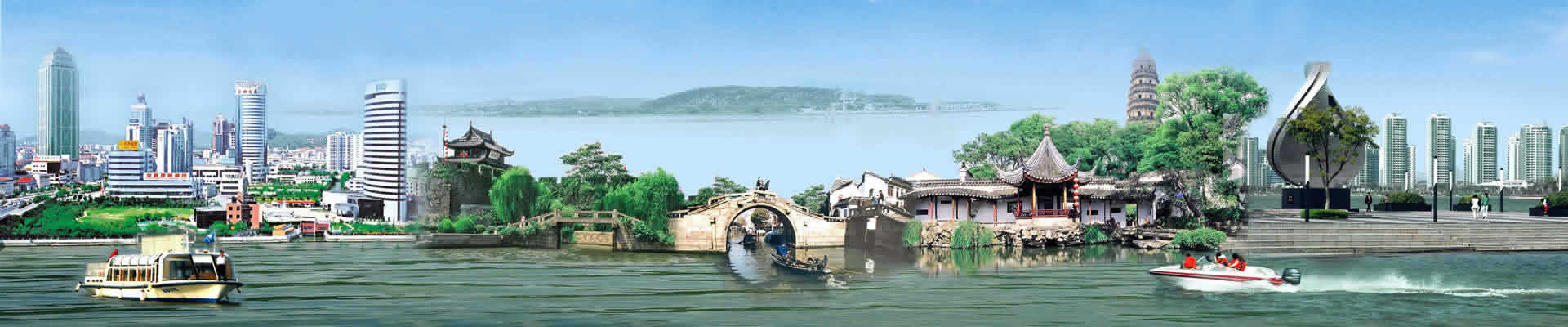






Dear Sir/Madam
We are a family of 2 adults and 3 children from South Africa.
We are visiting Shanghai and interested in spending a day in Sozhou on Friday 12 August.
What would you recommend and what would the cost be.
Replied:
Dear Matthew,
Thanks for your inquiry for Suzhou Private Tour service. We highly recommend you visit Suzhou from Shanghai by bullet train, it takes only 25 minutes for one way and costs around 35RMB. And for day tour in Suzhou, you can visit Lingering Garden, Hanshan Temple, Pingjiang Historic Street, Suzhou No.1 Silk Facoty and Panmen Gate. For the details, we will send you by email. Plz check. Feel free to let us know if you have any questions or need any help. Thanks!
Customer-care Team (Suzhou Private Tour)
Your Way Holiday - Your trusted partner for private tours in China!