24 Hours Hotline: +86 137-3541-1378
Email:[email protected]
24 Hours Hotline: +86 137-3541-1378
Email:[email protected]
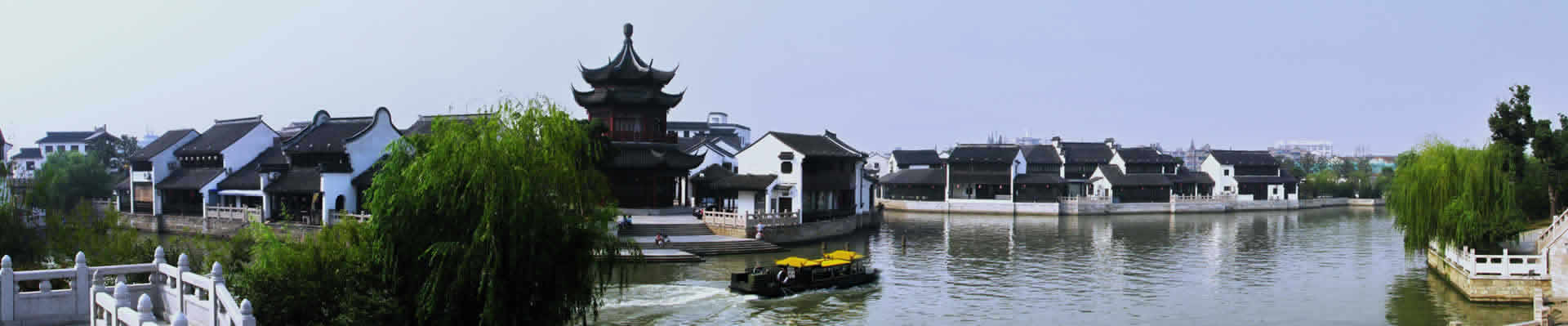
As the birthplace of Wu culture and a 3,000-year-old water town pearl nestled between Taihu Lake and the Beijing-Hangzhou Grand Canal, Wuxi’s food culture is a "living fossil" of Jiangnan culinary civilization, embodying the dietary genes of the Wu Kingdom and the flavor integration of the Grand Canal’s millennium-long commerce. From the ritual food etiquette of the Spring and Autumn Wu Dynasty, the lake food craftsmanship of the Ming and Qing canal merchants, to the iteration of folk snacks passed down through generations, the warmth of street food hides the most authentic memories of this water town. This guide is specially designed for foreign tourists, covering wuxi food, wuxi cuisine, and old Wuxi local specialties, integrating cultural interpretation and practical strategies to help you accurately experience authentic delicacies, and immerse yourself in the "flavor of Jiangnan water town".
 Wuxi Tour Highlights: From Ancient Heroes to Cherry Blossoms at Yuantouzhu
 Wuxi Taihu Lake Day Tour: Unwind with Slow Walks, Old Towns & Waterside Views
Comprehensive Guide to Wuxi's Cuisine
A. Wuxi Street Food
a. Carb Carnival: The Soul of Wuxi's Staples
Wuxi’s street food is built on a deep-rooted love for glutinous rice and wheat, with carb-forward dishes that form the heart of local daily life, from breakfast staples to all-day street snacks. Each dish carries centuries of local craftsmanship and the signature balanced sweet-savory flavor that defines authentic wuxi food.
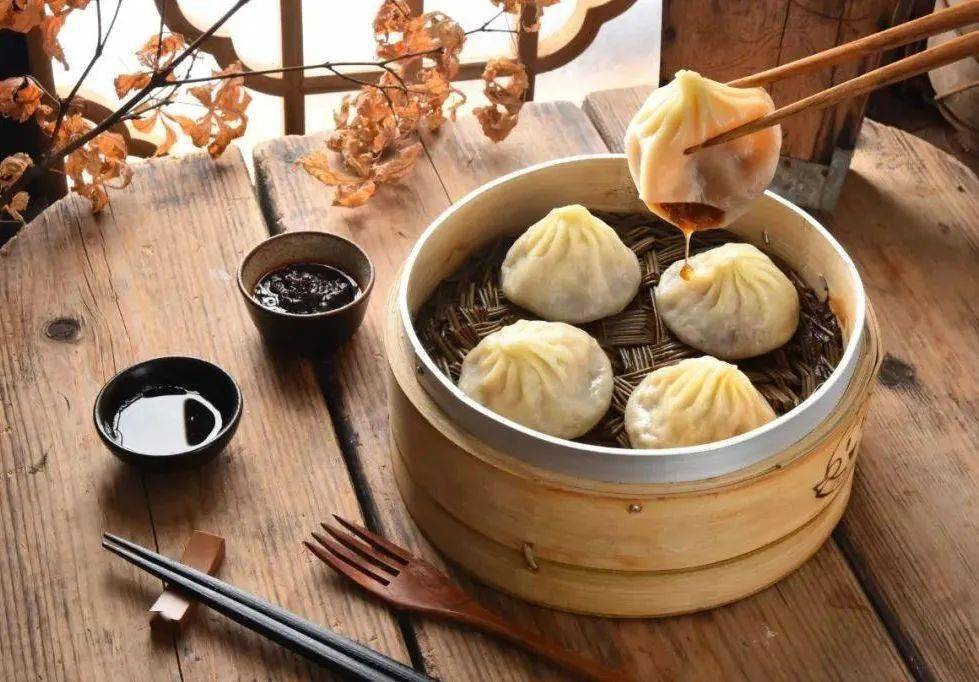
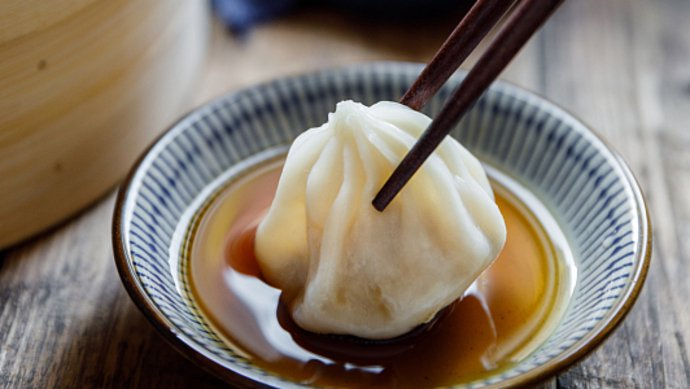
1. Wuxi Xiaolong Mantou (Wuxi Soup Dumplings)
Invented in 1863, this is the iconic signature of wuxi street food, distinct from Shanghai’s soup dumplings with a thinner, translucent wrapper, richer collagen-rich broth, and a perfectly balanced sweet-savory pork filling. Made with front leg meat of Taihu Black Pork and pork skin jelly (1:0.5 meat to jelly ratio) to create the signature juicy broth, each dumpling is hand-folded with 18 delicate folds per the intangible cultural heritage standard.
*Recommended Restaurant:
- Xishengyuan (Headquarters, Jiankang Road)
· Address: No. 87 Jiankang Road, Liangxi District, Wuxi, Jiangsu Province, China
· Phone: +86-(0510)82712177
· Opening hours (Mon to Sun): 06:30-20:00
· Price: Approximately 15–22 RMB per cage (10 dumplings) ($2.1–3.1), offering fantastic value for authentic Wuxi soup dumplings with a perfectly balanced sweet-savory flavor and rich, juicy broth.
- Yiqinyuan (Huishan Ancient Town Branch)
· Address: No. 28 Huishan Ancient Town Main Street, Huishan District, Wuxi, Jiangsu Province, China
· Phone: +86-13961878977
· Opening hours (Mon to Sun): 07:00-19:00
· Price: Approximately 12–18 RMB per cage ($1.7–2.5), with a reduced-sugar option perfect for first-time visitors to wuxi cuisine.
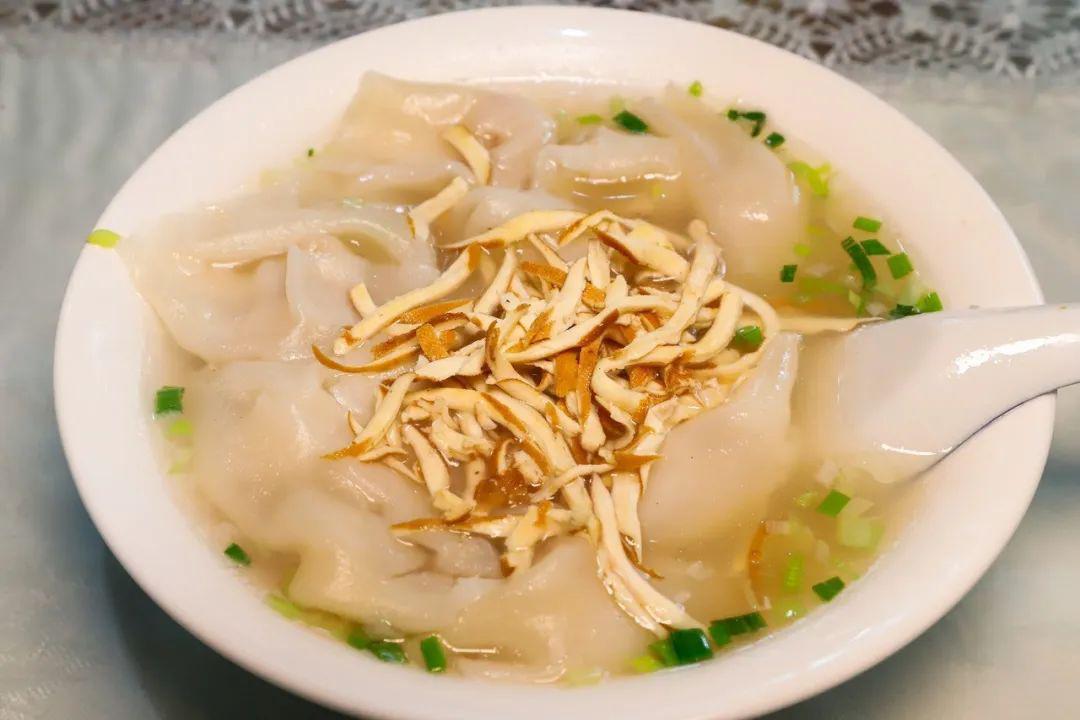
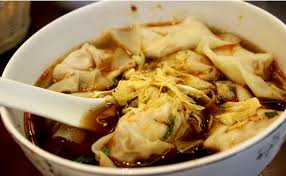
2. Wuxi Wonton
A staple breakfast and lunch dish in wuxi food, with two core styles to suit different tastes, both made with hand-pressed wrappers and fresh, house-made fillings. Red Soup Wonton features a sweet-savory soy broth and juicy pork filling, rich and flavorful with a mild sweet finish; Three Fresh Wonton uses a filling of pork, fresh Taihu white shrimp, and shepherd's purse, served in a clear chicken broth, fresh and bright with a clean umami taste.
*Recommended Restaurant:
- Xishengyuan (Jiankang Road Headquarters)
· Address: No. 87 Jiankang Road, Liangxi District, Wuxi, Jiangsu Province, China
· Opening hours (Mon to Sun): 06:30-20:00
· Price: Approximately 10–20 RMB per bowl ($1.4–2.8), with both classic red soup and three fresh styles available, plus vegetarian shepherd's purse wonton options.
- Maohua Food (Qingyang Road Branch)
· Address: No. 58 Qingyang Road, Liangxi District, Wuxi, Jiangsu Province, China
· Phone: +86-(0510)85750778
· Opening hours (Mon to Sun): 06:00-20:00
· Price: Approximately 8–15 RMB per bowl ($1.1–2.1), a 30-year-old local favorite famous for its crispy yulan cake paired with sour spicy soup and fresh three fresh wonton.
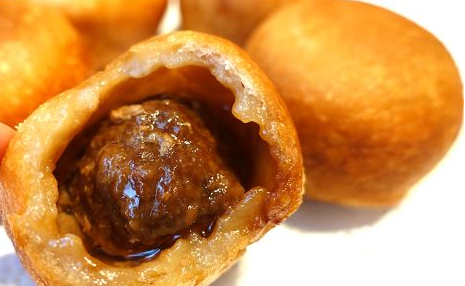
3. Yulan Cake
A 170-year-old fried street snack named after Wuxi’s city flower, the yulan magnolia, and a beloved staple of wuxi street food. Made with glutinous rice dough stuffed with juicy pork or sweet red bean paste, then deep-fried until golden and crispy, it has a crunchy exterior and soft, chewy interior that bursts with flavor in every bite.
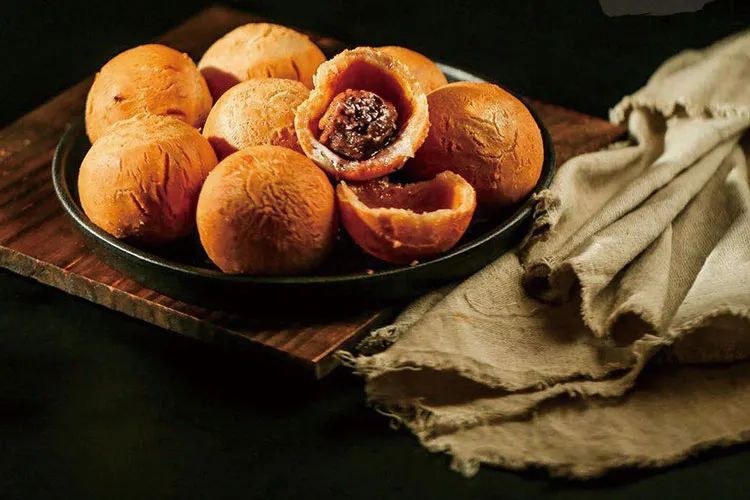
*Recommended Restaurant:
- Maohua Food (Qingyang Road Branch)
· Address: No. 58 Qingyang Road, Liangxi District, Wuxi, Jiangsu Province, China
· Opening hours (Mon to Sun): 06:00-20:00
· Price: Approximately 3–5 RMB per piece ($0.4–0.7), with a per-person average of 15 RMB for a full breakfast set of yulan cake and sour spicy soup.
4. Wuxi Silver Thread Noodles
A Jiangsu Provincial Intangible Cultural Heritage dish, the crown jewel of Wuxi’s noodle culture and a must-try staple of wuxi cuisine. Made with hand-pulled noodles as thin as silver thread (14 rounds of hand-pulling per batch), served in a clear, umami-rich chicken broth, with a smooth, bouncy texture and a mild, balanced sweet-savory flavor. It is divided into two styles: clear soup for a light taste, and red soup for a richer, sweeter finish.
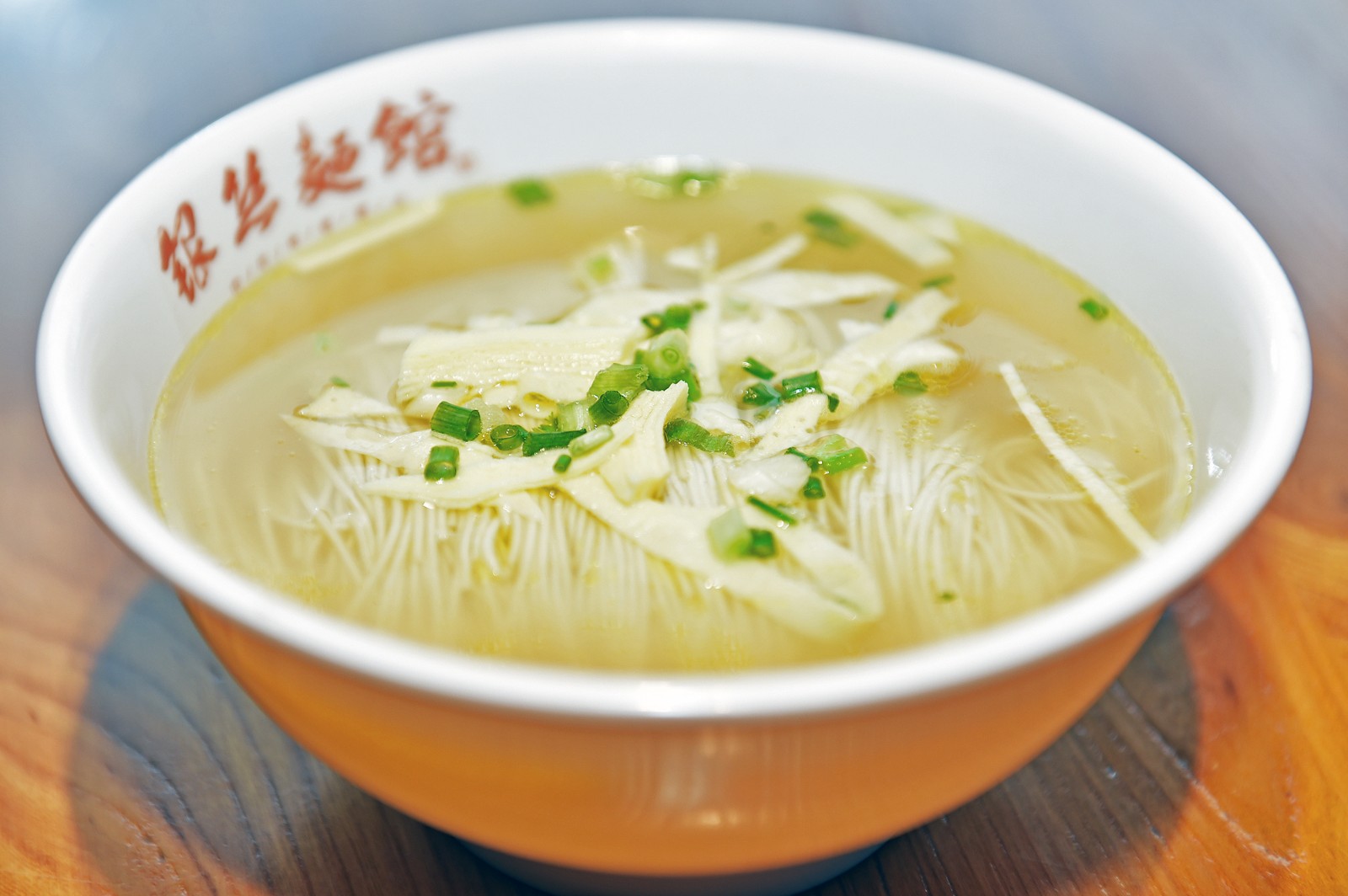
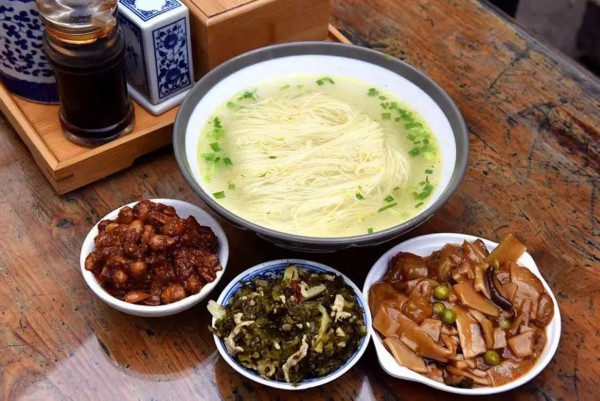
*Recommended Restaurant:
- Xinwanxin Silver Noodle Restaurant (Headquarters)
· Address: No. 108 Zhongshan Road, Liangxi District, Wuxi, Jiangsu Province, China
· Phone: +86-(0510)82726677
· Opening hours (Mon to Sun): 06:30-20:30
· Price: Approximately 12–22 RMB per bowl ($1.7–3.1), the only restaurant in Wuxi that preserves the full traditional hand-pulled intangible cultural heritage technique.
5. Plum Blossom Cake
A 100+ year old street sweet snack in wuxi food, named for its beautiful plum blossom shape, a classic symbol of Jiangnan water town culture. It has a crispy, golden outer layer made of flour batter, with a soft, glutinous interior, stuffed with red bean paste, taro paste, or sweet osmanthus filling. It is topped with red dates, melon seeds, and osmanthus, with a soft, chewy texture and a sweet, aromatic flavor.
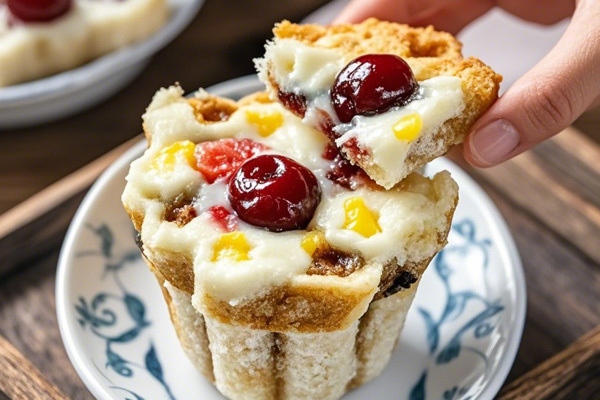
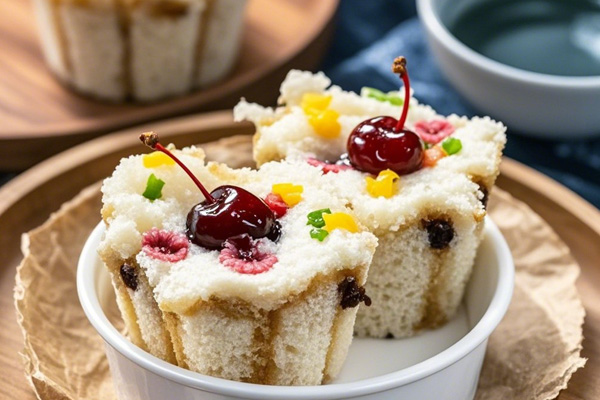
*Recommended Restaurant:
- Laofa Tou Plum Blossom Cake (Daoxiang Market Branch)
· Address: Daoxiang Market Entrance, Liangxi District, Wuxi, Jiangsu Province, China
· Opening hours (Mon to Sun): 07:00-18:00
· Price: Approximately 3–6 RMB per piece ($0.4–0.8), freshly made to order with multiple sweet filling options.
6. Stuffed Oil Gluten (Street Version)
The signature street snack of wuxi cuisine, using Wuxi’s world-famous hollow water gluten, a unique ingredient that cannot be replicated elsewhere. The hollow gluten is stuffed with a mix of pork, shiitake mushrooms and shrimp, braised in a sweet-savory soy sauce until fully infused with flavor. It has a chewy, juicy texture and is sold in individual portions at street stalls across the city.
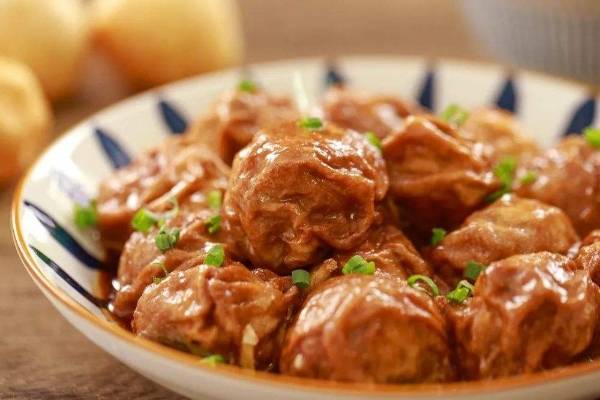
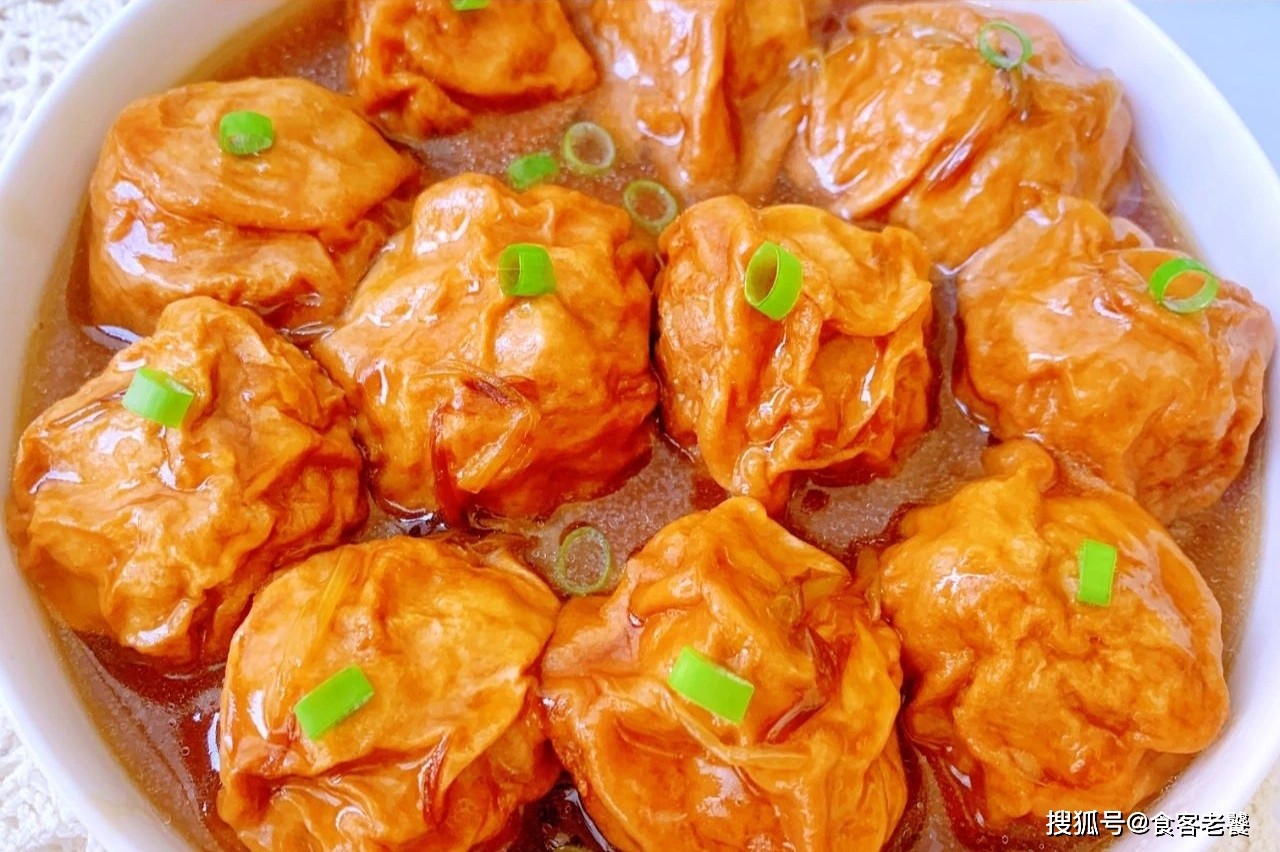
*Recommended Restaurant:
- Daoxiang Market Street Stalls
· Address: No. 1 Daoxiang Road, Liangxi District, Wuxi, Jiangsu Province, China
· Opening hours (Mon to Sun): 06:00-18:00
· Price: Approximately 5–8 RMB per piece ($0.7–1.1), freshly braised daily with authentic local flavor.
7. Huishan Crisp Cake
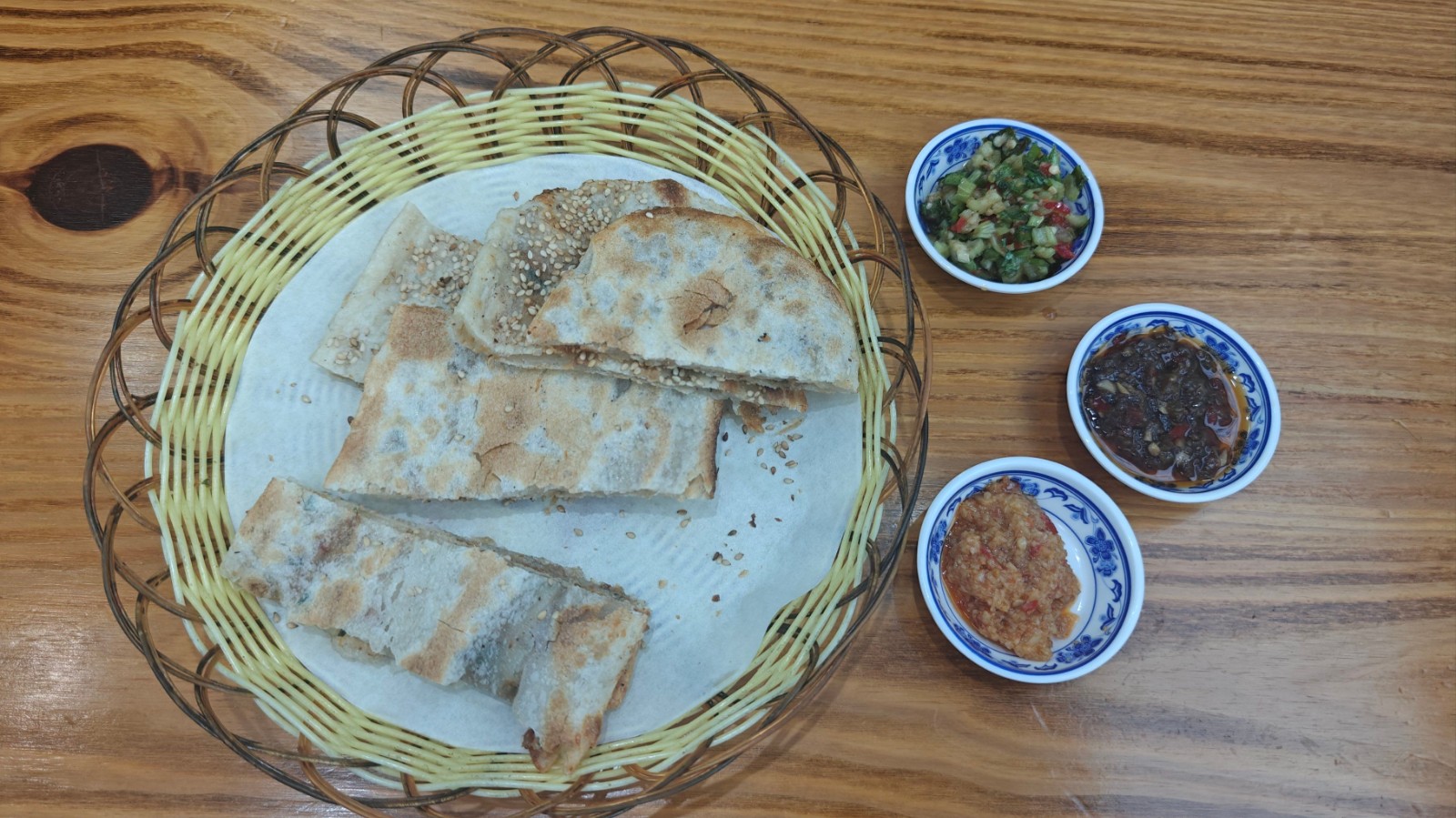
A 300-year-old traditional pastry from Huishan Mountain, nicknamed "Golden Navel", a Wuxi Intangible Cultural Heritage and a classic street snack of wuxi food. It is a crispy, flaky shortbread made with wheat flour, sesame, and sugar, with a rich, buttery, sweet flavor and a crumbly texture that melts in your mouth. It has two styles: salty and sweet, both fully vegetarian, making it a perfect on-the-go snack.
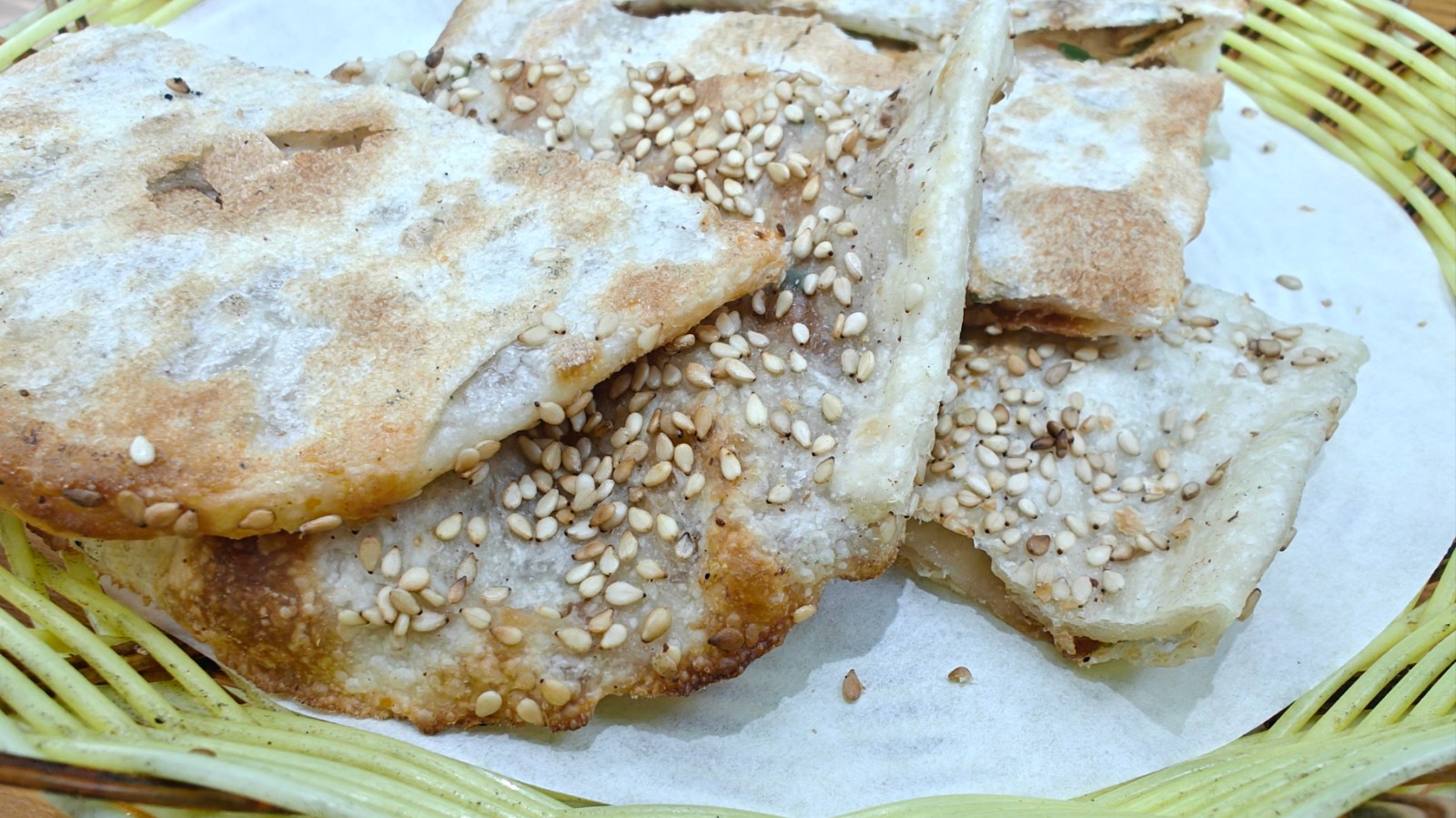
*Recommended Restaurant:
- Zhu Shunxing Old Shop (Huishan Ancient Town Branch)
· Address: No. 82 Huishan Ancient Town Main Street, Huishan District, Wuxi, Jiangsu Province, China
· Opening hours (Mon to Sun): 08:00-18:00
· Price: Approximately 15–25 RMB per 500g ($2.1–3.5), a 300+ year old time-honored shop using the traditional hand-made recipe.
8. Wuxi Spring Rolls
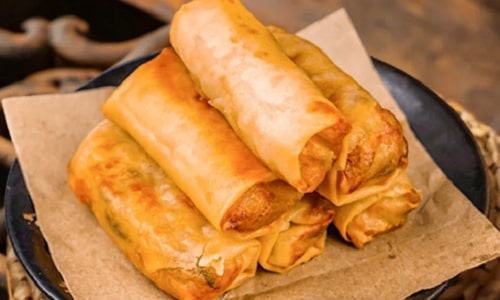
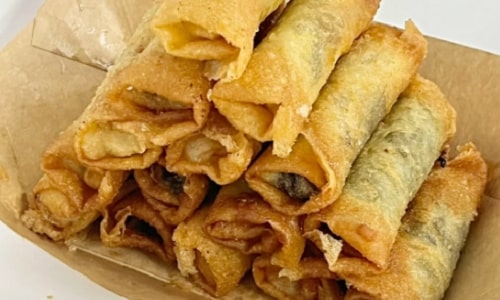
A century-old iconic fried street snack and a mandatory festive staple for Wuxi families during the Spring Festival, a beloved classic of wuxi street food with deep roots in Jiangnan water town customs. Made with paper-thin wheat wrappers stuffed with two authentic Wuxi-style fillings: the signature savory version uses fresh Taihu-basin shepherd's purse, tender shredded pork and dried shrimp for a bright umami taste, while the traditional sweet version features smooth, house-made red bean paste for a mellow sweet finish. Deep-fried until golden and shatteringly crisp, it has a flaky, crunchy exterior and a juicy, flavorful interior that delivers a satisfying burst of taste in every bite.
*Recommended Restaurant:
- Maohua Food (Qingyang Road Branch)
· Address: No. 58 Qingyang Road, Liangxi District, Wuxi, Jiangsu Province, China
· Opening hours (Mon to Sun): 06:00-20:00
· Price: Approximately 2–4 RMB per piece ($0.3–0.6), with a per-person average of 12 RMB for a classic breakfast set of spring rolls and xiaolong mantou.
b. Taihu Lake Fresh Bites: The Core of Water Town Street Flavors
Influenced by thousands of years of Taihu Lake fishing culture, this is the core of wuxi food’s unique identity, distinct from other Jiangnan cuisines. Using fresh-caught aquatic products from Taihu Lake, these street-friendly lake fresh bites let you experience the bounty of China’s third-largest freshwater lake on the go, with a focus on the natural, sweet umami of the ingredients.
· Cultural Tip: Taihu Lake follows a strict annual fishing ban from February 1 to August 31 every year. During the ban, lake fresh dishes use legally farmed Taihu aquatic products, ensuring sustainable and legal ingredients. Please avoid asking for wild-caught fish during the ban period to respect local ecological protection rules.
1. Taihu Three Whites Street Bites
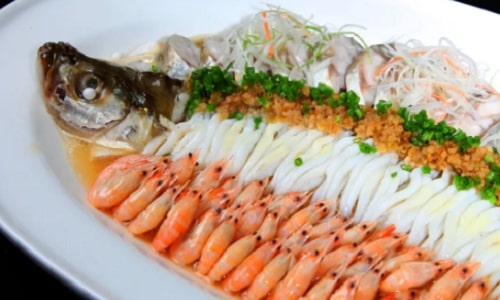
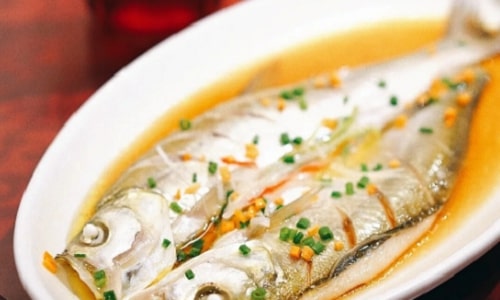
The "Three Whites" (white fish, whitebait, white shrimp) are the crown jewels of wuxi cuisine, and these street-friendly versions bring the iconic lake flavor to casual eating. Salt-boiled white shrimp cups feature sweet, bouncy Taihu white shrimp boiled in lightly salted water, served with ginger-vinegar dip; whitebait fritters are made with fresh whitebait mixed into a light batter and deep-fried into crispy, bite-sized snacks; steamed white fish slices are served in portable paper boxes, with tender, flaky fish and minimal seasoning to highlight its natural sweetness.
*Recommended Restaurant:
- Taihu Lakeside Snack Stalls (Lihu Scenic Area)
· Address: Lihu Park Entrance, Binhu District, Wuxi, Jiangsu Province, China
· Opening hours (Mon to Sun): 08:00-17:00
· Price: Approximately 10–25 RMB per serving ($1.4–3.5), with fresh ingredients sourced daily from Taihu Lake.
2. Taihu Smoked Fish
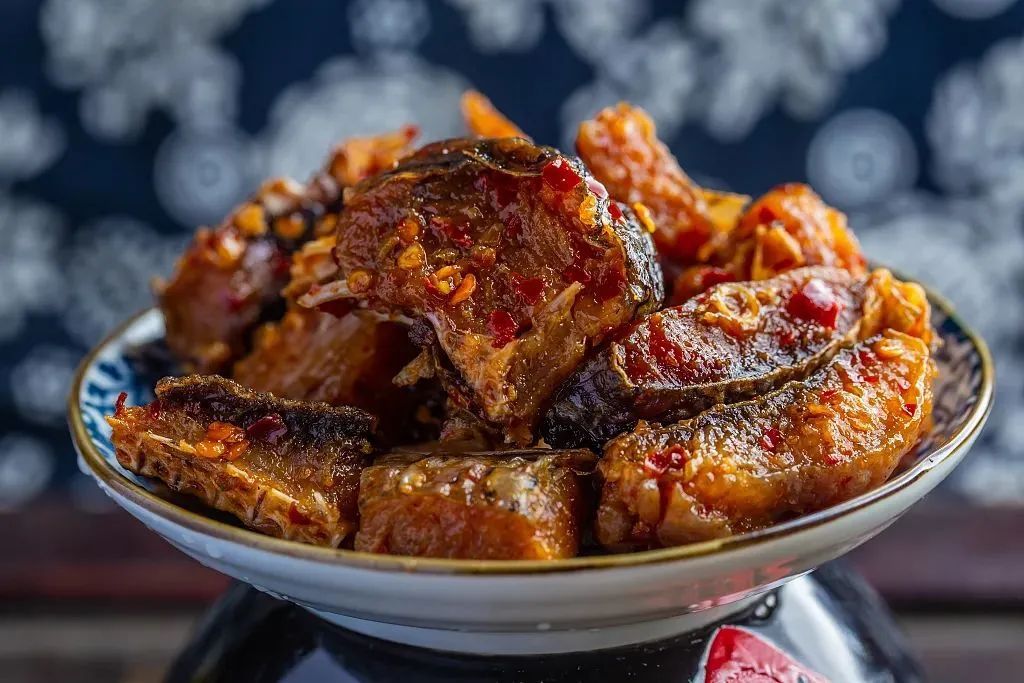
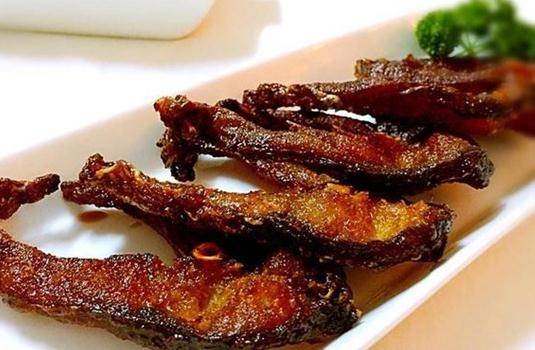
A classic cold appetizer and street snack of wuxi food, made with fresh grass carp from Taihu Lake, sliced and marinated, then fried and soaked in a sweet-savory brine with osmanthus and rice wine. It has a crispy exterior and tender interior, with a balanced sweet-savory flavor and a subtle osmanthus aroma, sold in vacuum-packed individual portions at street stalls and time-honored shops.
*Recommended Restaurant:
- Sanfengqiao Meat House (Zhongshan Road Headquarters)
· Address: No. 240 Zhongshan Road, Liangxi District, Wuxi, Jiangsu Province, China
· Phone: +86-(0510)82700605
· Opening hours (Mon to Sun): 08:00-20:30
· Price: Approximately 25–38 RMB per 250g pack ($3.5–5.4), made with a century-old traditional brine recipe.
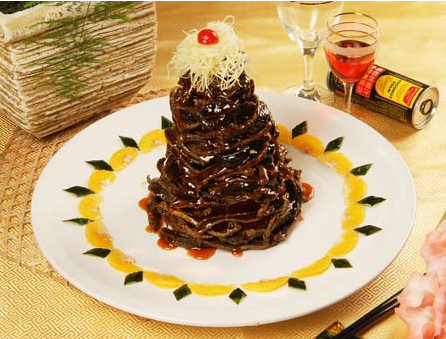
3. Mini Liangxi Crispy Eel
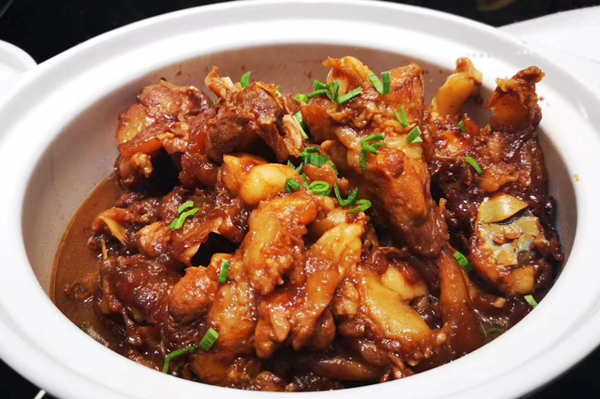
The street version of the iconic intangible cultural heritage dish of wuxi cuisine, made with fresh river eel, using the classic "three fry, three braise" technique, cut into bite-sized pieces for easy eating. It has a shatteringly crisp exterior, tender interior, and a rich, aromatic sweet-savory flavor, perfect as a casual snack or a pairing with local rice wine.
*Recommended Restaurant:
- Erquanyuan Old Restaurant Takeaway Counter
· Address: No. 207 Renmin Middle Road, Liangxi District, Wuxi, Jiangsu Province, China
· Opening hours (Mon to Sun): 10:30-20:00
· Price: Approximately 35–48 RMB per box ($4.9–6.8), made by a provincial intangible cultural heritage inheritor.
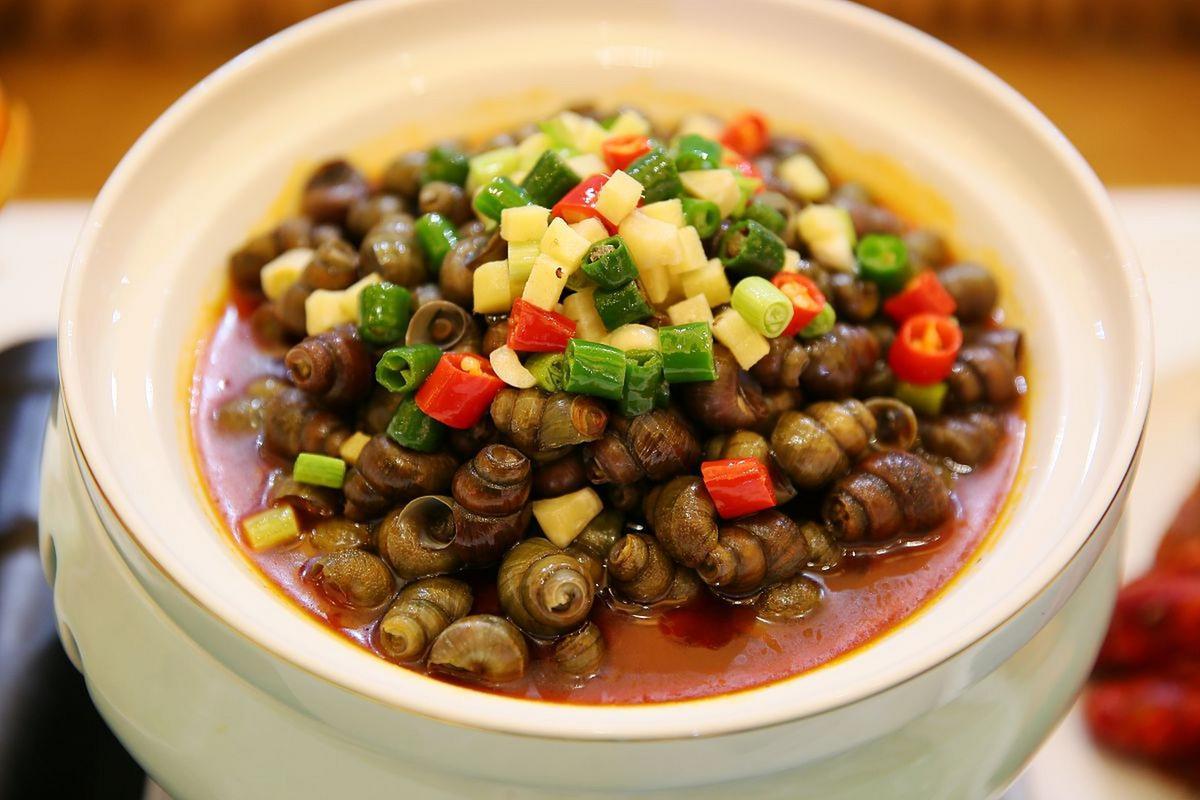
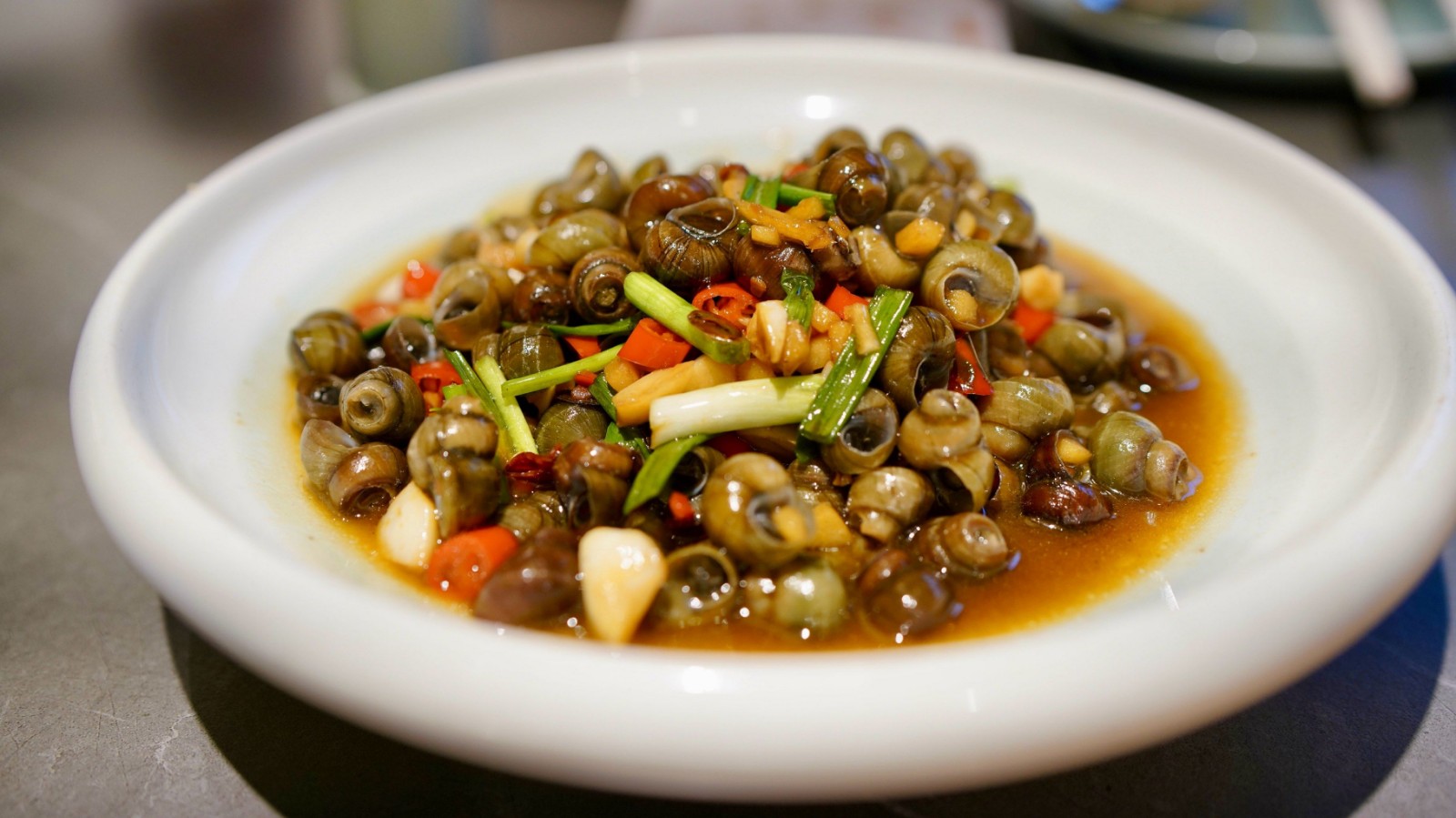
4. Sauce-Fried Taihu Snails
A classic street snack and late-night favorite in wuxi food, with a local saying "Qingming snails are fatter than geese". Made with fresh Taihu green-shell snails, stir-fried with soy sauce, chili, rice wine and ginger, with a tender, juicy meat and a rich, sweet-savory flavor. It is a classic pairing with local rice wine and beer, and a must-try spring and summer street snack.
*Recommended Restaurant:
- Xiaofeng Restaurant (Nanchang Street Branch)
· Address: No. 218 Nanchang Street, Liangxi District, Wuxi, Jiangsu Province, China
· Opening hours (Mon to Sun): 10:30-02:00
· Price: Approximately 22–32 RMB per plate ($3.1–4.5), a 35-year-old local favorite famous for its authentic Wuxi-style sauce-fried snails.
B. Classic Dishes: The Essence of Wuxi Flavors
These are the iconic, time-honored dishes that define wuxi cuisine, with many protected as intangible cultural heritage, served in formal banquets and time-honored restaurants for over a century. Each dish tells a story of Wuxi’s canal and lake history, with refined craftsmanship and balanced flavors that have been perfected over generations.
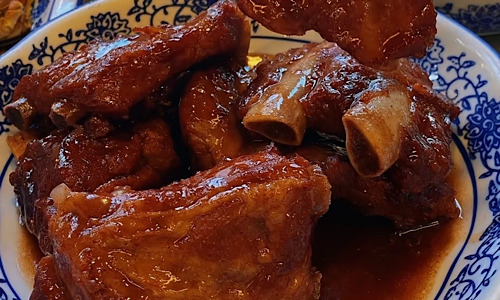
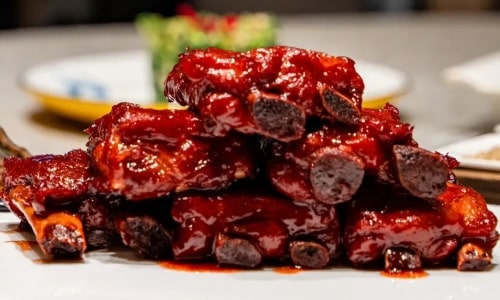
1. Wuxi Braised Spare Ribs (Wuxi Rou Gutou)
The undisputed "business card" of wuxi food and wuxi cuisine, a national intangible cultural heritage dish invented in the 1890s, and awarded at the 1915 Panama Pacific International Exposition. Made with 3-finger wide rib cuts from Taihu Black Pork, slow-braised for 4 hours in a 130-year-old "one sugar, three soy sauce" brine recipe, with tender meat that falls off the bone, a glossy red sauce, and a perfectly balanced sweet-savory flavor that is never cloying. The sweetness acts only as an umami enhancer, never dominating the rich, savory flavor of the pork.
*Recommended Restaurant:
- Sanfengqiao Meat House (Zhongshan Road Headquarters)
· Address: No. 240 Zhongshan Road, Liangxi District, Wuxi, Jiangsu Province, China
· Phone: +86-(0510)82700605
· Opening hours (Mon to Sun): 08:00-20:30
· Price: Approximately 42–58 RMB per serving ($5.9–8.2) for dine-in, with vacuum-packed souvenir boxes available for 28–45 RMB ($3.9–6.3). Founded in 1927, this is the most authoritative time-honored brand for Wuxi spare ribs, with an unchanged old brine recipe for over 90 years.
- Laowowoli (Jianye Road Branch)
· Address: No. 128 Jianye Road, Liangxi District, Wuxi, Jiangsu Province, China
· Phone: +86-(0510)85033777
· Opening hours (Mon to Sun): 10:30-14:00, 16:30-21:00
· Price: Approximately 35–45 RMB per serving ($4.9–6.3), a local favorite with a home-style braising recipe that has less sugar and more savory depth.
2. Taihu Boat Cuisine Feast
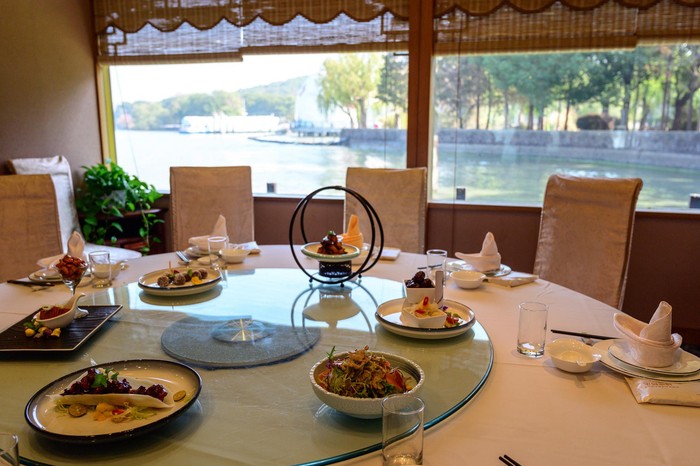
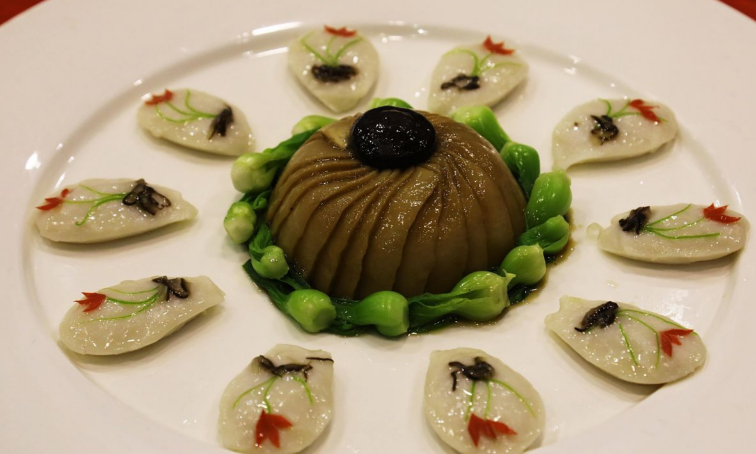
A Jiangsu Provincial Intangible Cultural Heritage dining format, the ultimate expression of wuxi food’s lake-rich identity, originating in the Ming Dynasty from wealthy canal merchants who held banquets on luxury Taihu Lake boats. The core feature is "catching and cooking on the spot", with a seasonal menu of fresh Taihu lake seafood, paired with panoramic views of Taihu Lake. The classic feast includes steamed Taihu white fish, whitebait omelet, salt-boiled white shrimp, braised fish tail, and lake water shield soup, with a focus on the natural freshness of the lake’s ingredients, minimal seasoning, and refined cooking techniques.
*Recommended Venue:
- Taihu Boat Cuisine Manor (Mashan Scenic Area)
· Address: Mashan Taihu Lakeside, Binhu District, Wuxi, Jiangsu Province, China
· Phone: +86-13812008877
· Opening hours (Mon to Sun): 09:00-20:00
· Price: Approximately 120–220 RMB per person ($16.9–31.0), with a 50+ year old intangible cultural heritage chef leading the kitchen, and customizable seasonal menus.
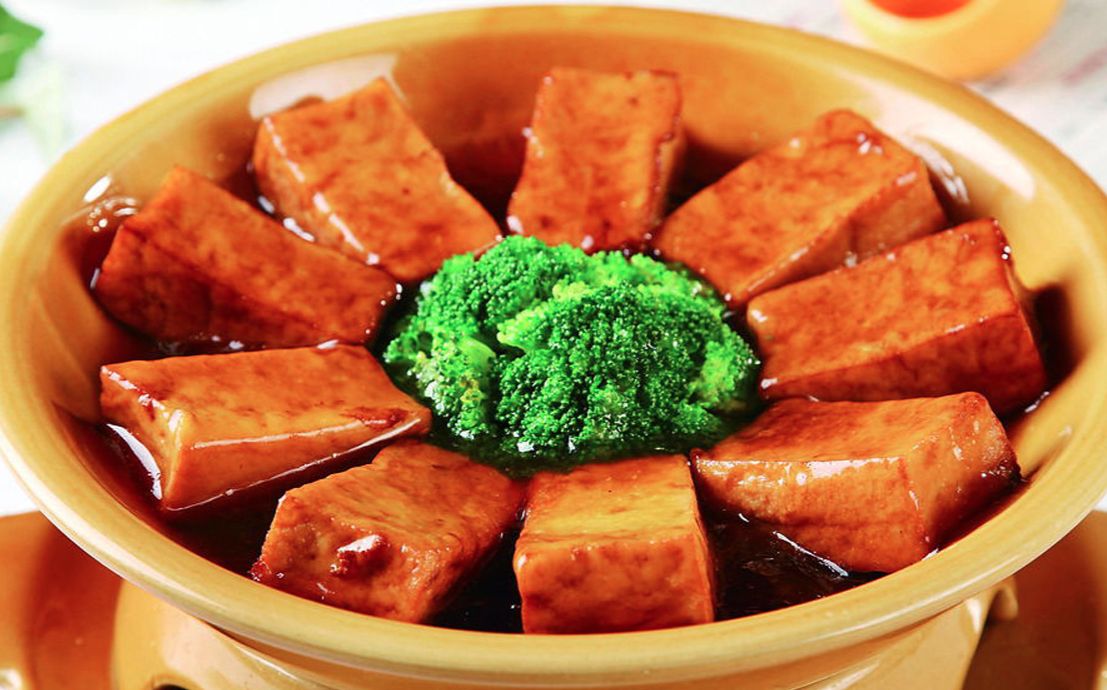
3. Mirror Box Tofu
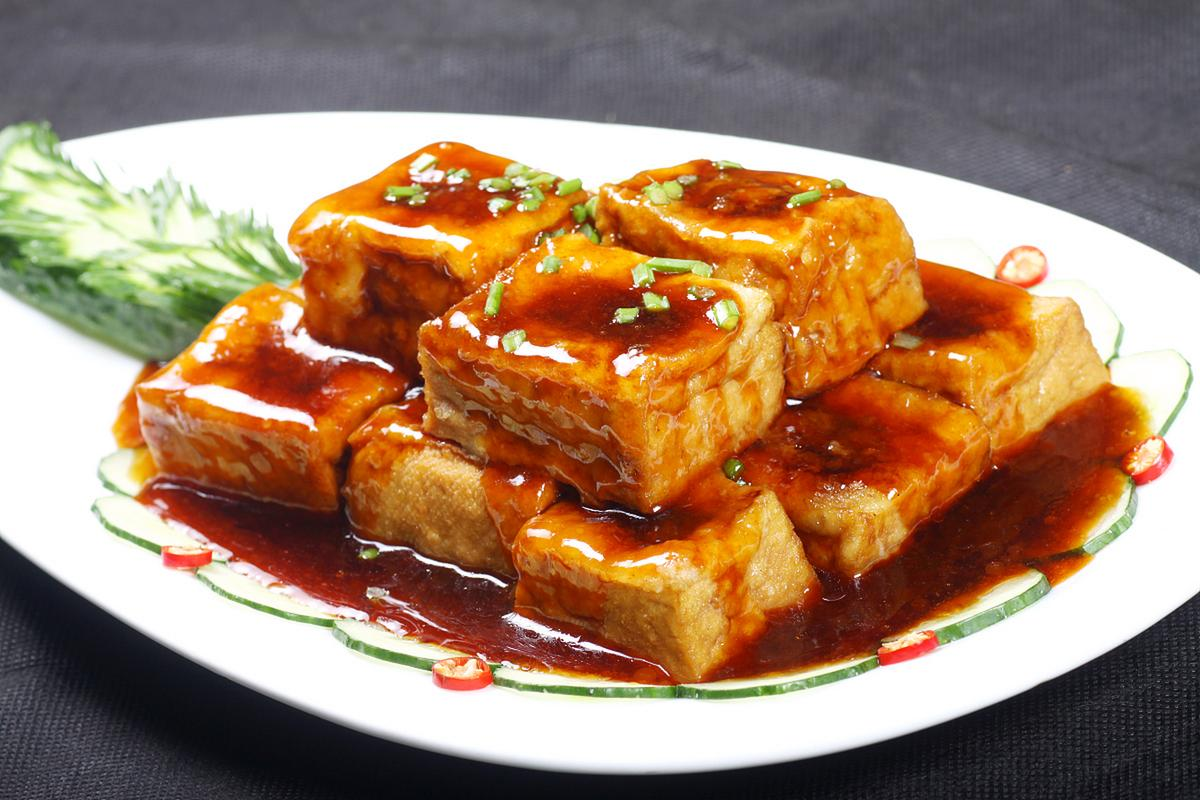
An elegant classic of wuxi cuisine, invented in the 1930s by a Wuxi master chef, named for its rectangular mirror-box shape that symbolizes "peace and prosperity". Firm local tofu is hollowed out, stuffed with a mix of pork and fresh Taihu shrimp, then braised until tender in a sweet-savory soy sauce, with a final thickening of starch to create a glossy sauce. It has a soft, silky texture and a balanced savory-sweet flavor, with a beautiful presentation perfect for banquets and family meals.
*Recommended Restaurant:
- Sanfeng Restaurant (Zhongshan Road Headquarters)
· Address: No. 226 Zhongshan Road, Liangxi District, Wuxi, Jiangsu Province, China
· Phone: +86-(0510)82725181
· Opening hours (Mon to Sun): 11:00-14:00, 17:00-20:30
· Price: Approximately 28–38 RMB per serving ($3.9–5.4), the most authentic version of this classic Wuxi dish.
4. Wuxi Fermented Pork with Rice Wine (Zao Kou Rou)
A classic winter dish of wuxi cuisine, with a history dating back to the Qing Dynasty, originating from the gentry families of Wuxi’s water towns. Made with streaky pork from Taihu Black Pork, blanched and steamed with local rice wine lees, rock sugar, and soy sauce for 3 hours. It has a melt-in-your-mouth texture, a rich rice wine aroma, and a mild sweet-savory flavor, with a non-greasy finish that makes it a staple of Wuxi family reunion dinners.
-%20food.jpg "Wuxi Fermented Pork with Rice Wine (Zao Kou Rou)- food")
.jpg "Wuxi Fermented Pork with Rice Wine (Zao Kou Rou)")
*Recommended Restaurant:
- Yingbinlou Hotel (Headquarters)
· Address: No. 220 Zhongshan Road, Liangxi District, Wuxi, Jiangsu Province, China
· Phone: +86-(0510)82727072
· Opening hours (Mon to Sun): 11:00-14:00, 17:00-20:30
· Price: Approximately 38–52 RMB per serving ($5.4–7.3), a state-owned time-honored restaurant with an unchanged recipe for over 60 years.
C. Vegetarian-Friendly Delights: Exclusive Recommendations for Foreign Vegetarian Tourists
For vegetarian tourists, Wuxi offers a wide range of vegetarian options, featuring local Jiangnan flavors and healthy concepts. Both ordinary vegetarians (who can accept dairy and eggs) and strict vegans (no dairy, eggs, or five pungent ingredients) can find suitable foods without worrying about dietary restrictions, with all dishes staying true to the authentic flavors of wuxi cuisine.
1. Sixi Braised Water Gluten (Four-Treasure Vegetarian Gluten)
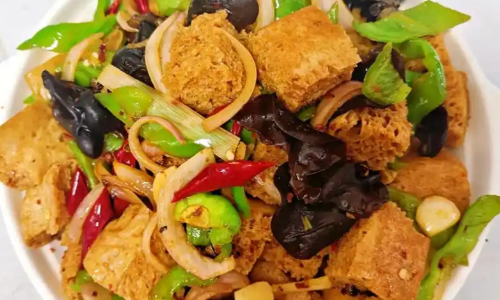
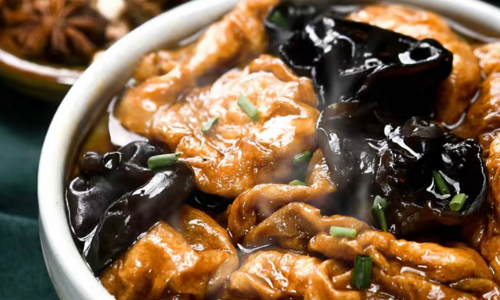
The signature vegetarian dish of wuxi cuisine, originating from the Southern Song Dynasty Huishan Temple nunneries, with a 230-year history as a Wuxi specialty and a core item of Wuxi Intangible Cultural Heritage vegetarian making techniques. It uses Wuxi’s world-exclusive hollow water gluten, which has a honeycomb-like interior that fully absorbs the sweet-savory sauce, braised with shiitake mushrooms, bamboo shoots, black fungus, and chestnuts. It has a chewy, juicy texture and the classic balanced flavor of wuxi food, 100% vegan-friendly, with customizable sugar and spice levels.
*Recommended Restaurant:
- Shifangzhai Vegetarian Restaurant (Nanchan Temple Branch)
· Address: Near Xiangyang Road, Nanchan Temple, Liangxi District, Wuxi, Jiangsu Province, China
· Phone: +86-(0510)82727072
· Opening hours (Mon to Sun): 07:00-19:00
· Price: Approximately 18–28 RMB per serving ($2.5–3.9), a 40-year-old time-honored brand favored by local elders for its authentic Wuxi-style sweet-savory taste.
2. Lingshan Vegetarian Noodles
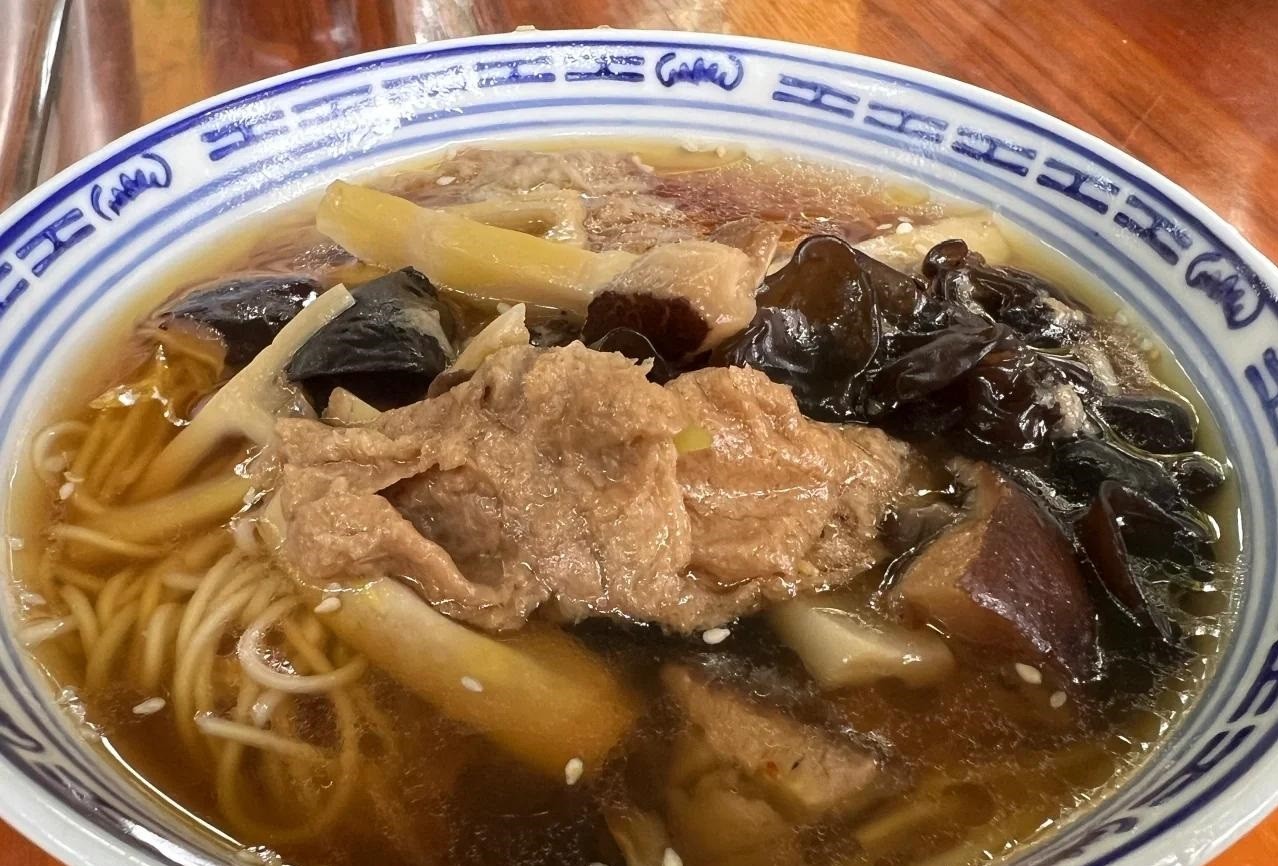
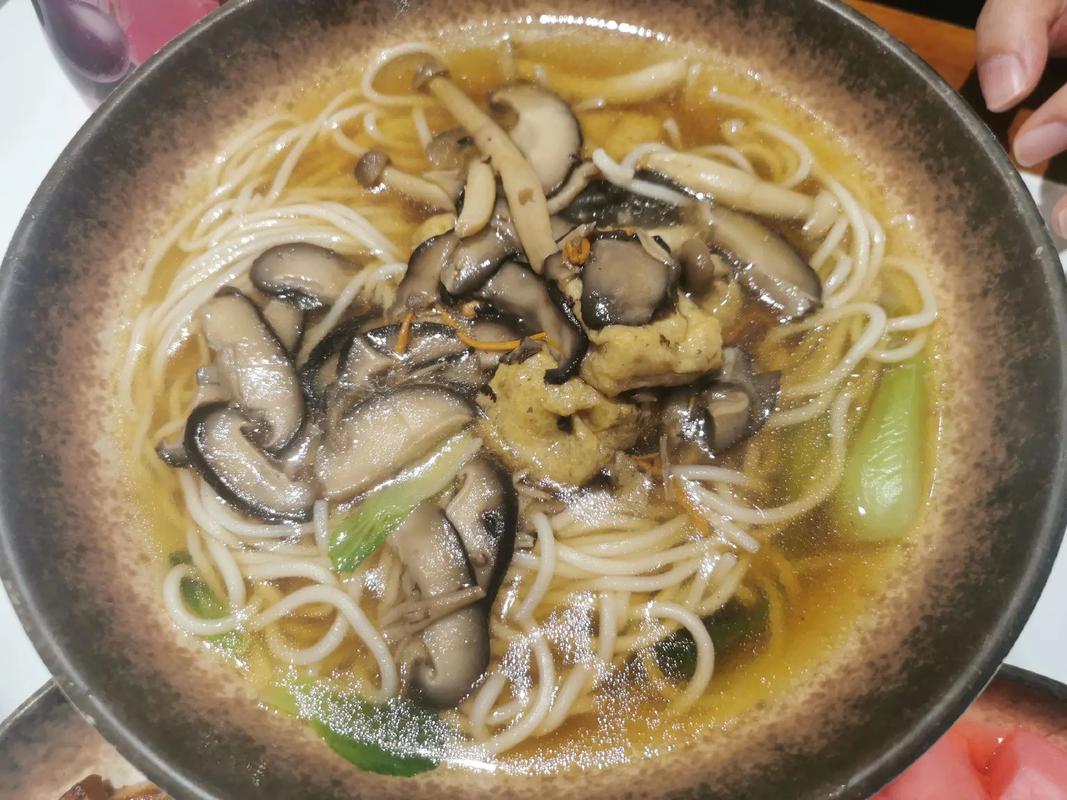
The "soul noodle" of Wuxi vegetarian cuisine, a core heritage dish of Wuxi Intangible Cultural Heritage, known as one of the "Three Wonders of Lingshan". The soup base is slow-simmered for 6 hours with mushroom, bamboo shoot and soybean, paired with ultra-thin Wuxi silver thread noodles, topped with Wuxi water gluten, seasonal vegetables, fungus and gingko nuts. It has a smooth, bouncy noodle texture, a rich, umami soup base, and a mild sweet-savory finish, fully vegan, with a strict no-five-pungent-ingredients option available.
*Recommended Restaurant:
- Guangfu Temple Vegetarian Noodle Shop (Yuantouzhu Scenic Area Branch)
· Address: Inside Guangfu Temple, Yuantouzhu Scenic Area, Binhu District, Wuxi, Jiangsu Province, China
· Opening hours (Mon to Sun): 06:00-14:00
· Price: Approximately 15–22 RMB per bowl ($2.1–3.1), a century-old temple vegetarian noodle shop favored by locals for decades.
3. Huishan Tofu Pudding
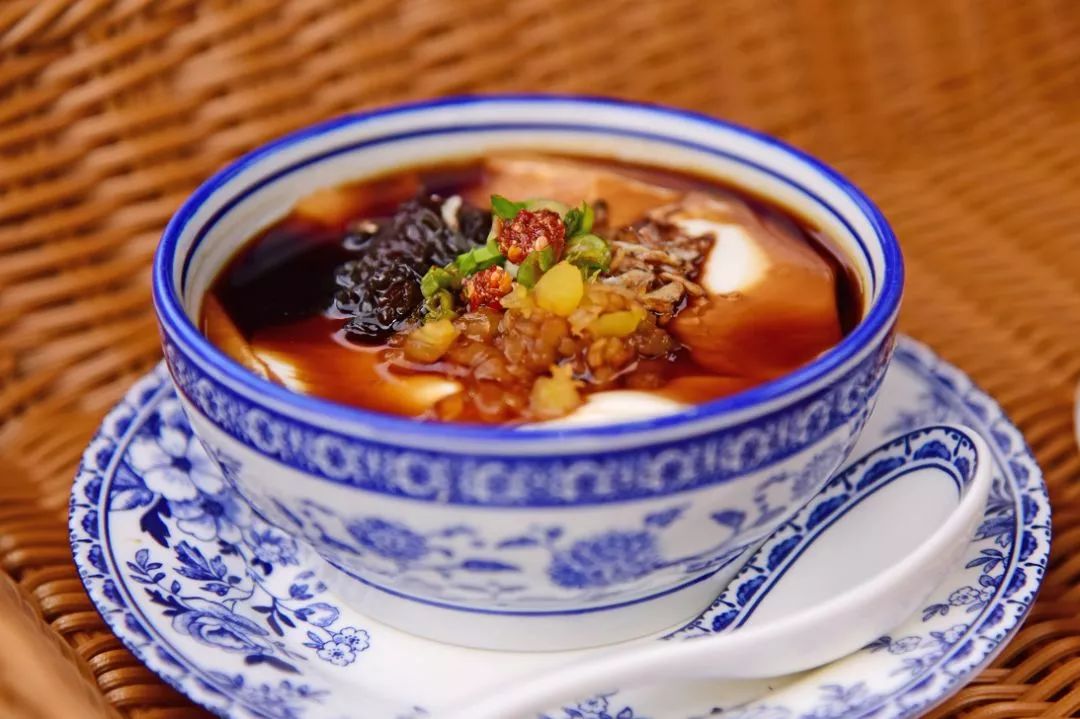
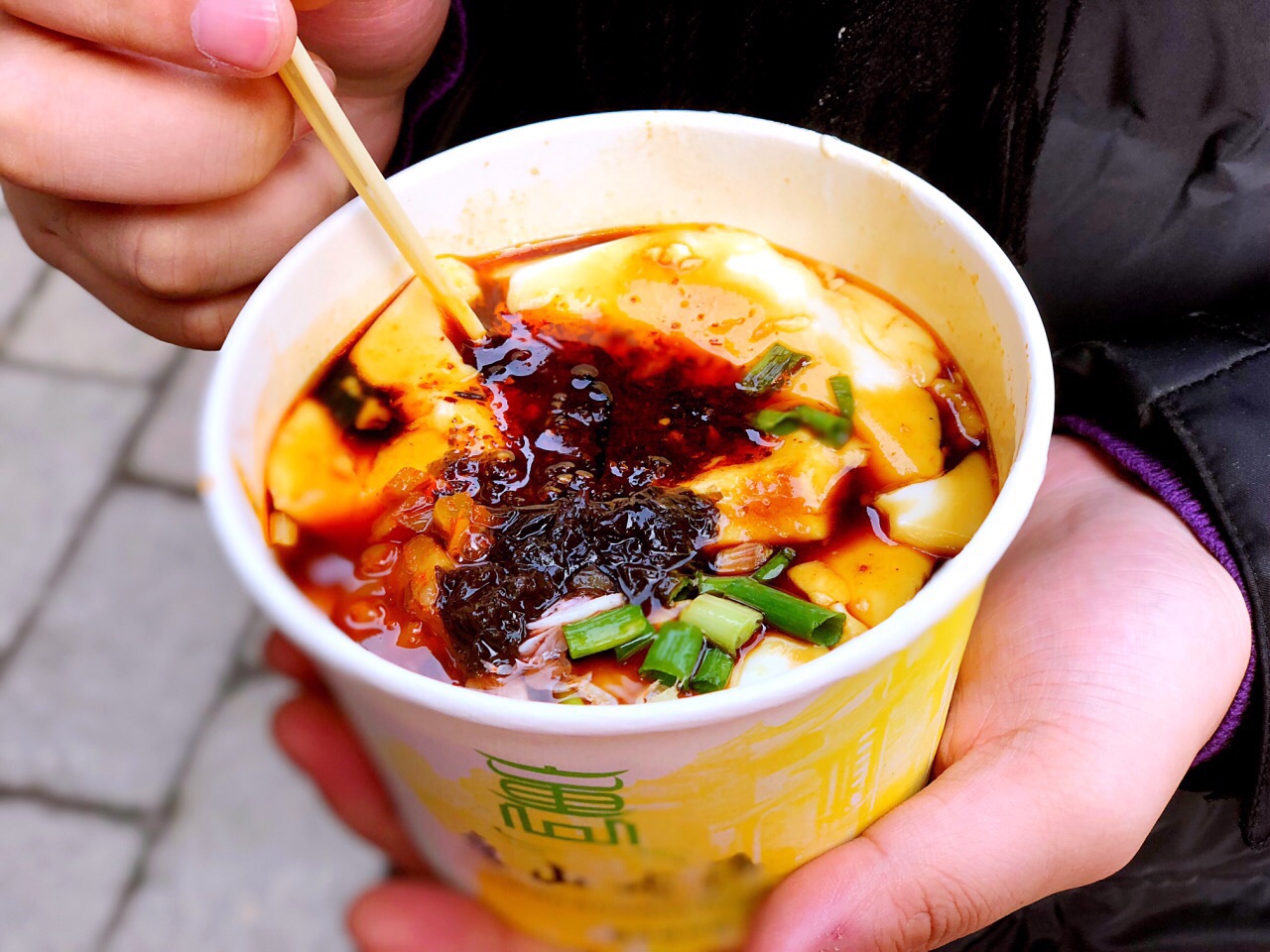
A 200-year-old classic street vegetarian snack of wuxi food, originating from Huishan Mountain, a must-try for every visitor to Huishan Ancient Town. It is made with non-GMO soybeans from northern Jiangsu, slow-ground and steamed to a silky, tender texture, served in two fully vegetarian styles: the savory version with dried shrimp, seaweed, shredded mustard tuber and soy sauce; the sweet version with brown sugar and fresh osmanthus syrup. It has a melt-in-your-mouth texture, warm and comforting, suitable for all vegetarians.
*Recommended Restaurant:
- Huishan Old Street Tofu Pudding Stall
· Address: No. 56 Huishan Ancient Town Main Street, Huishan District, Wuxi, Jiangsu Province, China
· Opening hours (Mon to Sun): 08:00-18:00
· Price: Approximately 8–12 RMB per bowl ($1.1–1.7), freshly made to order with both savory and sweet options.
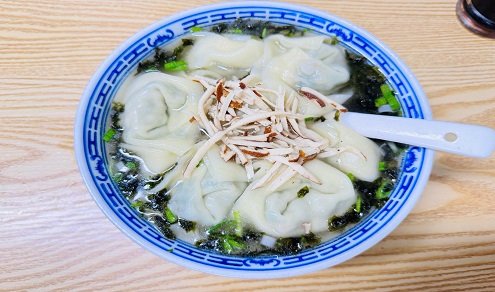
4. Wuxi Vegetarian Sanxian Wonton
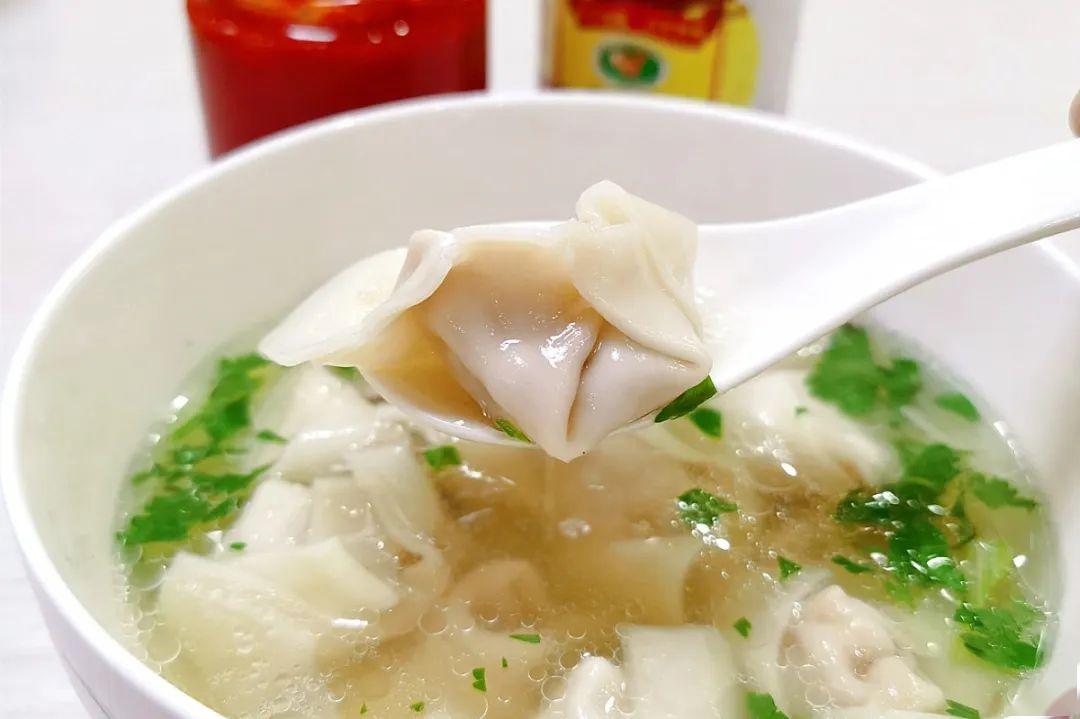
A staple vegetarian street food of wuxi cuisine, a classic breakfast item for locals for over a century. The filling is made with fresh shepherd's purse from the Taihu basin, bamboo shoots, shiitake mushrooms, and vermicelli, wrapped in ultra-thin hand-pushed wonton wrappers, served in a clear vegetable broth with sesame oil and osmanthus. It has a crisp, fresh filling, a smooth wrapper, and a clean, umami flavor, fully vegan, with customizable soup base.
*Recommended Restaurant:
- Cao Zhang Hand-Pushed Wonton (Cao Zhang Road Headquarters)
· Address: No. 23 Cao Zhang Road, Liangxi District, Wuxi, Jiangsu Province, China
· Opening hours (Mon to Sun): 06:00-19:00
· Price: Approximately 10–18 RMB per bowl ($1.4–2.5), a 60-year-old local favorite famous for its ultra-thin hand-pushed wrapper and fresh vegetarian filling.
D. Desserts and Drinks: The Perfect Refreshers and Flavorful Accents
These are the time-honored sweet treats that define the sweet soul of wuxi cuisine, with most having a history of over 100 years, deeply rooted in Wuxi’s water town culture and festival customs. Each dessert carries the signature gentle sweetness of Wuxi, never cloying, and perfectly balances the rich savory flavors of classic Wuxi dishes.
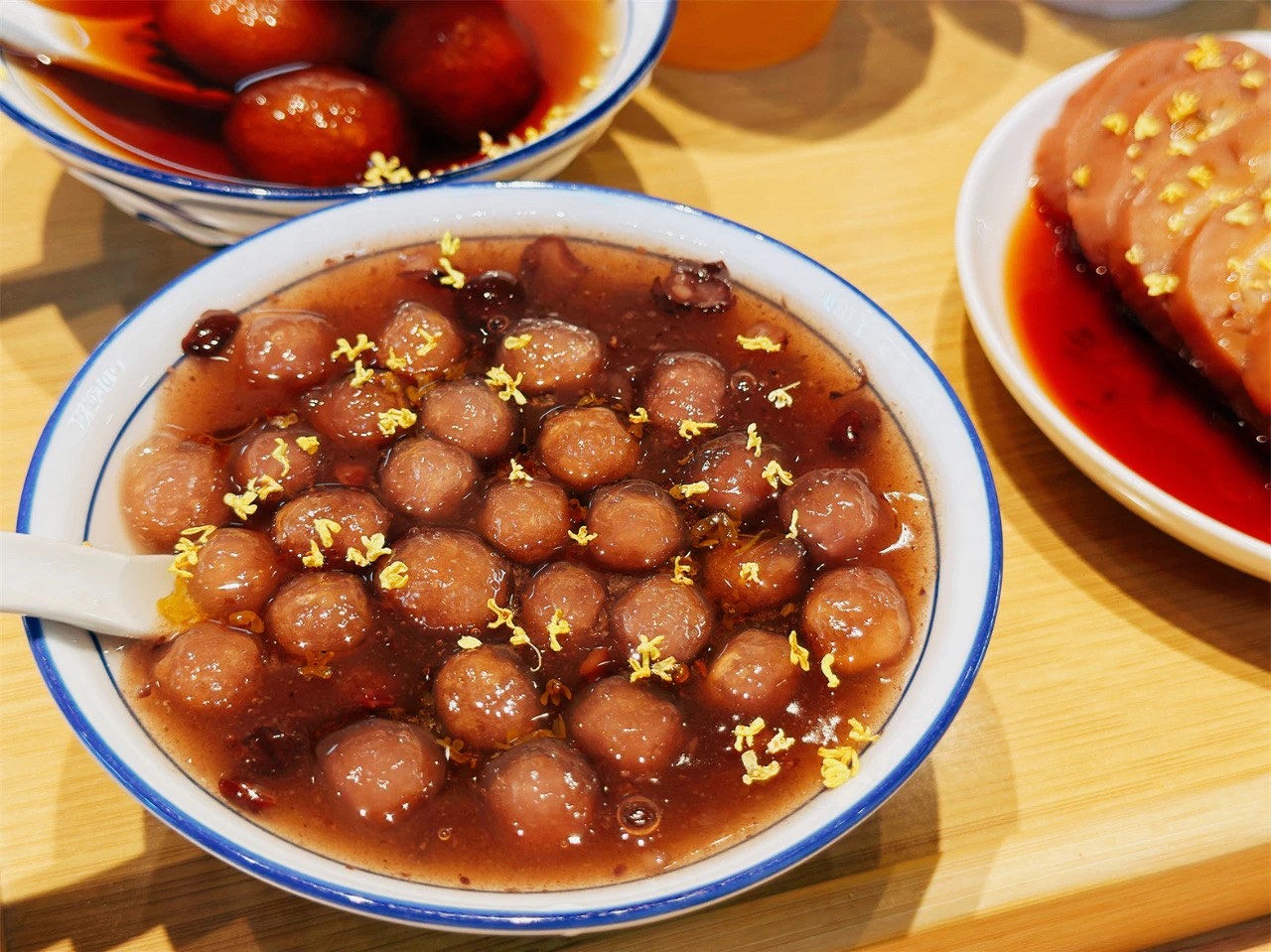
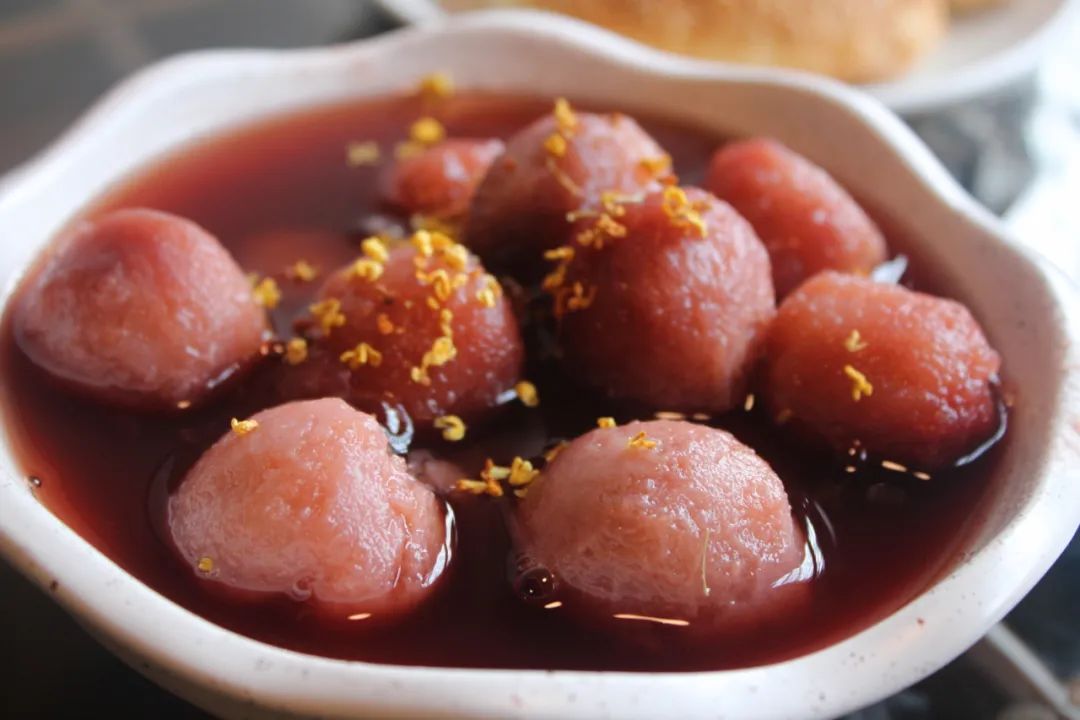
1. Sweet Taro with Osmanthus (Guihua Tang Yutou)
The undisputed signature dessert of wuxi cuisine, a Wuxi Intangible Cultural Heritage with a history dating back to the Eastern Han Dynasty, and a mandatory Mid-Autumn Festival food for Wuxi families for over 2,000 years. It uses small, round local taro from Wuxi’s Mashan area, boiled with lye to a bright purplish-red color, then slow-braised with brown sugar until melt-in-your-mouth tender, finally topped with fresh osmanthus syrup from Wuxi’s Guihua Park. It has a soft, glutinous texture, a sweet, aromatic flavor, and a warm, comforting finish, with a reduced-sugar option available.
*Recommended Restaurant:
- Muguiying Food City (Headquarters)
· Address: No. 108 Xiangyang Road, Liangxi District, Wuxi, Jiangsu Province, China
· Opening hours (Mon to Sun): 06:00-20:00
· Price: Approximately 12–18 RMB per bowl ($1.7–2.5), the most authentic version of this classic Wuxi dessert, with a 60-year unchanged recipe.
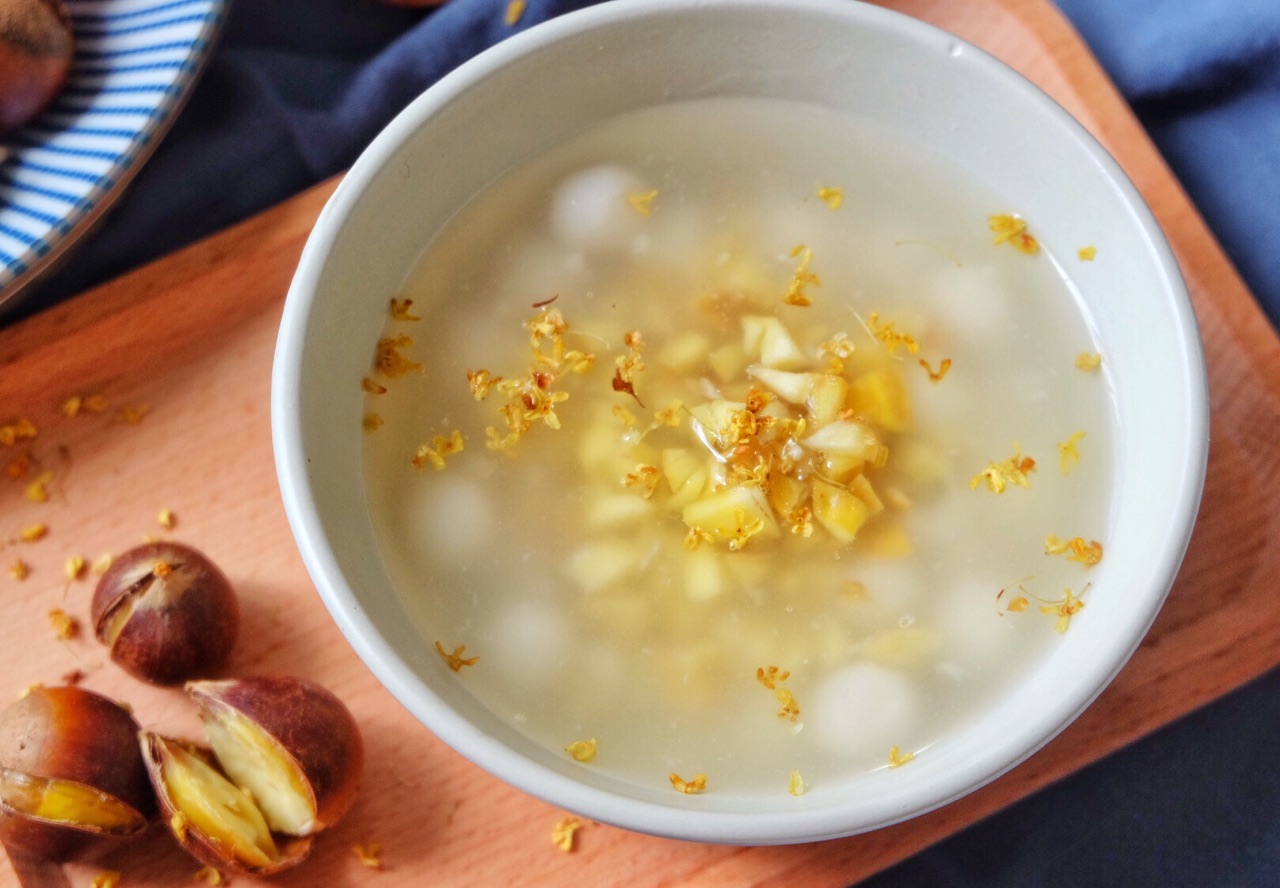
2. Jiu Niang Mian Zi Yuan (Fermented Rice Cotton Balls)
A century-old traditional dessert of wuxi cuisine, a beloved after-meal sweet treat for locals. It is made by rolling high-quality glutinous rice flour into tiny, cotton seed-sized balls, boiled until soft and bouncy, then served in sweet fermented rice (jiuniang) soup with sugar and osmanthus. It has a smooth, bouncy texture, a light rice wine aroma, and a mild, sweet flavor, never cloying, perfect for warming up in winter or cooling down chilled in summer.
.jpg "Jiu Niang Mian Zi Yuan (Fermented Rice Cotton Balls)")
*Recommended Restaurant:
- Lao Wuxi Porridge Shop (Cao Zhang Road Branch)
· Address: No. 45 Cao Zhang Road, Liangxi District, Wuxi, Jiangsu Province, China
· Opening hours (Mon to Sun): 10:00-23:00
· Price: Approximately 8–12 RMB per bowl ($1.1–1.7), freshly made daily with traditional techniques.
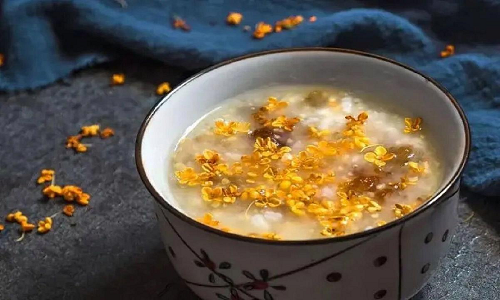
3. Osmanthus Sweet Porridge (Guihua Tang Zhou)
A traditional health-preserving dessert of wuxi food, a beloved winter warm-up treat for locals for over a century. It is made by slow-simmering glutinous rice for 3 hours until thick and creamy, then sweetened with brown sugar and topped with fresh osmanthus syrup. It has a smooth, creamy texture, a sweet, aromatic flavor, and a warm, comforting finish, perfect for pairing with savory Wuxi street food.
-wuxi.png "Jiu Niang Mian Zi Yuan (Fermented Rice Cotton Balls)-wuxi")
*Recommended Restaurant:
- Lao Wuxi Porridge Shop (Cao Zhang Road Branch)
· Address: No. 45 Cao Zhang Road, Liangxi District, Wuxi, Jiangsu Province, China
· Opening hours (Mon to Sun): 10:00-23:00
· Price: Approximately 8–12 RMB per bowl ($1.1–1.7), slow-simmered daily with no additives.
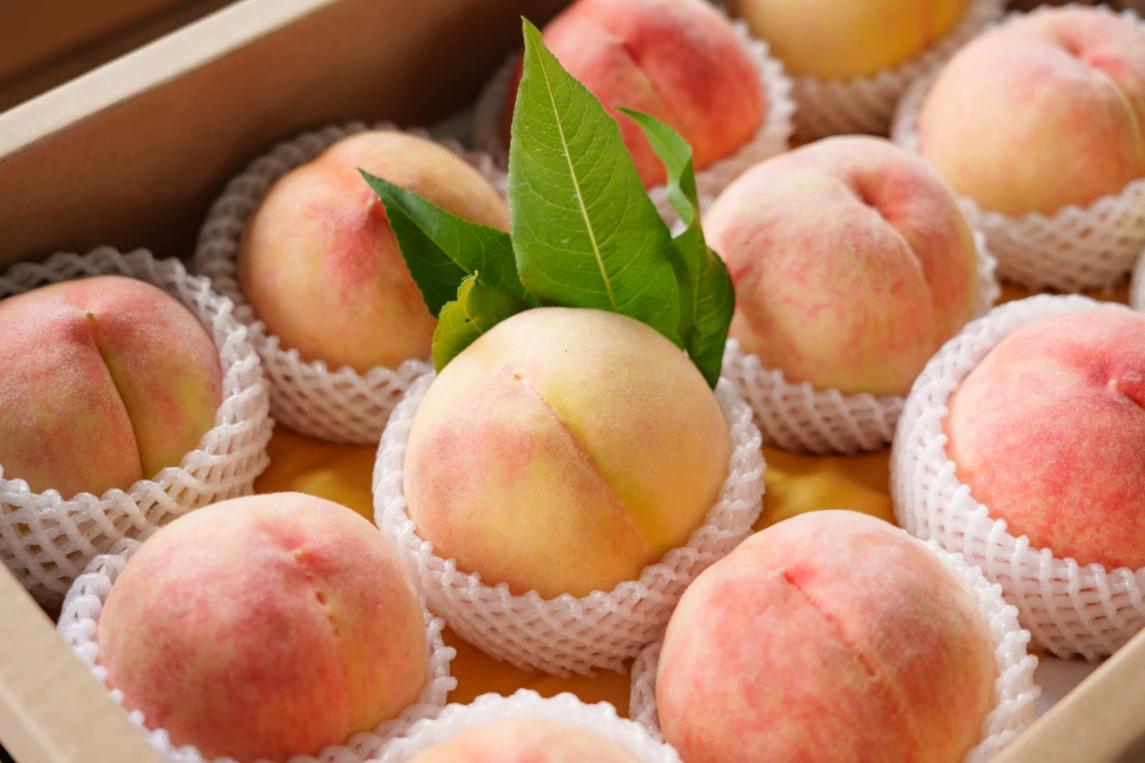
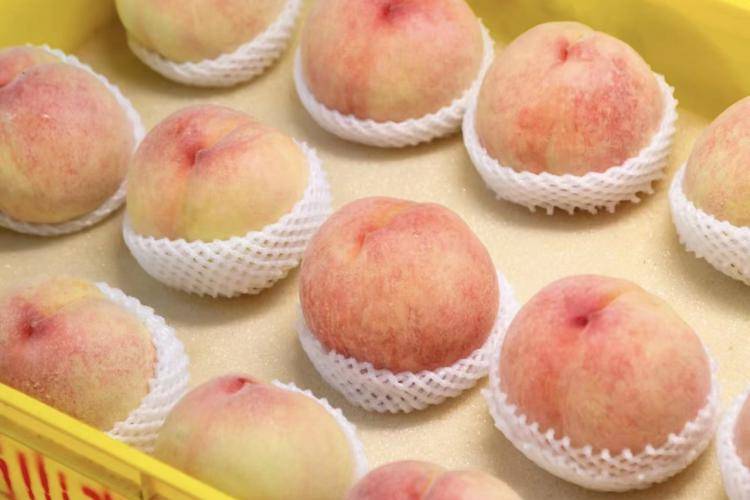
4. Fresh Yangshan Honey Peach Juice
The iconic signature drink of wuxi food, made from Wuxi’s world-famous Yangshan honey peaches, a national geographical indication product known as "the juiciest peach in China". It is freshly squeezed on the spot without any additives or extra sugar, featuring a bright pale pink color, thick and smooth texture, and a pure sweet and fragrant peach aroma. It is the best choice to relieve heat in summer, an ideal match for Wuxi’s savory braised dishes and street food.
*Recommended Restaurant:
- Jianwei Freshly Squeezed Peach Juice (Yangshan Scenic Area Branch)
· Address: Yangshan Peach Blossom Scenic Area Entrance, Huishan District, Wuxi, Jiangsu Province, China
· Opening hours (Mon to Sun): 08:00-17:00 (Peach Season: June–August)
· Price: Approximately 15–20 RMB per cup ($2.1–2.8), made with fresh Yangshan peaches picked the same day.
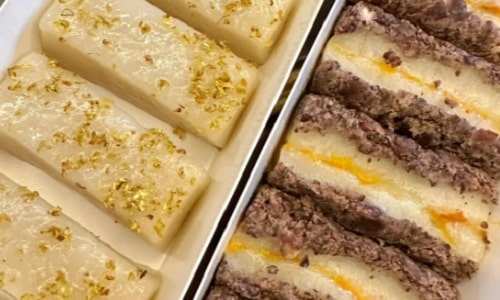
A 200-year-old traditional steamed dessert deeply tied to Wuxi’s millennium-old osmanthus culture, a signature sweet staple of wuxi cuisine and a beloved daily snack for locals. Made with premium Jiangnan round-grain glutinous rice, steamed and hand-pounded to a smooth, chewy texture, infused with house-made osmanthus syrup from locally picked sweet osmanthus in Wuxi’s Huishan Mountain, and dotted with red dates and melon seeds for layered aroma. It has a soft, glutinous non-sticky mouthfeel, with a lingering floral fragrance and a mild, balanced sweetness that is never cloying.
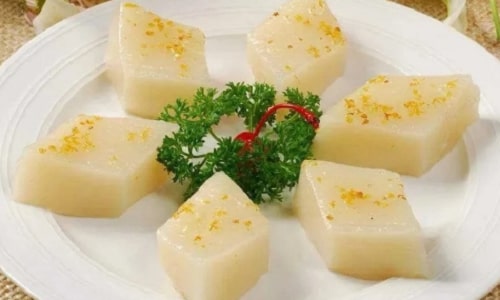
*Recommended Restaurant:
- Muguiying Food City (Zhongshan Road Headquarters)
· Address: No. 108 Xiangyang Road, Liangxi District, Wuxi, Jiangsu Province, China
· Opening hours (Mon to Sun): 06:00-20:00
· Price: Approximately 5–8 RMB per piece ($0.7–1.1), with a per-person average of 15 RMB for a traditional dessert set of osmanthus rice cake and sweet taro with osmanthus.
 Private Wuxi Day Tour: Dive into Local History and Tranquility
 Wuxi Private Day Tour from Suzhou: Discover Lingshan Buddha & Zen Tranquility at Nianhuawan
The Cultural Stories Behind Wuxi Cuisine
Wuxi’s food is never just a taste experience. Every wisp of aroma is intertwined with the historical context of the Wu culture capital, and every dish hides the marks of changing times, the warmth of water town life, and the code of cultural integration between the Grand Canal and Taihu Lake. Only by understanding these stories can we truly grasp the depth and vitality in the taste of wuxi food and wuxi cuisine.
1. Water Gluten: From Southern Song Temple Vegetarian Food to Wuxi’s Signature Ingredient
The origin of Wuxi’s iconic water gluten dates back to the Southern Song Dynasty, over 800 years ago, invented by Buddhist nuns at Huishan Temple. At that time, Huishan Temple was a renowned Buddhist holy land in the Jiangnan region, with a large number of pilgrims visiting every day. The nuns in the temple needed a high-protein vegetarian ingredient to replace meat for temple meals and pilgrim offerings. They experimented with washing wheat flour to remove the starch, leaving only the pure gluten, then fried it in hot oil, creating the hollow, honeycomb-structured water gluten that is unique to Wuxi.At first, it was only used in vegetarian dishes in Buddhist temples, prized for its strong ability to absorb flavors and chewy texture. In the Ming Dynasty, with the prosperity of Wuxi’s Grand Canal trade, the gluten-making technique spread to the folk. Local chefs invented the meat-stuffed gluten dish, braising it in Wuxi-style sweet-savory soy sauce, which quickly became a popular home-style dish. In the Qing Dynasty, it became a must-have dish for Wuxi family festivals and banquets, and was even served as a tribute to the royal court.Today, Wuxi water gluten is a unique signature ingredient of wuxi cuisine, known as "the most versatile ingredient in Jiangnan cuisine". Its production technique is included in the Wuxi Intangible Cultural Heritage List, and it is the only ingredient in Chinese cuisine that is exclusively associated with a single city.
2. Wuxi Braised Spare Ribs: From Canal Tea House Snack to Global Icon of Wuxi Cuisine
The origin of Wuxi braised spare ribs is closely tied to Wuxi’s Grand Canal tea house culture in the late Qing Dynasty. In the 1890s, Wuxi’s North Gate Canal Wharf was the busiest commercial hub in the south of the Yangtze River, known as the "Little Shanghai of Jiangnan", with thousands of canal merchants, boatmen and silk factory workers passing through every day. A tea house owner named Wang Shaoyun, who ran a small shop near the wharf, invented the braised spare ribs as a side dish for tea.He used 3-finger wide rib cuts from local black pigs, slow-braising them with Wuxi’s locally brewed soy sauce, rock sugar, and more than 10 kinds of spices for 4 hours. The dish was tender, flavorful, and could be stored for days on long canal trips, making it an instant hit among canal merchants and dock workers. The dish quickly spread along the Grand Canal to other cities, making Wuxi spare ribs famous across the country.In 1915, Wuxi braised spare ribs was awarded the Gold Medal at the Panama Pacific International Exposition in San Francisco, bringing wuxi cuisine to the world stage for the first time. In 1927, the Sanfengqiao Meat House was founded, standardizing the production process of Wuxi braised spare ribs, and its old brine recipe has been passed down continuously for over 90 years to this day. Today, this dish is the undisputed "business card" of wuxi food, a national intangible cultural heritage, and the first dish that comes to mind when people think of Wuxi cuisine.
3. Taihu Boat Cuisine: From Ming Dynasty Merchant Banquets to Jiangsu Provincial Intangible Cultural Heritage
The origin of Taihu boat cuisine dates back to the Ming Dynasty, over 600 years ago, when wealthy silk and grain merchants from Wuxi would hold banquets on luxury wooden boats cruising Taihu Lake, to entertain business partners, government officials and literati friends. At first, the dishes were simple, using fresh fish and shrimp caught from the lake during the cruise, cooked on board by the boat’s cook, with minimal seasoning to highlight the natural sweetness of the lake ingredients.As Wuxi’s canal trade boomed in the Qing Dynasty, the boat cuisine became more elaborate. Wealthy merchants hired top Jiangnan master chefs to create refined lake food dishes, and the boats were fitted with luxurious dining rooms, panoramic viewing decks, and even opera stages for performances. The cuisine reached its peak in the early 20th century, with over 50 luxury boat cuisine boats operating on Taihu Lake, serving celebrities, government officials and foreign guests from across the country.In 2009, Taihu boat cuisine was included in the Jiangsu Provincial Intangible Cultural Heritage List, with the traditional "catch and cook on the spot" technique preserved by a handful of master chefs. Today, it is the ultimate expression of wuxi food’s lake-rich identity, no longer just a meal, but a cultural experience that combines Taihu Lake’s natural scenery with Wuxi’s culinary heritage, allowing visitors to taste the lake’s bounty while surrounded by its beauty.
4. Sweet Taro with Osmanthus: From Eastern Han Wu Dynasty Sacrifice to Mid-Autumn Festival Icon
The history of Wuxi’s signature sweet taro with osmanthus dates back to the Eastern Han Dynasty, over 2,000 years ago, originating from the Wu people’s moon worship rituals. In ancient Wu culture, taro was a sacred crop, believed to be a gift from the moon god, and was used as the core offering in Mid-Autumn Festival moon worship ceremonies. In the Wuxi dialect, the word for taro (yù nai) is pronounced almost identically to "yùn lái" (good luck comes), making it a symbol of good fortune and prosperity.In the Tang Dynasty, with the prosperity of osmanthus culture in the Jiangnan region, people began to braise taro with osmanthus syrup and brown sugar, creating the prototype of this dessert. In the Qing Dynasty, it became a mandatory dessert for Wuxi families during the Mid-Autumn Festival, with a fixed production technique: small round taro from Mashan area are boiled with lye to a bright purplish-red color, then slow-braised with brown sugar until melt-in-your-mouth tender, finally topped with fresh osmanthus syrup.
Food-Scenic Spot Linkage Routes
1. Route: Wuxi Classic Heritage Food Half-Day Tour
*Route Overview
This route focuses on Wuxi’s old city core, combining the most iconic intangible cultural heritage food spots with the city’s most representative water town cultural attractions. It is perfect for first-time visitors to Wuxi, allowing you to taste the most classic wuxi food while experiencing the charm of the Grand Canal water town in just half a day.
*Scenic Spot Tour (Order & Highlights)
- Nanchan Temple & Qingming Bridge Ancient Canal Scenic Area
The birthplace of Wuxi’s canal food culture, a 1,000-year-old water street with well-preserved Ming and Qing Dynasty architecture. Visit the 1,500-year-old Nanchan Temple, walk along the Grand Canal, and climb the ancient Qingming Bridge for a panoramic view of the "water alley" scenery.
· Visiting Time: 1 hour
· Ticket: Free admission
- Huishan Ancient Town
The "home of Wuxi intangible cultural heritage food", a 1,500-year-old ancient town at the foot of Huishan Mountain, home to the most time-honored snack shops in Wuxi, as well as the largest ancestral hall complex in the Jiangnan region. It is the best place to experience old Wuxi culture and authentic wuxi cuisine.
· Visiting Time: 1.5 hours
· Ticket: Free admission for the main street, 70 RMB for the ancestral hall scenic area
*Food Matching (Scenic Spot Adjacent Delicacies)
- Breakfast (Near Nanchan Temple)
· Wuxi Xiaolong Mantou and Sanxian Wonton at Xishengyuan, Osmanthus Syrup Drink
- Mid-Morning Snack (Qingming Bridge Nanchang Street)
· Plum Blossom Cake, Fresh Yangshan Peach Juice, Taihu Smoked Fish
- Lunch (Huishan Ancient Town)
· Huishan Crisp Cake at Zhu Shunxing Old Shop, Vegetarian Noodles at Huishan Temple, Sixi Braised Water Gluten
- Afternoon Tea (Huishan Ancient Town)
· Huishan Tofu Pudding, Sweet Taro with Osmanthus
2. Route: Taihu Lake Food & Scenery One-Day In-Depth Tour
*Route Overview
This route takes you deep into the core of Taihu Lake, Wuxi’s mother lake, combining the most beautiful Taihu scenic spots with the most authentic Taihu lake food, the soul of wuxi cuisine. It is perfect for food lovers who want to experience the essence of Wuxi’s lake-rich food culture, with stunning natural scenery and the freshest Taihu aquatic products.
*Scenic Spot Tour (Order & Highlights)
- Turtle Head Isle (Yuantouzhu)
Known as "the best scenic spot of Taihu Lake", a national 5A-level scenic spot, a peninsula that stretches into Taihu Lake, with stunning lake views, cherry blossom gardens (spring), and the historic Guangfu Temple. It is the most iconic scenic spot of Wuxi, and the best place to view Taihu Lake.
· Visiting Time: 2 hours
· Ticket: 90 RMB per person
- Lingshan Shengjing Scenic Area
A national 5A-level scenic spot, home to the 88-meter-tall Lingshan Giant Buddha, the most famous Buddhist holy land in the Jiangnan region. It is also the birthplace of Wuxi’s intangible cultural heritage vegetarian cuisine, with the most authoritative vegetarian restaurant in Wuxi.
· Visiting Time: 2 hours
· Ticket: 210 RMB per person
- Taihu Lakeside Wetland Park
A beautiful lakeside wetland park with lush water plants, panoramic views of Taihu Lake, and less crowded than the main scenic spots, perfect for a leisurely walk and experiencing the natural ecology of Taihu Lake.
· Visiting Time: 1 hour
· Ticket: Free admission
*Food Matching (Scenic Spot Adjacent Delicacies)
- Breakfast (On the way to Yuantouzhu)
· Yulan Cake at Maohua Food, Wuxi Silver Thread Noodles
- Lunch (Near Yuantouzhu)
· Steamed Taihu White Fish, Whitebait Omelet, Salt-Boiled White Shrimp, Taihu Lake Water Shield Soup at Taihu Fisherman’s Wharf Restaurant.
- Afternoon Tea (Near Lingshan Scenic Area)
· Lingshan Vegetarian Pastries, Osmanthus Sweet Porridge
- Dinner (Taihu Lake)
· Taihu Boat Cuisine Feast at Taihu Boat Cuisine Manor, with panoramic lake views, including Braised Taihu Crab, Sauce-Fried Taihu Snails, Braised Fish Tail.
3. Route: Wuxi Family-Friendly Food & Scenic Spot 2-Day Tour
*Route Overview
This route is specially designed for family travelers with children, combining parent-friendly scenic spots with mild, child-friendly wuxi food, covering Wuxi’s most representative cultural attractions, theme parks, and authentic local delicacies. All dishes can be customized with reduced sugar and no spice, suitable for children of all ages.
*Day 1: City Culture & Classic Wuxi Food
- Morning
· Visit Wuxi Museum, learn about the 3,000-year history of Wu culture and the Grand Canal, with interactive exhibition halls suitable for children.
- Lunch
· Sanfeng Restaurant, the most authoritative time-honored brand of wuxi cuisine, with child-friendly dishes such as reduced-sugar braised spare ribs, sweet taro with osmanthus, and whitebait omelet.
- Afternoon
· Visit Huishan Ancient Town, experience the traditional hand-made Huishan clay figurine DIY activity for children, and taste classic street snacks along the way.
- Dinner
· Nanchang Street, with a variety of child-friendly snack options, and a night cruise on the Grand Canal to enjoy the beautiful night view of the water town.
*Day 2: Taihu Lake & Parent-Child Fun
- Morning
· Visit Taihu Happy Valley Theme Park, with a variety of parent-friendly rides and entertainment projects suitable for children of all ages.
- Lunch
· Taihu Lakeside Restaurant, with fresh, mild lake food dishes suitable for children, such as steamed white fish, salt-boiled white shrimp, and vegetable tofu soup.
- Afternoon
· Visit Wuxi Zoo & Taihu Lake Amusement Park, where children can see giant pandas and a variety of rare animals, with a beautiful lakeside environment.
- Dinner
· Return to the city center, taste Wuxi halal beef xiaolong mantou and beef soup at Wuxi Halal Restaurant, ending the 2-day trip.
4. Route: Wuxi Vegetarian & Zen Culture 1-Day Tour
*Route Overview
This route is specially designed for vegetarian and vegan travelers, combining Wuxi’s most famous Buddhist temples, zen cultural attractions, and the most authentic intangible cultural heritage vegetarian wuxi cuisine. All dishes are fully customizable, with strict no-five-pungent-ingredients options available, allowing you to experience the zen culture of Jiangnan while tasting the most authentic Wuxi vegetarian food.
*Scenic Spot Tour (Order & Highlights)
- Kaiyuan Temple (Rong's Meiyuan Scenic Area)
A 1,200-year-old Buddhist temple in the famous Meiyuan Plum Garden, with a beautiful garden environment, famous for its plum blossoms in spring and osmanthus in autumn. It is the birthplace of Wuxi’s traditional temple vegetarian noodles.
· Visiting Time: 1 hour
· Ticket: 60 RMB per person (Meiyuan Scenic Area ticket, including Kaiyuan Temple)
- Guangfu Temple (Yuantouzhu Scenic Area)
A 1,500-year-old temple on the shore of Taihu Lake, known as "the first temple of Taihu Lake", with a century-old vegetarian noodle shop that is a favorite among locals for decades.
· Visiting Time: 1 hour
· Ticket: Included in Yuantouzhu Scenic Area ticket
- Lingshan Shengjing & Xiangfu Temple
The most famous Buddhist holy land in the Jiangnan region, home to the Lingshan Giant Buddha and the magnificent Xiangfu Temple, with the most authoritative intangible cultural heritage vegetarian restaurant in Wuxi.
· Visiting Time: 2 hours
· Ticket: 210 RMB per person
*Food Matching (Scenic Spot Adjacent Delicacies)
- Breakfast (Kaiyuan Temple)
· Kaiyuan Fortune Vegetarian Noodles, Osmanthus Soy Milk
- Lunch (Guangfu Temple, Yuantouzhu)
· Guangfu Temple Vegetarian Sanxian Noodles, Taihu Lake Water Shield Soup, Vegetarian Crispy Eel
- Afternoon Tea (Lingshan Scenic Area)
· Lingshan Vegetarian Pastries, Yixing Black Rice, Osmanthus Syrup Drink
- Dinner (Lingshan Shushi Guan)
· Sixi Braised Water Gluten, Vegetarian Braised Pork, Mushroom Hot Pot, Vegetarian Sanxian Wonton
Off-Peak & Local Hidden Eats
These are the hidden food spots that only Wuxi locals know about, far from the crowded tourist areas, with the most authentic old Wuxi flavors, affordable prices, and no tourist premium. They are the best places to experience the real daily food life of Wuxi locals, and taste the most authentic wuxi food.
1. Cao Zhang New Village Food Street
*Overview
Known as "the food holy land of Wuxi locals", a residential neighborhood food street in the old city, with no tourists, only locals lining up every day. It is home to more than 30 time-honored snack shops and family-run restaurants, most of which have a history of over 30 years, serving the most authentic home-style wuxi cuisine.
*Must-Try Dishes & Recommended Stores
- Cao Zhang Hand-Pushed Wonton
A 60-year-old shop, famous for its ultra-thin hand-pushed wonton wrapper and fresh filling, the most famous wonton shop in Wuxi.
- A-Mei Restaurant
A 35-year-old family-run restaurant, famous for its home-style braised spare ribs, meat-stuffed water gluten, and sweet taro with osmanthus, with prices 30% lower than tourist restaurants.
- Lao Yang Fried Noodle Shop
A 40-year-old late-night snack shop, famous for its wok-hei infused fried noodles and fried rice, a favorite among locals for late-night meals.
*Practical Info
· Best Time: 06:00-10:00 (breakfast), 17:00-20:00 (dinner). Avoid noon.
· Average Cost: 15-35 RMB/person ($2.1–4.9)
· Address: Cao Zhang Road, Liangxi District, Wuxi, Jiangsu Province, China
2. Daoxiang Market
*Overview
The largest and most popular farmers' market in Wuxi, known as "the stomach of Wuxi locals". It is not only a market for fresh ingredients, but also a gathering place for the most authentic Wuxi street snacks, with more than 50 snack stalls and small restaurants, all favored by locals for decades.
*Must-Try Dishes & Recommended Stores
- Maohua Food (Daoxiang Branch)
The most famous yulan cake shop in Wuxi, with a 30-year history, freshly fried yulan cake every day, with crispy exterior and juicy filling.
- Lao Wuxi Tofu Pudding Stall:
A 40-year-old stall, famous for its silky tender tofu pudding, with both savory and sweet options, a must-try breakfast for locals.
- Taihu Lake Fresh Stalls:
Fresh Taihu white shrimp, whitebait, and snails sold every morning, with prices half of those in scenic area restaurants, and can be processed on site.
*Practical Info
· Best Time: 06:00-10:00 (morning market), 16:00-18:00 (afternoon market).
· Average Cost: 10-30 RMB/person ($1.4–4.2)
· Address: No. 1 Daoxiang Road, Liangxi District, Wuxi, Jiangsu Province, China
3. Rongxiang Old Street
*Overview
A century-old street in the west of Wuxi, the birthplace of Wuxi’s national industry, the former residence of the famous Rong family. It is far from the tourist crowds, with well-preserved old street architecture, and a number of family-run snack shops and restaurants with a history of over 50 years, serving the most authentic old Wuxi flavors.
*Must-Try Dishes & Recommended Stores
- Rongxiang Old Street Steamed Bun Shop
A 50-year-old shop, famous for its Wuxi-style xiaolong mantou and big steamed buns, with a reduced-sugar recipe favored by locals.
- A-Long Barbecue
A 30-year-old barbecue shop, a favorite late-night spot among locals, famous for its grilled lamb skewers and grilled Taihu shrimp, with an irresistible charcoal aroma.
- Lao Wang Wonton Shop
A 45-year-old shop, famous for its three fresh wonton and silver thread noodles, a classic breakfast spot for locals in the area.
*Practical Info
· Best Time: 06:00-09:00 (morning), 17:30-21:00 (evening).
· Average Cost: 20-40 RMB/person ($2.8–5.6)
· Address: Rongxiang Old Street, Binhu District, Wuxi, Jiangsu Province, China
4. Sheng'an Market
*Overview
A hidden food market in the north of Wuxi, known as "the most down-to-earth food market in Wuxi". It is a favorite among the elderly locals in Wuxi, with the cheapest prices and the most authentic old Wuxi snacks, including many traditional snacks that are hard to find in other places.
*Must-Try Dishes & Recommended Stores
- Lao Li Plum Blossom Cake Stall
A 35-year-old stall, famous for its traditional plum blossom cake and haitang cake, freshly made to order, with a crispy exterior and soft interior.
- Sheng'an Braised Food Shop
A 40-year-old shop, famous for its traditional Wuxi braised food, including braised spare ribs, spiced beef, and taihu smoked fish, with an old brine recipe passed down for generations.
- A-Xiu Porridge Shop
A 30-year-old shop, famous for its osmanthus sweet porridge and red bean paste porridge, a classic breakfast spot for locals.
*Practical Info
· Best Time: 06:00-10:00 (morning market)
· Average Cost: 10-25 RMB/person ($1.4–3.5)
· Address: Sheng'an Road, Liangxi District, Wuxi, Jiangsu Province, China
Seasonal Foods in Wuxi: A Year-Round Culinary Guide
Wuxi's cuisine is deeply rooted in its Taihu Lake and water town geography, with each season bringing a unique harvest from Taihu Lake and the Jiangnan countryside, and traditional flavors that follow the rhythm of nature, forming the annual cycle of wuxi food. Wuxi people have always adhered to the traditional concept of "eating in season", and only eat the freshest ingredients of the season.
a. Spring (March to May)
Spring in Wuxi is a time for fresh, tender ingredients from the Taihu Lake basin, known as "spring fresh", with light, delicate dishes that celebrate the season's new growth, the start of the annual wuxi food cycle. The local saying goes: "Spring fresh is more precious than gold".
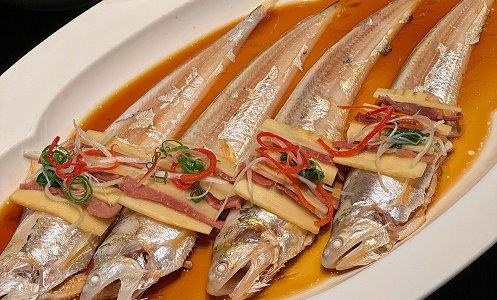
1. Yangtze River Knife Fish
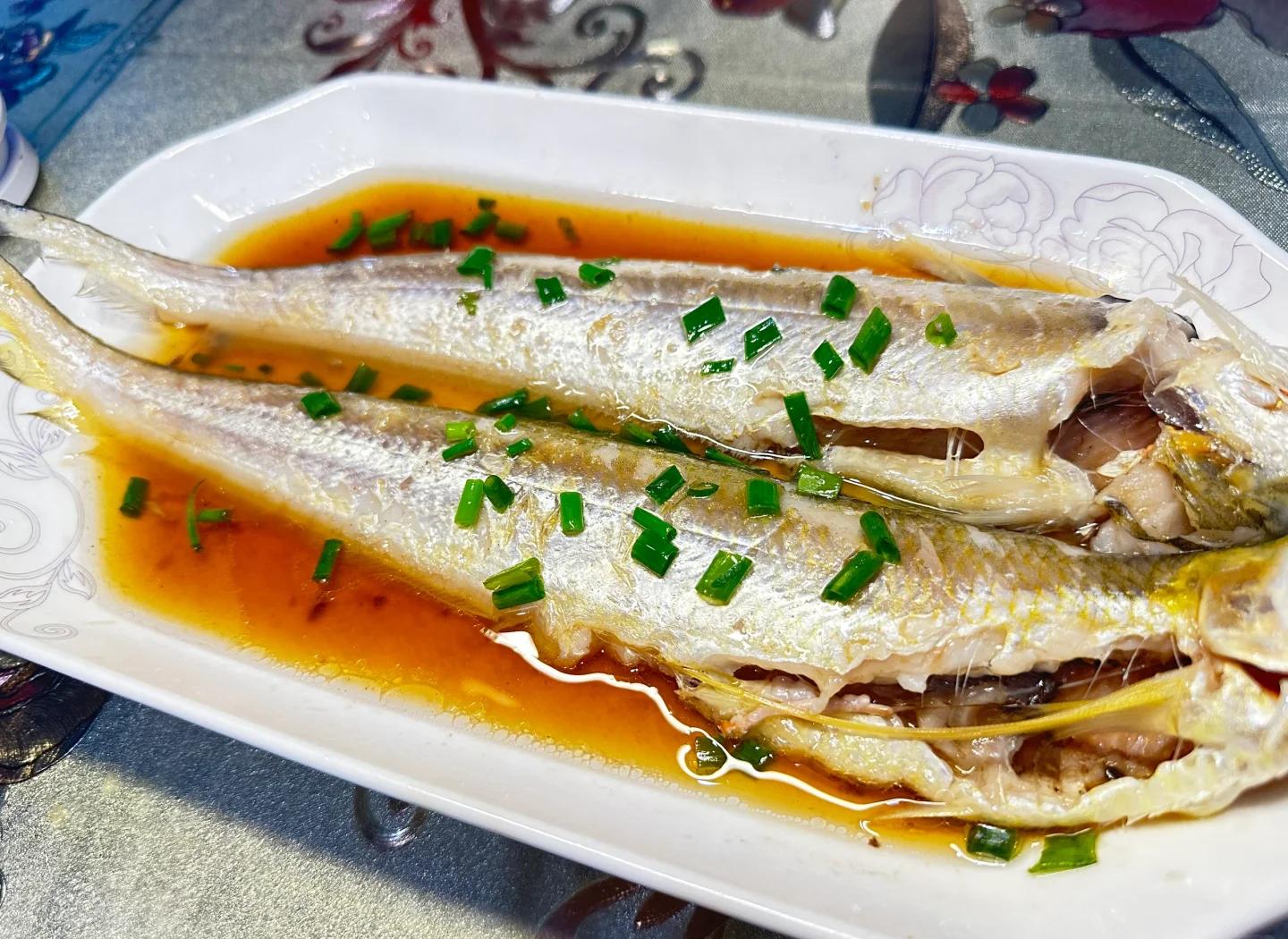
The most prized lake food of spring, known as one of the "Three Delicacies of the Yangtze River", with a short 1-month tasting window from mid-March to mid-April every year. It has an extremely tender, melt-in-your-mouth texture and a rich umami flavor, with the classic cooking method being steaming with minimal seasoning to highlight its natural sweetness. It is the most precious seasonal delicacy of wuxi cuisine in spring.
2. Taihu Snails
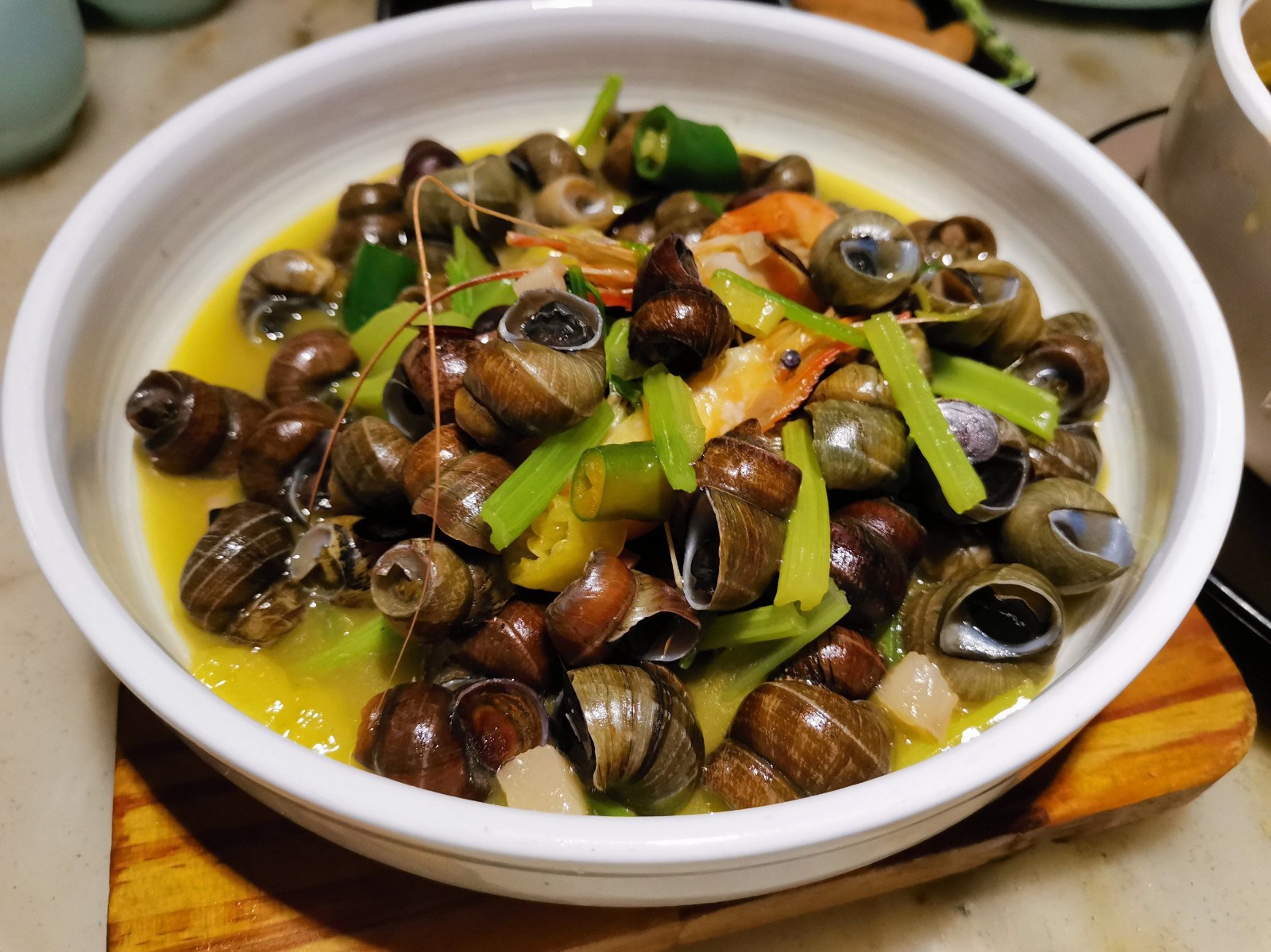
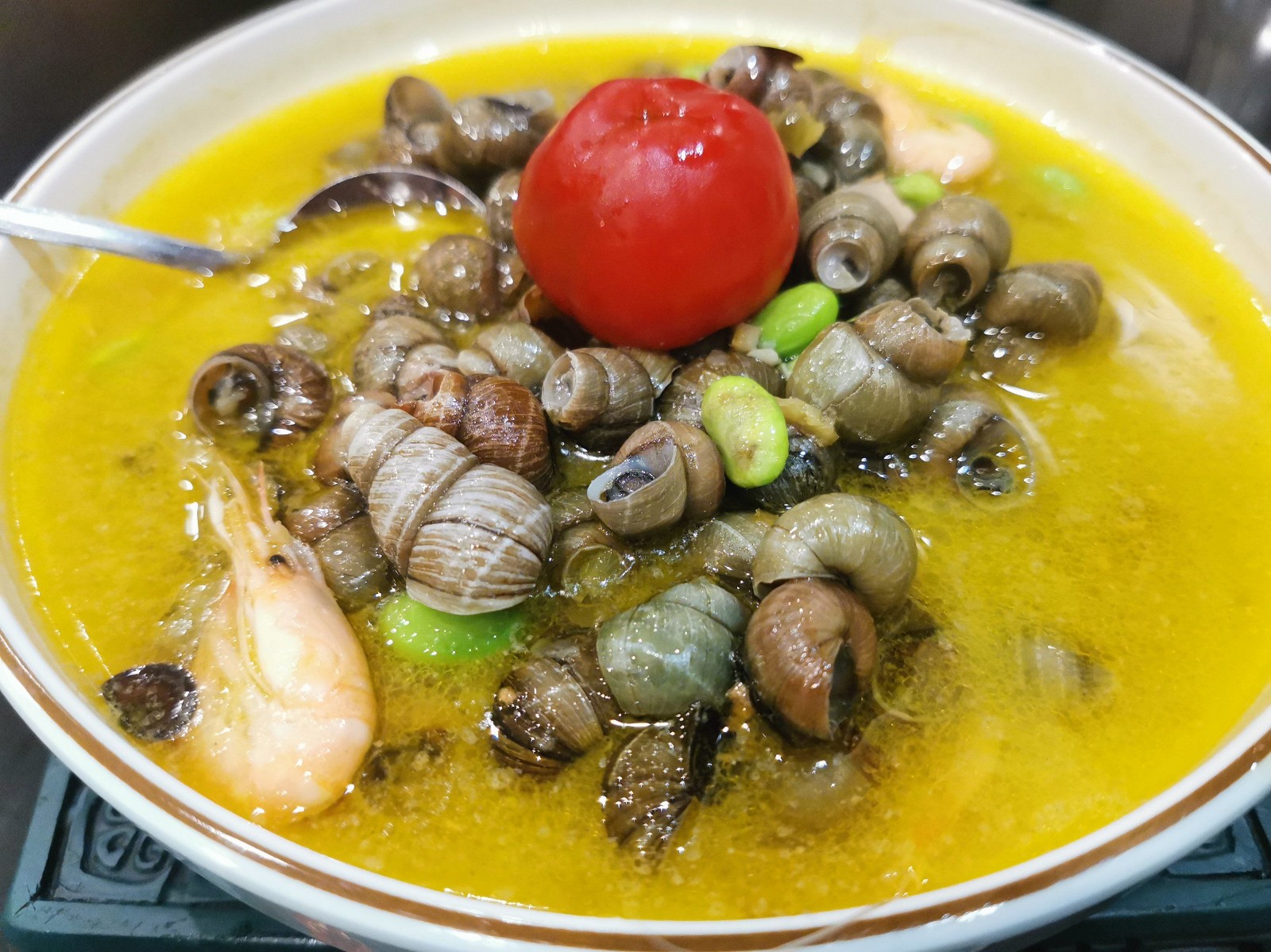
A classic spring street snack of wuxi food, with the local saying "Qingming snails are fatter than geese". Before the Qingming Festival, the Taihu green-shell snails are at their plumpest, with tender, juicy meat and no muddy taste. The classic Wuxi cooking method is sauce-frying with soy sauce, rice wine, chili and ginger, with a rich, sweet-savory flavor, a classic pairing with local rice wine.
3. Toona Sinensis & Spring Bamboo Shoots
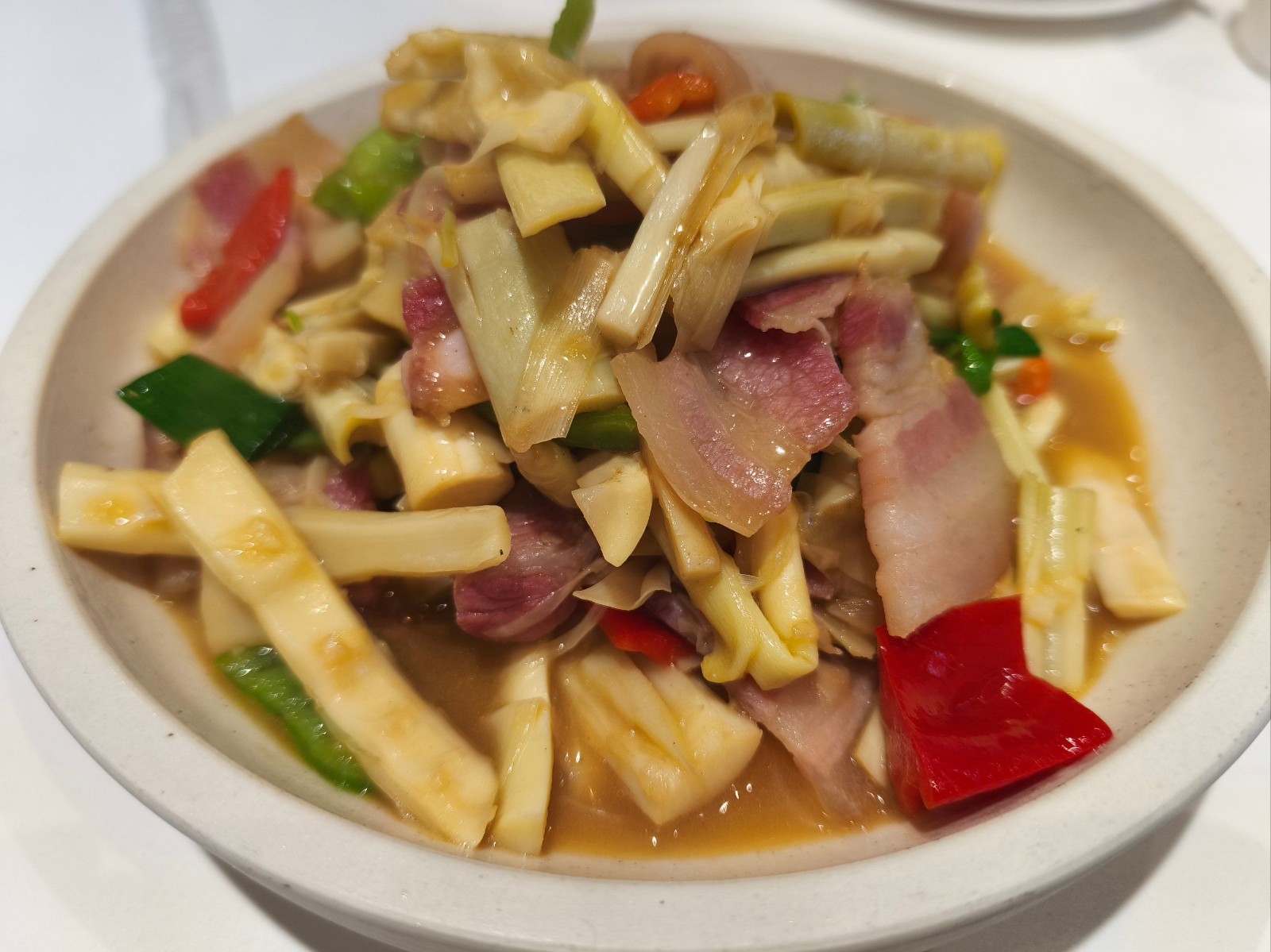
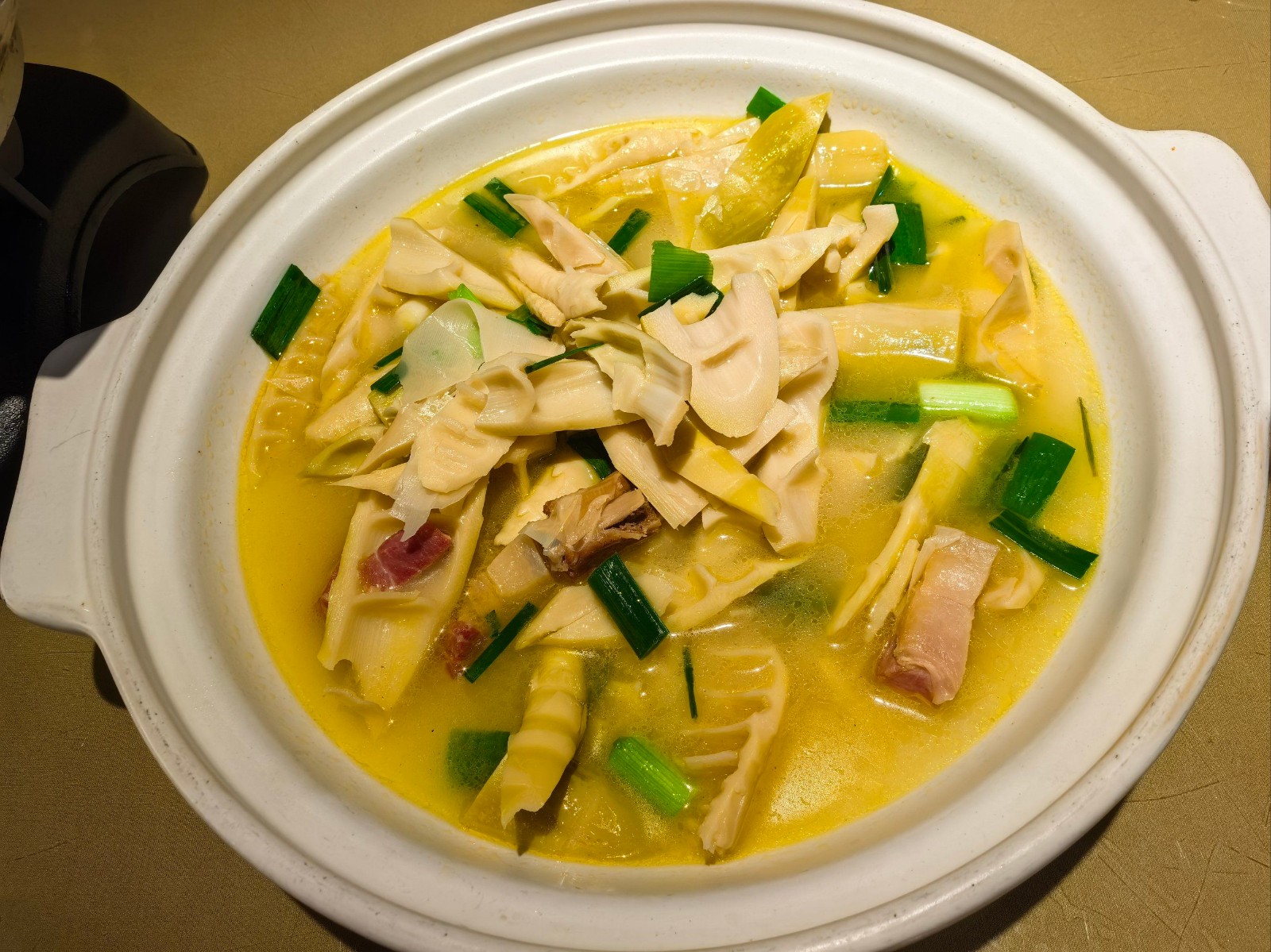
The most representative spring vegetables of Wuxi, known as "the two treasures of spring". Tender toona sinensis sprouts from the Taihu basin are blanched and mixed with soft tofu, dressed with chili oil and sesame oil, with a unique, pungent aroma and fresh taste. Spring bamboo shoots are used in stir-fries, braised dishes, and wonton fillings, with a tender, crisp texture and sweet flavor, perfectly embodying the freshness of spring.
4. Qingtuan (Green Rice Cake)
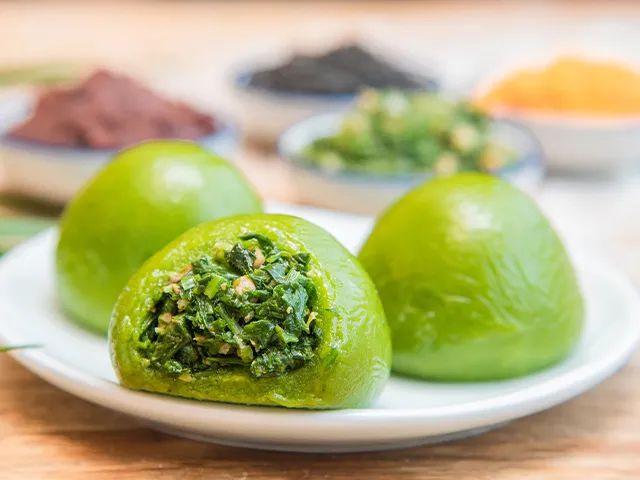
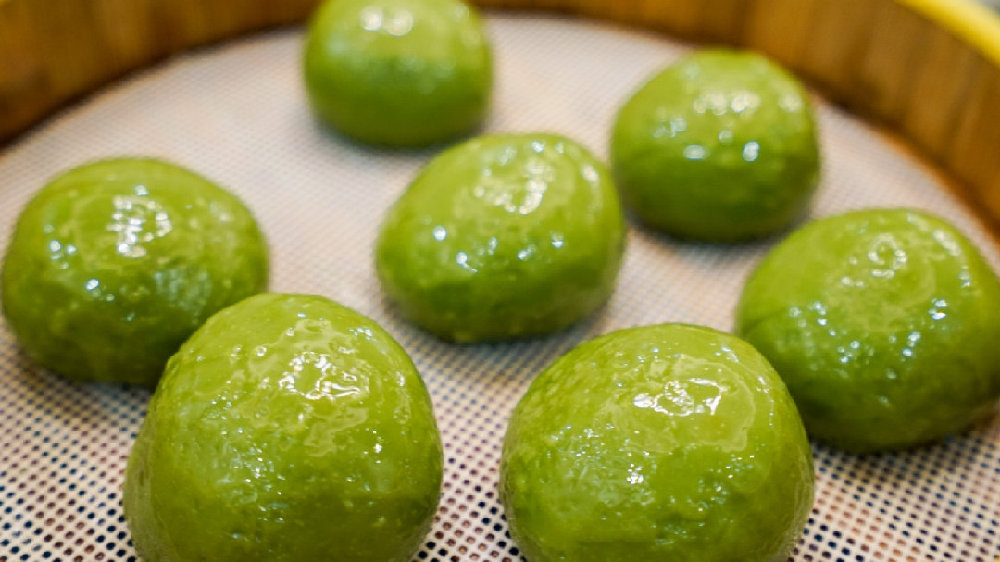
A beloved traditional spring snack of wuxi food, especially popular around the Qingming Festival. These vibrant green glutinous rice balls get their color and unique aroma from mugwort juice from the Taihu lakeside. They are typically filled with either sweet red bean paste for a classic, comforting taste or savory salted egg yolk with pork floss, with a soft, chewy texture and fresh herbal scent.
b. Summer (June to August)
Wuxi's summers are hot and humid, so wuxi food focuses on cooling, refreshing lake food dishes to beat the heat and dampness, with light, fresh flavors that highlight the bounty of Taihu Lake in summer. It is also the peak season for Wuxi’s most famous fruit, Yangshan honey peaches.
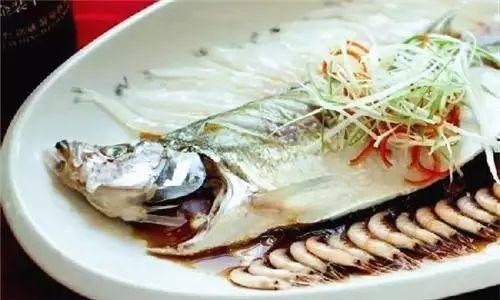
1. Taihu Three Whites (White Fish, Whitebait, White Shrimp)
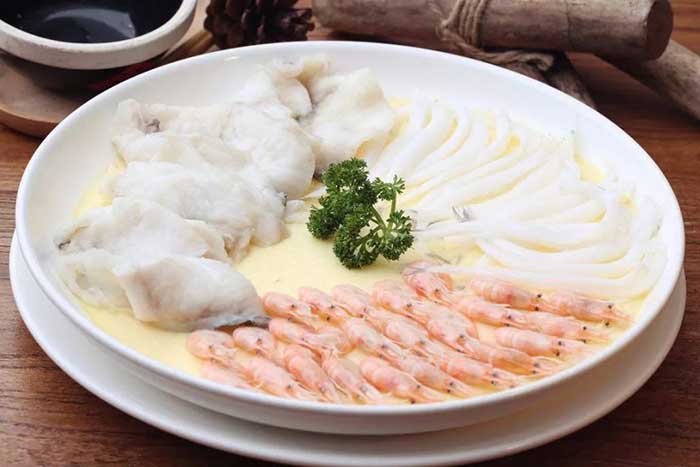
Summer is the peak season for farmed Taihu three whites, with the most tender meat and sweetest flavor of the year. The classic cooking methods are steaming for white fish, omelet for whitebait, and salt-boiling for white shrimp, with minimal seasoning to retain the natural umami of the lake ingredients. They are the core summer dishes of wuxi cuisine, available in almost all restaurants in Wuxi.
2. Yangshan Honey Peaches
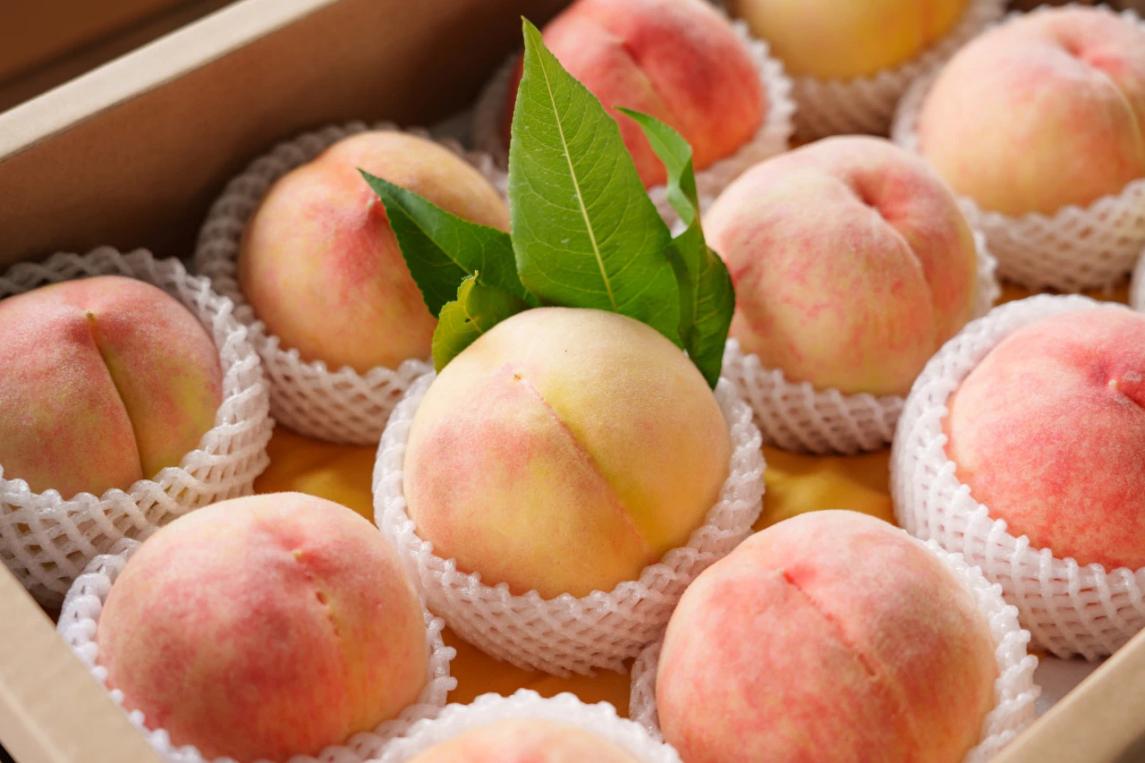
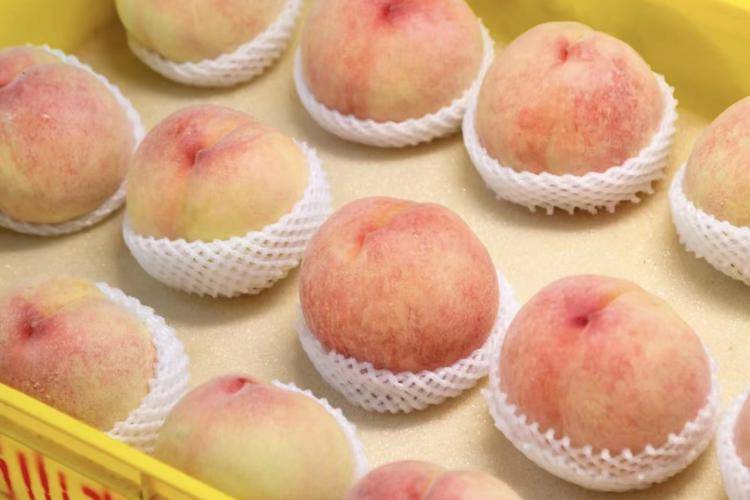
Known as "the juiciest peach in China", a national geographical indication product, with a peak ripening season from mid-June to mid-August every year. It has a paper-thin skin, juicy, honey-sweet flesh, and a rich aroma, with a sugar content of over 18%. It is eaten fresh, made into juice, jam, and desserts, the most iconic summer ingredient of wuxi food.
3. Taihu Lake Water Shield & Chicken Head Rice (Gorgon Fruit)
Two classic summer aquatic ingredients of wuxi cuisine, harvested from Taihu Lake in summer. Water shield has a tender, gelatinous texture, used in clear soup with tofu and bamboo shoots, with a smooth, slippery texture and fresh flavor. Chicken head rice is a classic Jiangnan health-preserving ingredient, used in sweet porridge with red dates and osmanthus, or stir-fried with shrimp and celery, with a chewy, tender texture and mild flavor.
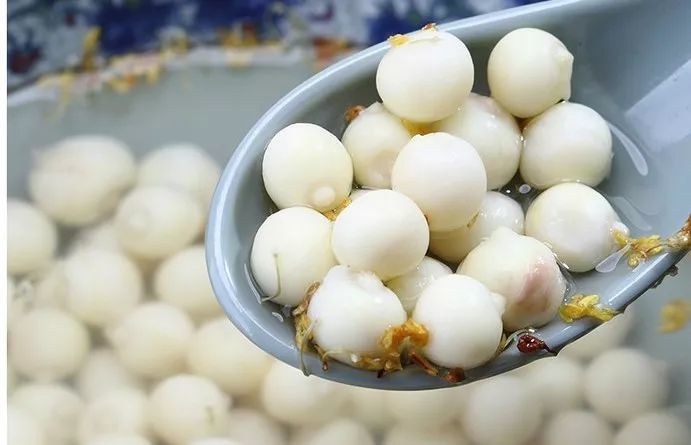
4. Wuxi Mung Bean Soup & Cold Cake
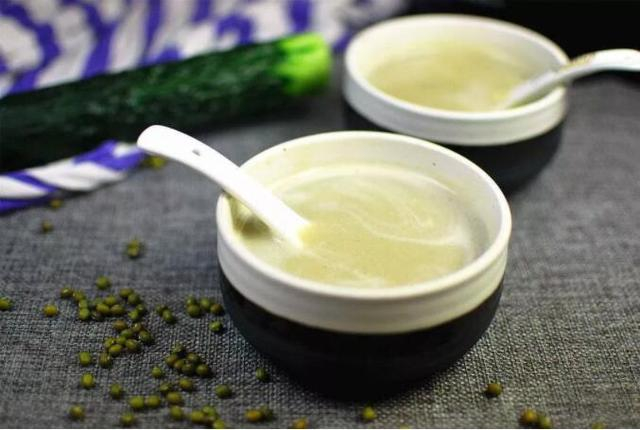
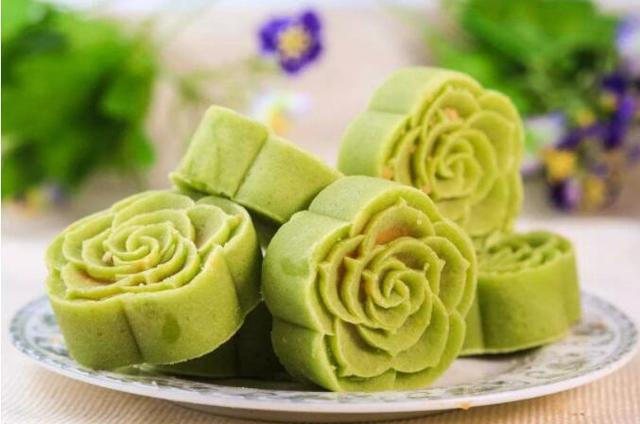
Classic summer refreshing desserts of wuxi food. Mung bean soup is made by slow-boiling mung beans with rock sugar until they break down, served chilled, traditionally believed to clear internal heat and detoxify the body. Cold cake is made with glutinous rice, steamed and chilled, topped with honey, osmanthus syrup, and crushed peanuts, with a soft, glutinous, icy texture, sweet and refreshing, perfect for relieving summer heat.
c. Autumn (September to November)
Autumn is Wuxi's prime culinary season, the peak of wuxi food and wuxi cuisine, offering a perfect blend of cool weather and abundant harvests from Taihu Lake, with the most diverse and rich flavors of the year. It is known as the "golden season for eating in Wuxi".
1. Taihu Hairy Crab
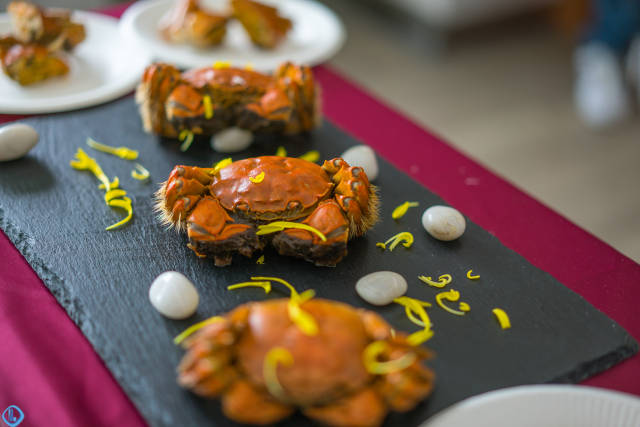
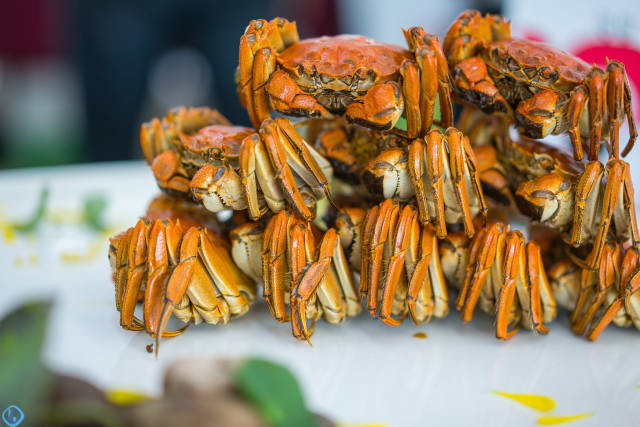
The undisputed star of Wuxi's autumn harvest and the crown jewel of autumn wuxi cuisine. Taihu Lake hairy crabs are renowned for their plump roe (female crabs in September) and rich crab paste (male crabs in October), with a sweet, tender meat and no muddy aftertaste. They are almost exclusively steamed with perilla leaves, served with ginger-vinegar dip, the ultimate autumn delicacy in Wuxi.
2. Osmanthus-Flavored Series Dishes & Desserts
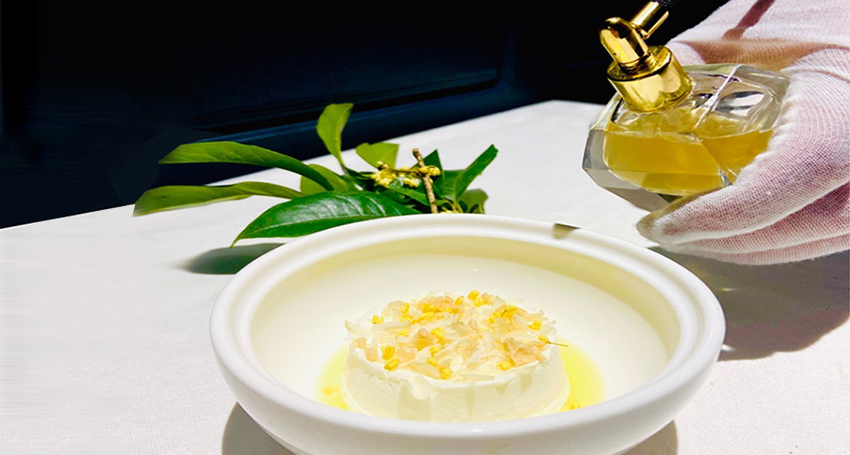
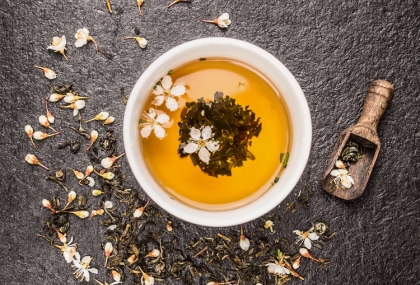
A fragrant tribute to Wuxi's autumn, when thousands of osmanthus trees bloom across the city in late September, their delicate, sweet aroma infusing every corner of the water town. Osmanthus is used to make the signature sweet taro with osmanthus, osmanthus syrup drink, osmanthus rice wine, osmanthus cake, and osmanthus glutinous rice balls, creating a sensory experience that combines taste and the unmistakable scent of fall in Jiangnan.
3. Taihu Lake Crayfish
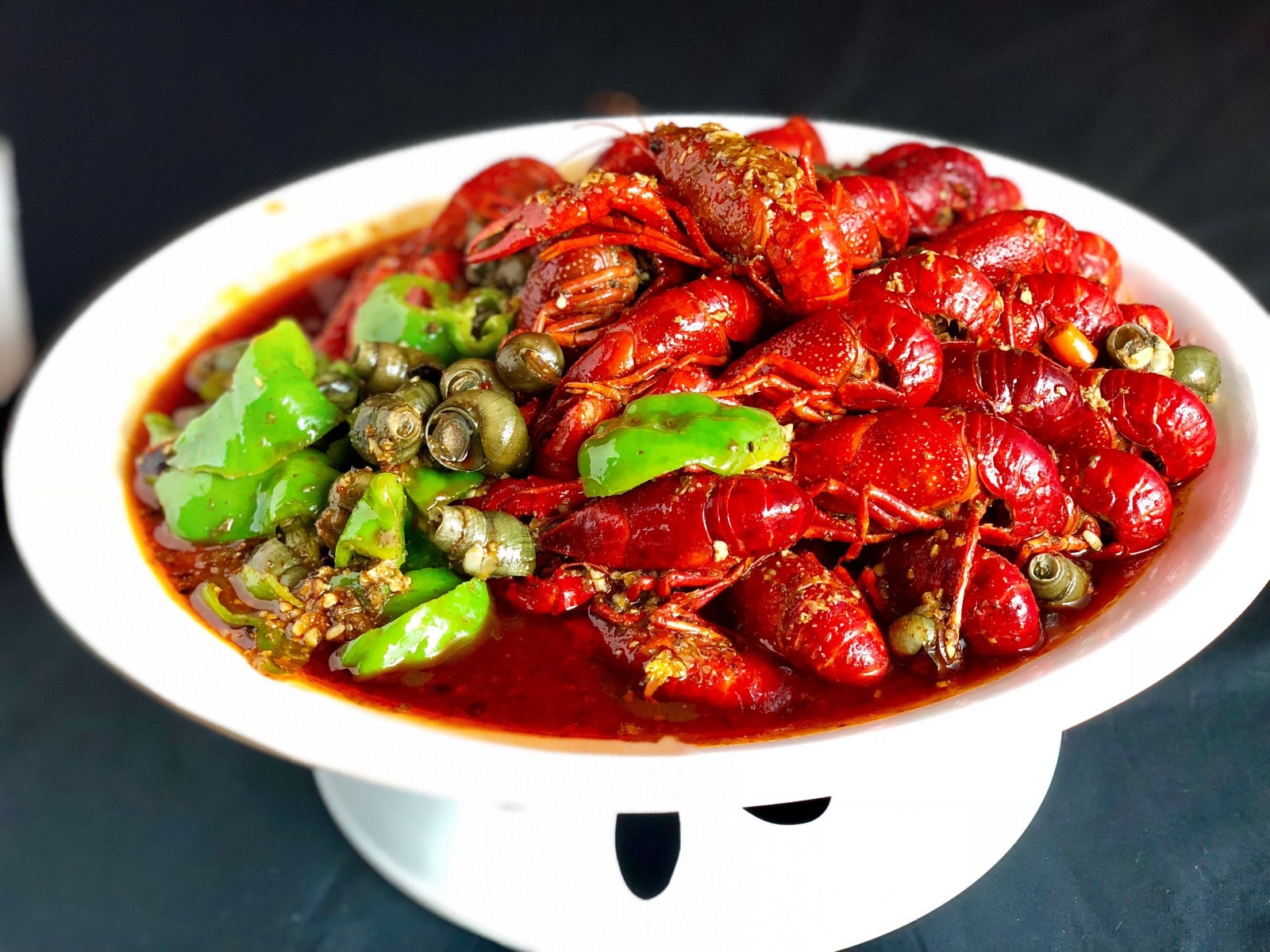
A classic autumn street food of wuxi food, with a peak season from September to November. Wuxi’s classic cooking method is the "thirteen spices" flavor, with a balanced sweet-savory and slightly spicy taste, or braised in garlic sauce, with tender, juicy crayfish meat and a rich, flavorful sauce. It is the most popular late-night snack in Wuxi in autumn, paired with local rice wine or beer.
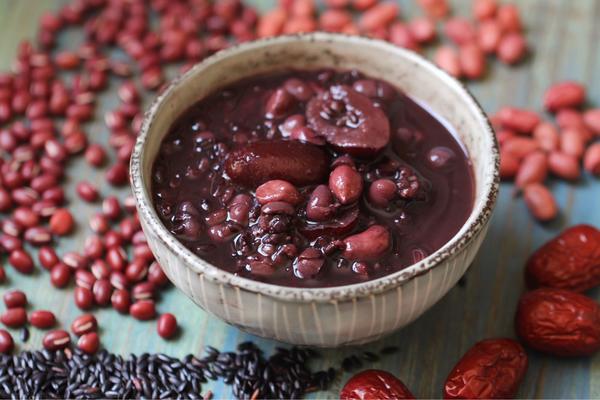
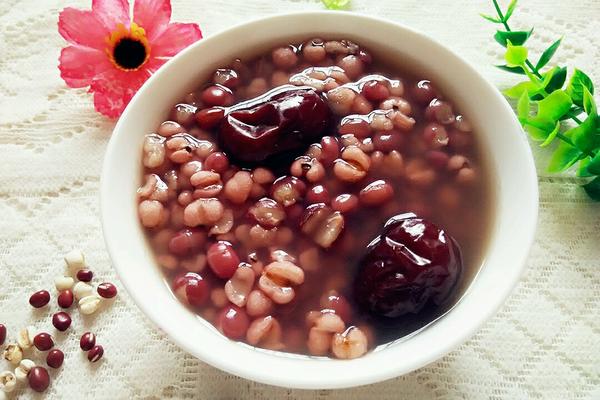
4. Wuxi Red Bean Paste Sweet Porridge & Eight-Treasure Rice
Classic autumn and winter desserts of wuxi cuisine, perfect for the cool autumn weather. Red bean paste sweet porridge is slow-simmered for 3 hours until thick and creamy, sweetened with brown sugar and topped with osmanthus. Eight-treasure rice is made with glutinous rice, red bean paste, dates, lotus seeds, raisins, and osmanthus, steamed until soft and sticky, a symbol of "eight treasures bring good fortune", a must-have for family gatherings in autumn and winter.
d. Winter (December to February)
Winter in Wuxi is cold and damp, so wuxi cuisine focuses on hearty, warm, nourishing braised dishes and hot pots, designed to keep you cozy and nourish the body in the cold weather, with rich, mellow flavors that are the core of classic wuxi food. It is also the season for Wuxi’s most important festival, the Chinese New Year, with a rich variety of festival foods.
1. Wuxi Braised Series Dishes
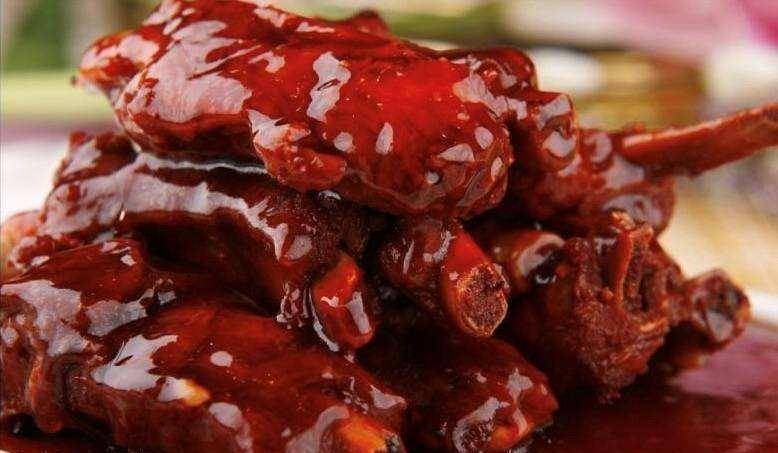
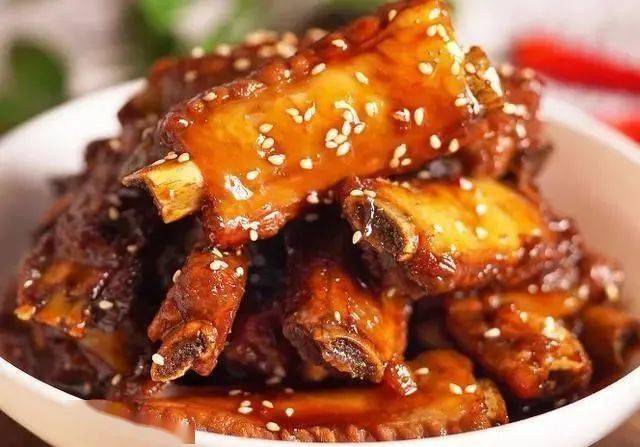
Winter is the best season to enjoy the classic braised dishes of wuxi cuisine, including Wuxi braised spare ribs, fermented pork with rice wine (zao kou rou), braised pork knuckle, and braised whole fish. These dishes are slow-braised for hours, with rich, mellow flavors and tender, melt-in-your-mouth meat, perfect for warming the body in the cold winter, and are the staple of Wuxi family reunion dinners during the Spring Festival. Wuxi people adopt mild rock sugar and local brewed soy sauce for braising, forming the signature gentle sweet flavor that never feels greasy, a distinctive feature of Jiangnan winter catering.
2. Wuxi Lamb Hot Pot & Braised Lamb
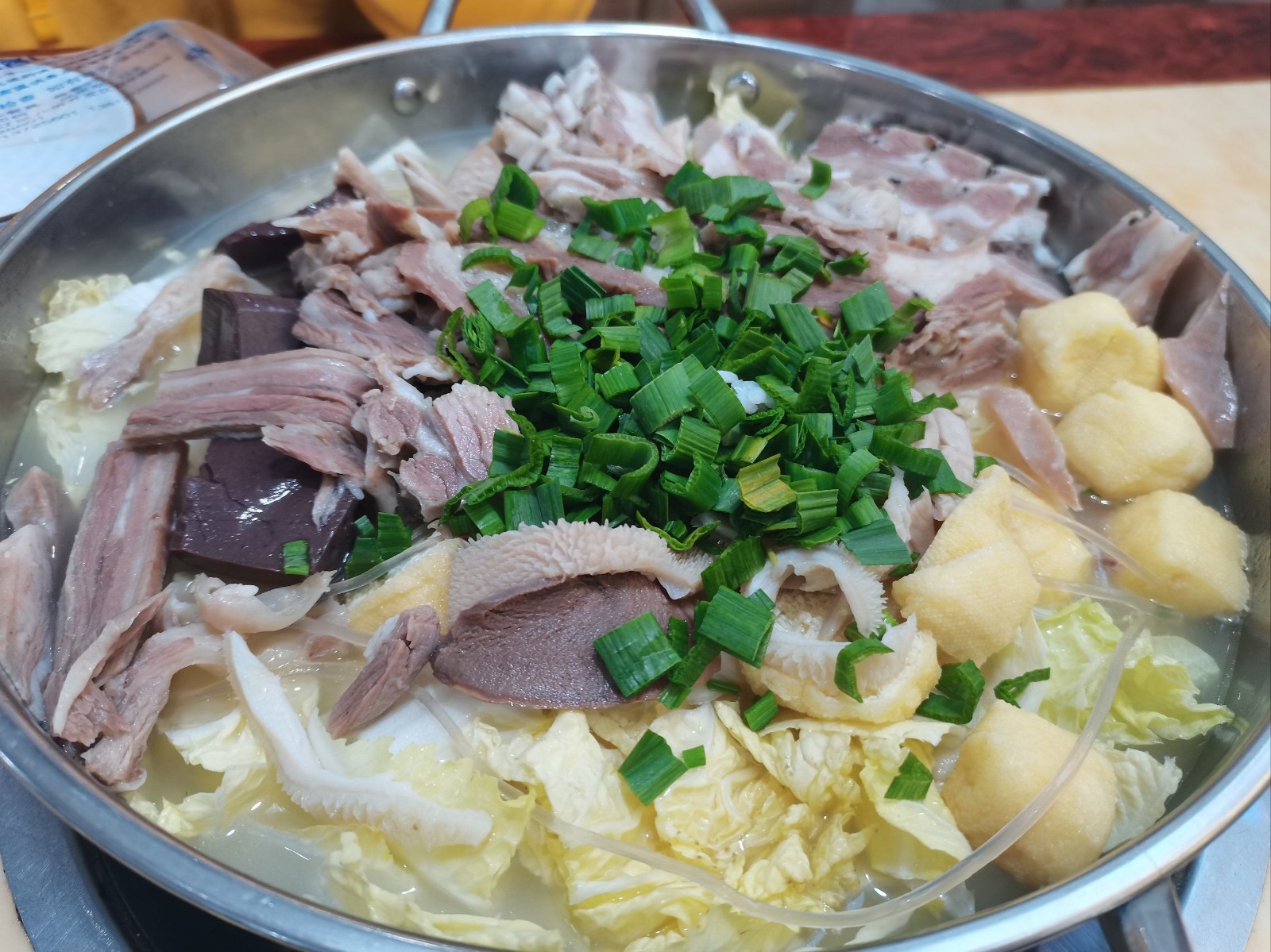
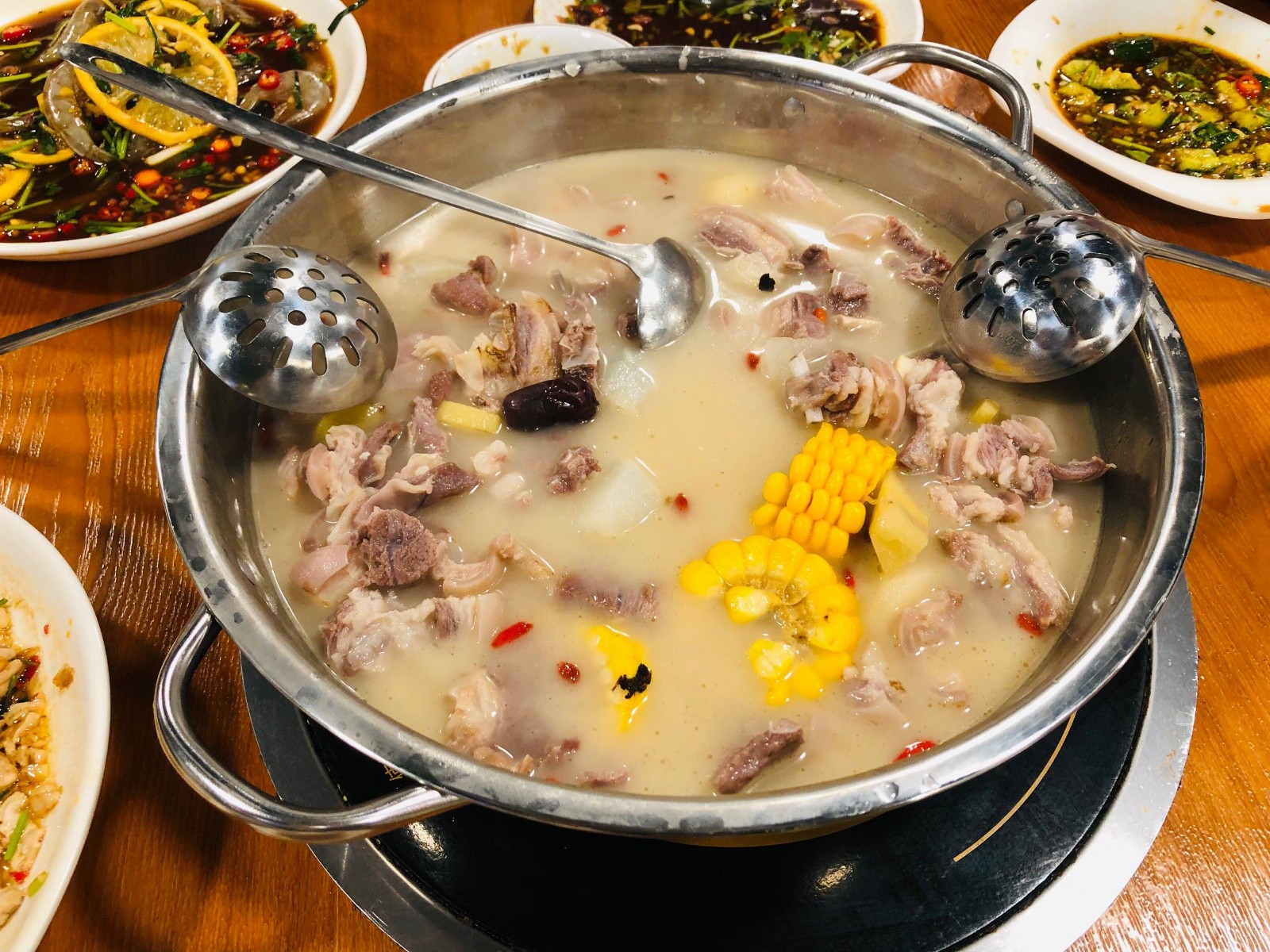
A legendary winter specialty exclusive to Wuxi and southern Jiangsu. Featured with local goats raised around Taihu Lake, the clear-broth lamb hot pot retains the original fresh meat taste with no mutton smell. Braised lamb in brown sauce is stewed with Wuxi sweet soy sauce and rock sugar, presenting a rich sweet-savory taste. Every winter, lamb restaurants across the city become bustling, and eating Wuxi lamb has become a local seasonal custom for hundreds of years.
Explore Your Way Holiday’s Recommended Tours.
We design private and Tailor-made Wuxi Tours customized to your style of travel at affordable local prices. We will provide a private & spacious car and a local professional tour guide with over 5 years guiding experience only work for you or your group. Transport, ticket, and dining (We find the most authentic dishes popular with locals) all we will arrange for you according your requirements. Please check our most popular tours below:
 Exclusive Private Wuxi Tour Package: 2 Days of Nature, Buddhism & Ancient Towns
 2 Days Wuxi Tour to Experience Traditional Jiangnan Charm
Are the above sample tour programs not suitable for you? Dont worry, our Wuxi tours can be tailor-made based on your requirements and budget to create unique Wuxi experiences that allow you to interact with the local people and culture. We are Wuxi travel experts who know what your guidebook and foreign agencies don't. Our enthusiastic tour expert will promptly reply you in details within 24 hours.
Wechat: YourWayHolidayAsia
24 Hours Hotline:
+86 137-3541-1378
* Authentic Experiences: Genuine local experiences that immerse you in the true essence of Suzhou and beyond.
* Safety First: Highest safety standards with secure activities and reliable transportation.
* Customizable Tours: Flexible itineraries tailored to your interests and needs.
* Local Expertise: In-depth knowledge of Suzhou and China, offering exclusive insights.
* Professional Guides: Licensed bilingual guides with over 5 years of experience.
* Comfortable Travel: Experienced drivers and well-maintained vehicles for a smooth journey.
* Sustainable Tourism:Commitment to responsible tourism and supporting local communities.
* Customer-Focused: Personalized service and continuous improvement based on your feedback.
* Free Cancellation: Cancel up to 24 hours before travel for flexibility and peace of mind.
* 24/7 Support: Round-the-clock assistance for any questions or help needed.
 Tiger Hill (Huqiu) Travel Guide: Exploring Suzhou’s Iconic Leaning Pagoda
 Exploring Suzhou No. 1 Silk Factory: A Journey into the Heart of China’s Silk Industry
 Exploring Guanqian Street in Suzhou: A Blend of Tradition, Shopping, and Local Flavors
 Humble Administrator’s Garden Suzhou: Complete Visitor Guide to Zhuozheng Garden, History, Highlights & Tips
 Song He Lou Suzhou: A Culinary Journey through Suzhou’s Historic Songhelou Restaurant
 Yangcheng Lake Hairy Crab Guide: The King of Crabs in China
 Master of the Nets Garden Suzhou: A Complete Guide to China’s Most Exquisite Classical Night Garden
 Jinji Lake Suzhou Travel Guide: What to See and Do Around Suzhou’s Modern Landmark
1 to 1 tailor-made service from our professional travel advisors for the most sophisticated
Constantly excellent reviews for attraction, hotel and service Competitive price
Local experts provide quality tours Best selected knowledgeable local guides Authentic local restaurants
7*24 hours available to create you a worry-free tour. No Hidden Fees and absolutely no pressure to buy. Secured









Copyright © 2017 Suzhouprivatetour.com All rights reserved. 浙ICP备18056007号-4